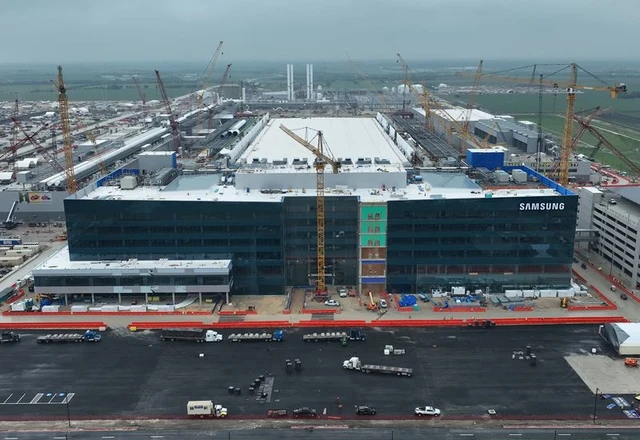
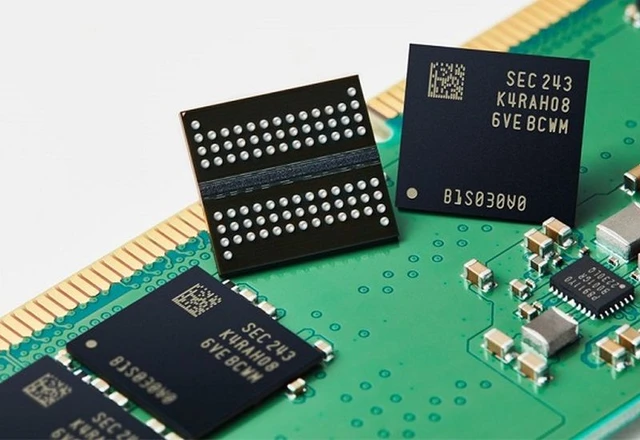
The global surge in AI demand has fundamentally restructured the semiconductor market hierarchy. In the race to capture the lucrative High Bandwidth Memory (HBM) sector, tech giants have encountered an unforeseen capacity crunch for commodity components. Samsung, in particular, now finds itself in a predicament where its internal fabrication capabilities are no longer sufficient to sustain the production of mass-market DDR5 modules and SSDs. To safeguard its market position, the company has been compelled to outsource critical stages of production to third-party vendors.
The current volatility in the DRAM market is the direct result of a rigid strategic pivot. The industry-wide drive to prioritize High Bandwidth Memory (HBM)—a critical component for AI accelerators—has left resources for standard DDR5 and DDR4 modules catastrophically limited. Samsung Electronics, a cornerstone of the industry, has found its internal production capacities overextended, forcing the company to seek additional capacity through external partnerships.
This bottleneck extends beyond RAM to the solid-state drive (SSD) segment, where Samsung traditionally maintains a strong proprietary presence. The crux of the issue lies in the testing and packaging phases. While the company's facilities in Cheonan and Onyang are undergoing extensive modernization, these upgrades are exclusively geared toward scaling HBM and other cutting-edge solutions. Consequently, standard DDR5 modules are effectively being squeezed out of the internal production cycle, shifting the burden of their manufacture onto specialized contractors.
This shift was far from spontaneous; negotiations with partners have been underway since mid-last year. Furthermore, Samsung is actively incentivizing its partners to accelerate the construction of dedicated production lines. While a new facility in Onyang is planned, its commissioning will take several years. Simultaneously, a packaging and testing plant is being deployed in northern Vietnam, though it will specialize in legacy products: DDR4, LPDDR4, NAND, and UFS for memory cards. As a result, internal capacity for current-generation memory modules is unlikely to expand in the near term.
The outsourcing footprint spans several key regions. Dreamtech has emerged as a primary partner, aggressively expanding its presence in India. Local DDR5 production began there last November, and Dreamtech is currently repurposing a site—previously used for smartphone PCBs—to meet memory demands. Once the retooling is complete, the facility is expected to yield over 50 million units annually.
Concurrently, Hanyang Digitech is investing in automation and equipment upgrades at its Vietnamese plants, allocating $22.7 million in the first half of the year. Another critical link in the chain is SFA Semicon, which is migrating equipment from Samsung's Onyang plant to its facilities in the Philippines. This site is slated to begin memory module production this November, with further expansion planned for the second quarter of next year. Meanwhile, the company's Korean division will continue to handle FBGA (Fine-pitch Ball Grid Array) chip packaging, which will then be mounted onto final modules in the Philippines.
This approach signals a fundamental shift in Samsung's business model: a transition from a fully integrated vertical cycle to a flexible ecosystem. Internal resources are now concentrated on the development of high-complexity, high-margin components, while the routine assembly and packaging of mass-market products are delegated to specialized players.
 Forecasting Exponential Growth in Nvidia Shipments