29 Aug 2026
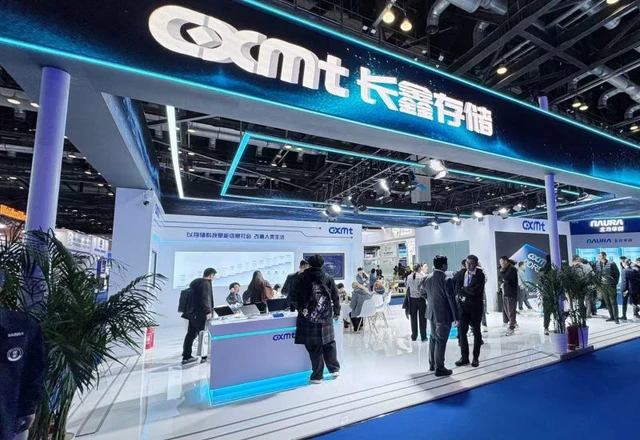 CXMT Lawsuit Against the US Department of Defense
The global semiconductor market has evolved into a theater of intense geopolitical rivalry, where administrative blacklists are increasingly weaponized as instruments of economic coercion. At the heart of this struggle is one of the world's leading DRAM manufacturers, now fighting to shed its designation as a "military end-user." CXMT’s legal challenge against the Pentagon's ruling marks a pivotal escalation in the battle for access to critical Western technology and high-value clientele. The outcome of this case could set a critical precedent for how the boundary between civilian and defense sectors is defined in an era of rampant technological nationalism.
29 Aug 2026
 The Economics of Foldable iPhone Maintenance
The smartphone industry is poised for another seismic shift as Apple prepares to enter the foldable market. While this innovative form factor promises a reimagined user experience, it simultaneously introduces significant financial liabilities for the consumer. The pivot toward flexible displays brings with it an unprecedented level of technical complexity and a corresponding surge in maintenance costs. Current projections suggest that owning and maintaining such a device may evolve into a luxury expense in its own right.
29 Aug 2026
 The Expansion of Semiconductor Foundry Giants
Global demand for compute has reached a critical inflection point, transforming semiconductor fabrication into a strategic resource of paramount importance. The AI explosion has acted as a catalyst for a dramatic surge in foundry revenues, which spiked by 29% in the second quarter of 2026. This pursuit of process leadership has evolved into a high-stakes geopolitical struggle between the technological titans of Asia and the U.S. Current dynamics point toward a deep consolidation of the market, where mastery of the most advanced nanometer nodes now dictates global leverage.
29 Aug 2026
 The Digital Blockade of China's Computing Power
The global AI arms race is shifting its focus from the procurement of hardware to the strategic control of infrastructure. Following the imposition of export bans on physical accelerators, Washington identified a critical loophole: the ability to access cloud computing power via third-party jurisdictions. Now, the U.S. intends to plug this leak, transforming remote compute access into a potent instrument of geopolitical leverage. This initiative could fundamentally reshape the AI development landscape across the Asia-Pacific region.
29 Aug 2026
 The Price of Memory in the Era of Neural Networks
The global AI surge has emerged as an unexpected and formidable challenge for the home console market. Skyrocketing demand for data center compute power has driven up component costs, threatening the affordability of gaming hardware. At the epicenter of this crisis is Microsoft, which now finds itself compelled to pivot its priorities while architecting the next generation of Xbox. The battle is no longer fought over teraflops, but over the economic viability of the product itself.
29 Aug 2026
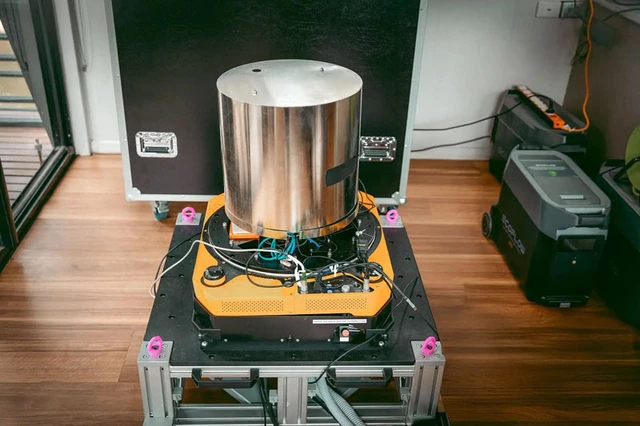 Navigating via Earth's Gravitational Anomalies
Modern satellite positioning systems are becoming critically vulnerable to electronic jamming and sophisticated signal spoofing. Amidst growing global instability, the quest for autonomous positioning methods has evolved from a theoretical academic pursuit into a critical matter of national security. A potential solution lies in utilizing the planet itself as a global reference point, leveraging the analysis of anomalies within its gravitational field. GravNav, a technology developed by Q-CTRL, is transitioning this concept from a theoretical framework into practical deployment aboard maritime vessels.
29 Aug 2026
 Space Debris Poses a Growing Threat to Low Earth Orbit Constellations
Near-Earth space is rapidly evolving into a high-risk zone, driven by the exponential proliferation of orbital objects. A recent incident involving a Chinese launch vehicle has once again brought the precarious state of Low Earth Orbit (LEO) safety into sharp focus. The resulting hundreds of new debris fragments pose a tangible threat to the operational integrity of global communication networks. In this volatile environment, the capacity for active maneuvering has become the sole guarantee of survival for high-value satellite constellations.
29 Aug 2026
 The Final Scientific Push of the Swift Observatory
Space exploration often presents a fundamental trade-off between the operational longevity of a spacecraft and its immediate scientific utility. The Swift Observatory, which has spent decades monitoring the universe's most high-energy phenomena, now faces an inevitable descent into the dense layers of Earth's atmosphere. Following the failure of a commercial orbit-extension mission, NASA has made the strategic decision to abandon hibernation mode. The instruments are now being reactivated to capture final, critical data, even if doing so hastens the station's ultimate demise.
29 Aug 2026
 The Shifting Power Dynamics of Mobile Platforms
The global mobile device market is undergoing a profound structural transformation. Android's long-standing hegemony is facing mounting pressure from Apple and the rapidly expanding HarmonyOS ecosystem. Economic headwinds and supply chain disruptions are compelling manufacturers to pivot their strategies, shifting focus from the mass market toward the premium segment. Current metrics reflect more than just shifting numbers; they signal a fundamental pivot in consumer preferences and a drive toward technological sovereignty.
29 Aug 2026
 The Project Helix Device Ecosystem
The home console industry is undergoing a fundamental transformation, where the concept of a "gaming device" is no longer synonymous with a single, monolithic hardware solution. Microsoft is taking a decisive step in this direction, evolving the next generation of Xbox from a standalone product into a diversified technological ecosystem. Under the codename Project Helix, the company is engineering a comprehensive suite of devices designed to penetrate various market segments and cater to diverse content consumption patterns. This strategic pivot has the potential to fundamentally rewrite the rules of competition within the global gaming landscape.
29 Aug 2026
 Magnetic Shielding for Spacecraft Re-entry
Reentry into the dense layers of the atmosphere has historically been one of the most perilous phases of any mission, driven by the onslaught of extreme thermal loads. Conventional thermal protection systems rely on heavy ceramic tiling or ablative materials—substances designed to erode and burn away to shield the spacecraft's structural integrity. Today, however, a paradigm shift is underway: moving away from passive resistance toward the active manipulation of flow physics. Cutting-edge experiments in magnetohydrodynamic (MHD) braking are paving the way for the creation of "force fields" that could fundamentally streamline and secure the descent of spacecraft.
29 Aug 2026
 Plasmonic Enhancement of Live-Cell Imaging
Real-time observation of biological processes remains a cornerstone objective in contemporary neurobiology and cellular engineering. For years, genetically modified proteins served as the primary vehicle for imaging; however, their inherent limitations in luminosity and response latency have hindered the granular analysis of neural circuitry. A breakthrough from researchers at Delft University of Technology has introduced plasmonic nanoantennas—a development that fundamentally alters how light interacts with organic matter. This technology does more than just amplify signals; it accelerates the dynamics of biological processes, unlocking unprecedented vistas for the study of the mammalian brain.
