Near-Earth space is rapidly evolving into a high-risk zone, driven by the exponential proliferation of orbital objects. A recent incident involving a Chinese launch vehicle has once again brought the precarious state of Low Earth Orbit (LEO) safety into sharp focus. The resulting hundreds of new debris fragments pose a tangible threat to the operational integrity of global communication networks. In this volatile environment, the capacity for active maneuvering has become the sole guarantee of survival for high-value satellite constellations.
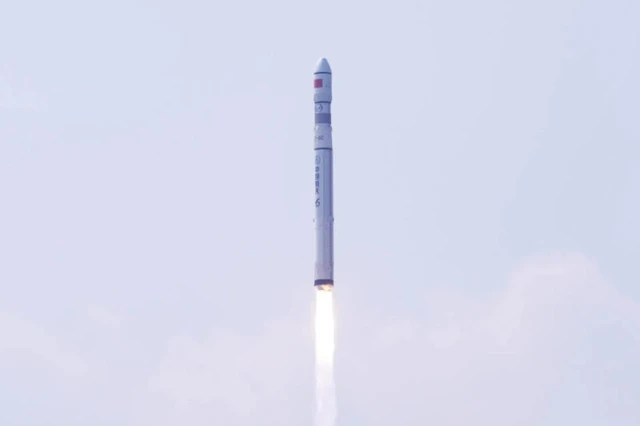
The issue of orbital debris has evolved from a theoretical concern into a tangible operational risk. The latest alarm was triggered by the launch of the Chinese Long March 6C carrier rocket. While seven satellites were successfully deployed to their target positions, the rocket's upper stage fragmented directly in orbit, becoming a source of extensive debris.
LeoLabs radars were the first to detect the anomaly. The signal was initially picked up by a station in Western Australia and subsequently confirmed during a second pass over a monitoring point in New Zealand. Preliminary expert estimates suggest the fragmentation generated anywhere from several dozen to several hundred individual objects.
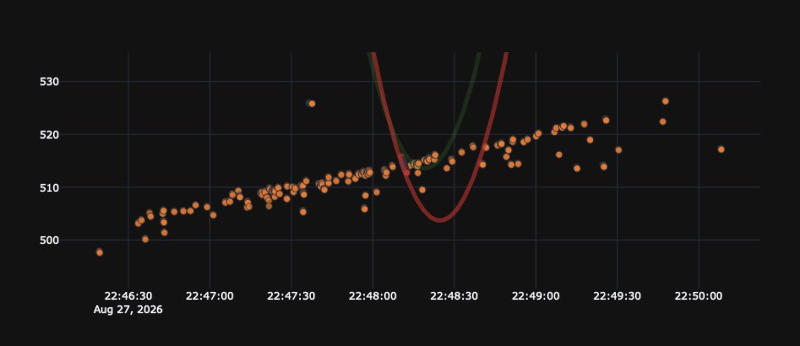
The altitude of the event is of particular concern. While the main body of the rocket was positioned between 396 and 482 km, the resulting debris has been tracked at altitudes ranging from 500 to 520 km. This creates a critical situation for any spacecraft operating below 1,000 km; at orbital velocities, even the smallest fragment possesses enough kinetic energy to completely destroy a satellite.
SpaceX’s Starlink constellation stands to be the most affected. Currently, approximately 11,000 Starlink satellites are in orbit, with a significant portion—over 8,500 units—concentrated between 460 and 490 km. Furthermore, the company is actively migrating thousands of its satellites to 480 km orbits, effectively placing them directly in the path of the new debris cloud.
In the modern space industry, such scenarios underscore the vital importance of active space traffic management. Starlink satellites are equipped with onboard propulsion systems, enabling them to perform evasive maneuvers. The scale of this effort is staggering: between December 2025 and May 2026, over 207,000 maneuvers were executed, averaging 40 corrections per spacecraft. To automate this process, SpaceX implemented the Stargaze system, which utilizes onboard sensors for real-time detection and tracking of foreign objects.
Unfortunately, the Long March 6C incident is not an isolated case. Similar debris-shedding issues were observed with the Long March 6A family in 2022 and 2024, pointing to systemic challenges in maintaining orbital cleanliness during the operation of these launch vehicles.
The problem is compounded by the fact that these fragments will not decay quickly due to atmospheric drag. According to LeoLabs' projections, the debris will remain a threat for several years. This forces satellite operators to revise safety protocols and increase the frequency of corrective maneuvers, which inevitably shortens the operational lifespan of the spacecraft due to accelerated fuel consumption.
 The Final Scientific Push of the Swift Observatory