The home console industry is undergoing a fundamental transformation, where the concept of a "gaming device" is no longer synonymous with a single, monolithic hardware solution. Microsoft is taking a decisive step in this direction, evolving the next generation of Xbox from a standalone product into a diversified technological ecosystem. Under the codename Project Helix, the company is engineering a comprehensive suite of devices designed to penetrate various market segments and cater to diverse content consumption patterns. This strategic pivot has the potential to fundamentally rewrite the rules of competition within the global gaming landscape.
The evolution of Microsoft's gaming ecosystem is taking an unexpected turn. While the market previously viewed Project Helix as the development of yet another console iteration, recent clarifications from Xbox leadership point toward a far more ambitious vision. This is not merely about replacing one box with another, but about establishing a comprehensive family of devices. Such an approach allows the company to diversify its hardware lineup, offering users varying performance tiers and form factors, effectively transitioning Xbox from a standalone product into a holistic platform.
This strategy demands deep synergy at the silicon level. The long-term strategic alliance with AMD, forged back in 2025, was specifically designed to create a "device portfolio." This implies that the collaborative efforts of Microsoft and AMD engineers encompass not a single specific chip, but a broad spectrum of hardware configurations. It is likely that the Helix family will include everything from flagship, high-performance powerhouses to more accessible or specialized solutions optimized for diverse use cases.
Of particular interest is the question of platform openness. Rumors have long circulated within the industry that Microsoft may grant third-party manufacturers the right to build consoles under the Project Helix brand. While company leadership has avoided explicit confirmation, the absence of a categorical denial leaves the door open for a scenario reminiscent of the Android model in the smartphone market. In such a case, Xbox could become a standardized operating environment that third-party vendors integrate into their own hardware, significantly expanding Microsoft's market footprint.
Parallel to this hardware reimagining, the company is working to shift consumer behavior. The question of whether new devices will feature optical drives remains open; however, the launch of a program to digitize physical game copies clearly signals the strategic trajectory. Microsoft aims to minimize user dependence on physical media, migrating game libraries into a fully digital format. This shift simplifies the engineering of the compact, energy-efficient devices envisioned for the Helix family.
Despite the ambitious nature of these plans, implementation requires time. A full-scale launch of the next-generation Xbox—one that ensures seamless convergence with PC gaming—is not expected before 2027. This timeline provides AMD and Microsoft the necessary window to refine component interoperability across the entire device family, ensuring that the transition to the new platform is not merely a hardware refresh, but a paradigm shift in how users interact with gaming.

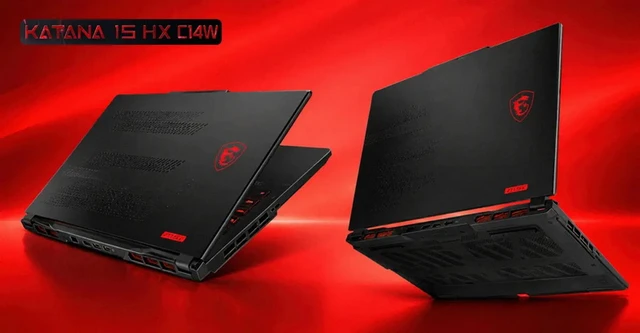 MSI Katana 15 HX and the Memory Paradox