The global AI surge has emerged as an unexpected and formidable challenge for the home console market. Skyrocketing demand for data center compute power has driven up component costs, threatening the affordability of gaming hardware. At the epicenter of this crisis is Microsoft, which now finds itself compelled to pivot its priorities while architecting the next generation of Xbox. The battle is no longer fought over teraflops, but over the economic viability of the product itself.
The modern tech market is grappling with a phenomenon ironically dubbed the "RAMpocalypse" within the industry. At its core is a fierce competition for semiconductors: the rapid expansion of data centers designed to train and support Large Language Models (LLMs) has triggered an insatiable demand for RAM and flash memory. In this arms race, gaming consoles—which traditionally rely on high-speed memory modules—have found themselves in a precarious position.
Historically, a console's lifecycle was characterized by the gradual decline of hardware costs. Today, we are seeing the opposite trend. Component prices are climbing, forcing manufacturers to either hike retail prices or sacrifice their margins. For Microsoft, this has served as a catalyst for a strategic pivot: in developing the next generation of Xbox, the focus is shifting from raw performance toward consumer affordability.
This paradigm shift implies that the successor to the Series X and Series S will be engineered under strict economic constraints. This isn't merely about sourcing cheaper suppliers; it is about a fundamental reimagining of memory and storage subsystems. Engineers will likely have to make compromises in the memory hierarchy or implement more efficient data compression algorithms to offset the prohibitive cost of physical modules.
Alongside hardware adjustments, the company is evolving its content delivery ecosystem. A key initiative is the "disc-to-digital" program, allowing owners of physical copies to migrate their games to a digital format. This move underscores Microsoft's desire to decouple content from physical media, granting users greater flexibility—a critical factor when the cost of hardware becomes a barrier to entry.
Orchestrating this transition is a leader with deep expertise in artificial intelligence. The move of a high-ranking executive from the AI division to Xbox leadership is no coincidence; understanding the inner workings of modern neural networks and their impact on the hardware market is critical for the division's survival. The past six months have been marked by large-scale restructuring and aggressive downsizing, part of a long-term blueprint to ensure business sustainability for decades to come.
However, market analysts and the gaming community remain skeptical of these promises of "affordability." There is significant doubt as to whether tech giants are willing to subsidize hardware costs in an era of high inflation and component shortages. The primary hope lies in a subscription-based monetization model, which could offset low hardware margins, transforming the console from a primary profit center into a vehicle for ecosystem acquisition.
The gaming industry is headed for a period of turbulence. The conflict between the performance demands of modern titles and the cost of components consumed by the AI industry will force manufacturers to seek fundamentally new engineering and business solutions.
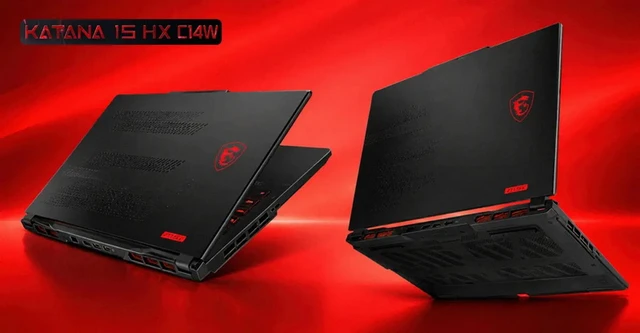 MSI Katana 15 HX and the Memory Paradox