The global mobile device market is undergoing a profound structural transformation. Android's long-standing hegemony is facing mounting pressure from Apple and the rapidly expanding HarmonyOS ecosystem. Economic headwinds and supply chain disruptions are compelling manufacturers to pivot their strategies, shifting focus from the mass market toward the premium segment. Current metrics reflect more than just shifting numbers; they signal a fundamental pivot in consumer preferences and a drive toward technological sovereignty.
Android's hegemony over the global smartphone market remains intact, yet recent trends suggest a gradual erosion of its lead. By the end of the second quarter of 2026, Google's operating system saw its market share slip from 79% to 75%. Conversely, Apple has demonstrated remarkable resilience, with iOS climbing to 20%—a seasonal record. Meanwhile, Huawei's HarmonyOS has emerged as a significant third player, firmly establishing a 5% foothold in the global market.
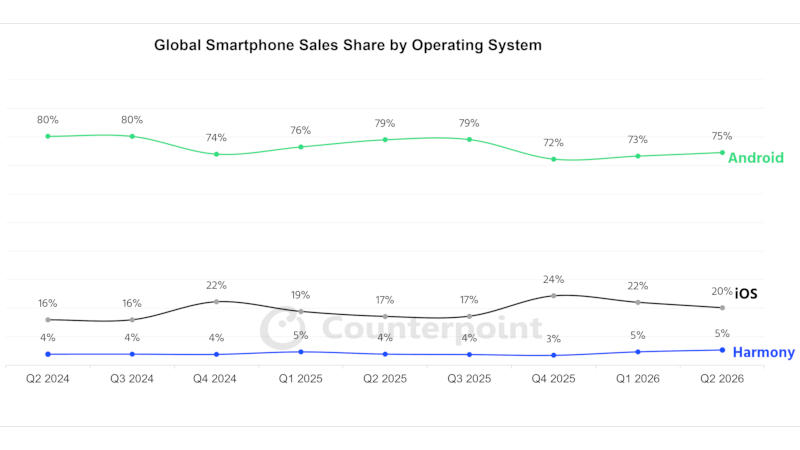
Android's receding footprint cannot be analyzed in a vacuum; it is a reflection of broader industry headwinds. The overall smartphone market has faced a notable downturn, with Q2 sales plummeting 11% year-over-year. The hardest hit were the entry-level and mid-tier segments in emerging markets. This decline was exacerbated by RAM shortages and a general surge in component costs, forcing Chinese OEMs—who traditionally rely on mass-market volume—to scale back their budget offerings and pivot toward higher-margin premium devices. Android's relative stability was bolstered by the success of flagship models; specifically, the Samsung Galaxy S26 series outperformed its predecessors, partially offsetting losses in the budget sector.
Apple's strategy, by contrast, has proven exceptionally effective under current conditions. The climb to a 20% market share was driven by steady demand for the iPhone 17 lineup and the introduction of the more accessible iPhone 17E. As competitors raised prices, Apple's value proposition became increasingly attractive. This growth was further catalyzed by aggressive financial incentives: robust trade-in programs and flexible financing options encouraged users to upgrade their devices more frequently than in previous cycles.
Simultaneously, we are witnessing the meteoric rise of HarmonyOS. Despite a modest 5% global share, the system has made an impressive leap within China, expanding its presence from 17% to 24%. Huawei's success is largely rooted in strategic autonomy; by integrating deeply with domestic supply chains, the company has insulated itself from the volatility of the global component market. The Huawei Enjoy 90 Pro Max played a pivotal role in this growth, resonating strongly with consumers alongside sustained demand for the brand's legacy devices.
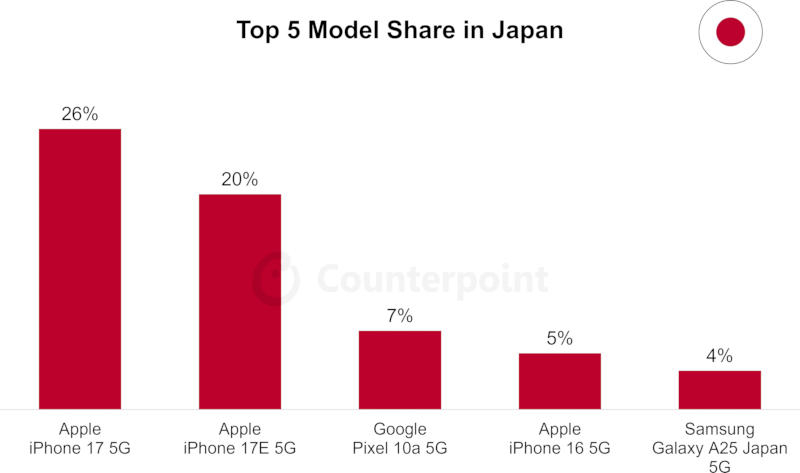
A regional breakdown of market dynamics reveals compelling disparities. Apple maintains leadership across most major economies, including the US, China, Germany, the UK, France, and Japan. However, the landscape shifts elsewhere: in India, OPPO dominates with the A6X, while South Korea remains a Samsung stronghold, where the Galaxy S26 Ultra and Galaxy S26 combined control nearly half the market.
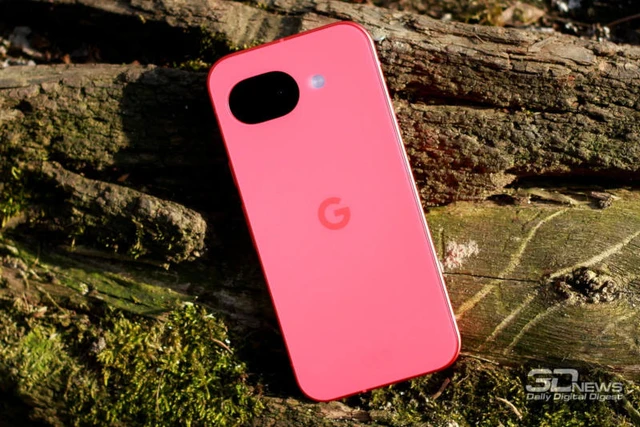
The Japanese market warrants particular scrutiny—it is the only region where Google successfully broke into the top five, with the Pixel 10a securing third place with a 7% share. Nevertheless, even here, the disparity with the leader remains stark: the combined share of the iPhone 17 and iPhone 17E in Japan reaches 46%, underscoring the exceptional loyalty of Japanese consumers to the Apple ecosystem.
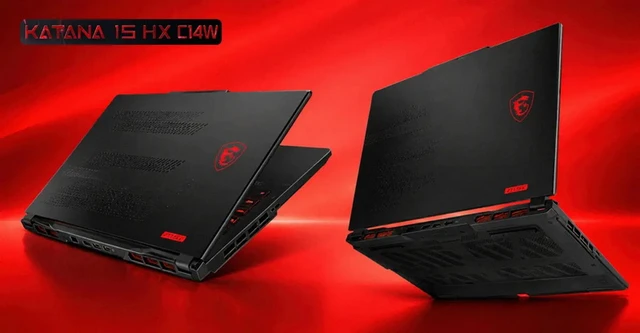 MSI Katana 15 HX and the Memory Paradox