21 Jul 2026
 Anthropic’s Billion-Dollar Compromise with Rightsholders
The clash between generative AI developers and content creators has reached its first major financial flashpoint. This collision—pitting the paradigm of "open training" against traditional copyright law—has culminated in one of the most significant legal settlements in U.S. history. The resolution of the Anthropic case establishes a precedent that is either perilous or essential, depending on one's perspective, for the entire Large Language Model (LLM) ecosystem. Intellectual capital is no longer an abstract concept; it has become a quantifiable figure that will dictate the rules of engagement within the global data marketplace.
21 Jul 2026
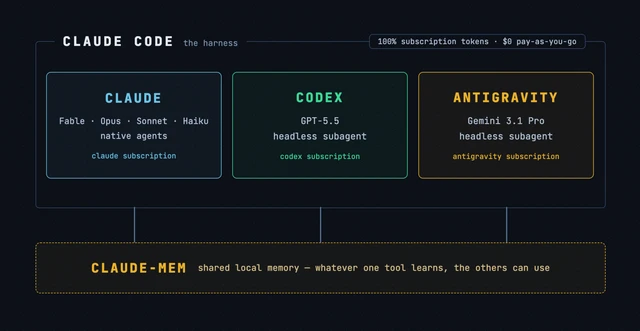 Efficient Resource Management in Multi-Agent Systems
The current evolution of Large Language Models (LLMs) is defined by a fundamental paradigm shift: the transition from simple conversational chatbots to autonomous agentic systems capable of sophisticated, deep-dive research. Yet, this progression has exposed a critical bottleneck—a staggering inefficiency in compute and token utilization as task complexity scales. Redundant operations and fragmented context frequently result in token quotas, even for premium tiers, being depleted before the system can synthesize a final deliverable. The solution lies in pivoting away from monolithic prompting toward rigorously orchestrated pipelines that decouple cognitive functions.
21 Jul 2026
 The Paradox of Supermassive Black Hole Growth
For years, one of the most enduring enigmas of the early universe has been the existence of gargantuan objects that seemingly defied the constraints of cosmic time—structures far too massive to have grown to such scales within the available window. Supermassive black holes, with masses billions of times that of our Sun, appeared in the cosmos far earlier than traditional evolutionary models predicted. The primary obstacle to their growth was long thought to be a "self-starvation" paradox, where intense energy emissions would repel the very matter needed for accretion. However, recent data from the James Webb Space Telescope are prompting a fundamental reassessment of this process, revealing a hidden mechanism of cosmic recirculation.
21 Jul 2026
 The Illusion of Control in Tesla’s Autopilot
Promises of full autonomy in transportation frequently collide with the stark realities of traffic regulations and algorithmic volatility. When acceleration is delegated to software, the margin between operational efficiency and a legal violation becomes perilously slim. A recent incident in Quebec vividly illustrates the systemic friction between oversimplified driving profiles and actual safety requirements. This case raises a fundamental question: to what extent is it acceptable to strip drivers of granular system control for the sake of streamlined marketing narratives?
21 Jul 2026
 Analog Minimalism Through the Lens of the Kodak EC35
In an era of digital perfection and instantaneous retouching, we are witnessing a paradoxical resurgence of analog aesthetics. A yearning for authenticity and tactile engagement is driving modern users to abandon complexity in favor of intuitive simplicity. This shift is the cornerstone of the new Kodak EC35—a camera designed to serve as an accessible gateway into the world of film photography. Through its uncompromising minimalism, the device removes technical friction, transforming the act of capturing a moment into a process of pure creative expression.
21 Jul 2026
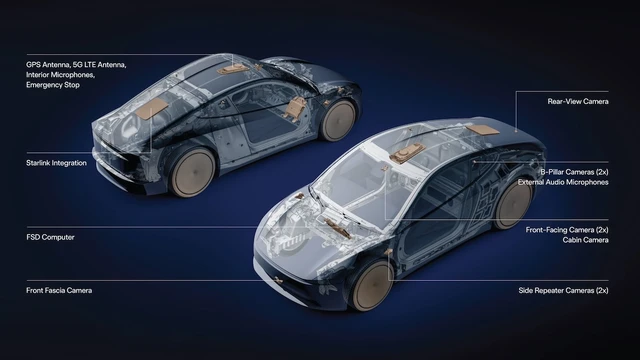 Space-Based Connectivity for Tesla’s Autonomous Vehicles
The era of autonomous transportation is ascending to a new tier of network independence. The integration of Starlink terminals into the Cybercab robotaxi marks a strategic pivot toward total connectivity redundancy; while on-board intelligence manages real-time navigation, the satellite link ensures seamless fleet orchestration regardless of geographic constraints. This move underscores the profound synergy between Elon Musk’s aerospace and automotive ambitions within his overarching technological ecosystem.
21 Jul 2026
 The System Requirements Crisis of Modern Windows
Modern operating systems have evolved into intricate ecosystems, demanding immense resources to maintain stability. For years, Microsoft has clung to a nominal baseline of 4GB of RAM for Windows 11, creating a perilous disconnect between official documentation and real-world performance. However, recent benchmarks conducted on the company's own hardware have laid bare a critical discrepancy between stated specifications and actual memory consumption. This situation calls into question the very notion of "minimum requirements" in an era defined by software bloat and the aggressive integration of AI.
21 Jul 2026
 The Software Challenge to Nvidia’s Ecosystem
The contemporary AI arms race has evolved far beyond a mere contest of transistor counts and memory bandwidth. Today, the primary bottleneck hindering industry growth is software lock-in driven by proprietary standards, which has effectively turned a single vendor's hardware into the sole viable roadmap for progress. Alibaba’s introduction of the SAIL open stack signals a new chapter in the quest for technological sovereignty and interoperability. This initiative seeks to dismantle the hegemony of CUDA, which has dominated the market for decades through the tight coupling of software and silicon.
21 Jul 2026
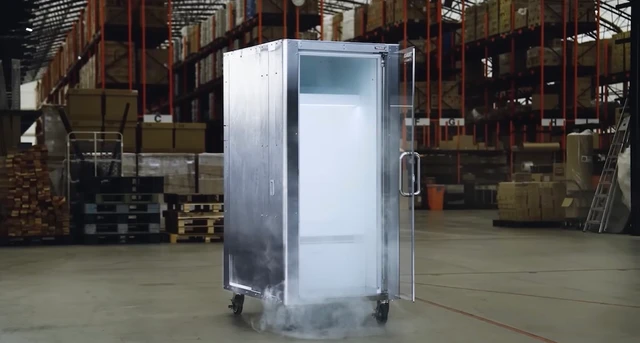 The Technological Response to Extreme Heat
Global warming has evolved from a distant projection into an immediate threat to human health and productivity. Extreme temperature spikes are compelling industries to overhaul occupational safety standards and refine strategies for combating heat stress. In Japan, where temperatures increasingly breach the critical 40-degree threshold, conventional air conditioning systems have proven too rigid for field environments. The introduction of specialized rapid-cooling capsules signals a paradigm shift toward targeted, high-intensity restoration of physiological thermoregulation.
21 Jul 2026
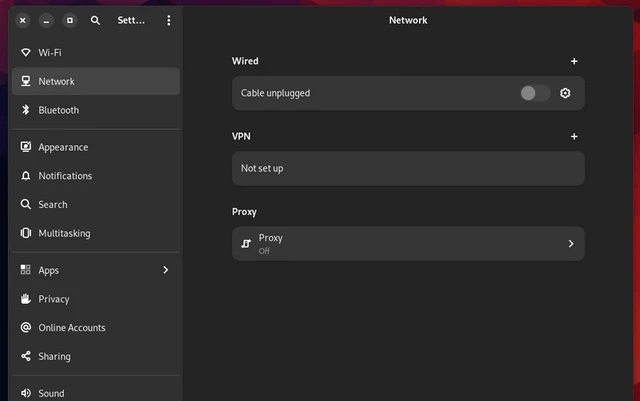 New Network Management Standards in NetworkManager 1.58
Modern operating systems demand impeccable network interface management as connectivity infrastructures grow increasingly complex. The launch of NetworkManager 1.58 marks a pivotal milestone in the evolution of Linux administration tools, blending support for the latest hardware standards with deep system-level optimizations. This update focuses on expanding wireless networking capabilities and implementing advanced tunneling protocols, underscoring the developers' commitment to creating a flexible, transparent, and highly automated traffic management ecosystem.
21 Jul 2026
 The US Campaign Against Chinese Drone Masking
The global unmanned systems market has evolved into a flashpoint of intense geopolitical friction. DJI’s long-standing industry dominance is now colliding with a systematic campaign to purge Chinese technology from the American landscape. The U.S. Federal Communications Commission (FCC) is shifting its strategy beyond outright bans, moving toward dismantling "white-labeling" schemes and stealth hardware rebranding. This pivot signals the dawn of an era of aggressive technological protectionism, where a product's provenance has become more critical than its technical specifications.
21 Jul 2026
 The Global Scale of the New Qwen3.8 System
The AI arms race is ascending to a new echelon of scale and accessibility. By unveiling Qwen3.8—a behemoth of a model with parameters numbering in the trillions—Alibaba is taking direct aim at the industry's walled gardens. The commitment to open-source weights for a system of this magnitude could fundamentally reshape the global trajectory of neural network development. This is far more than a mere technical release; it is a strategic gambit to democratize high-performance computing.
