Promises of full autonomy in transportation frequently collide with the stark realities of traffic regulations and algorithmic volatility. When acceleration is delegated to software, the margin between operational efficiency and a legal violation becomes perilously slim. A recent incident in Quebec vividly illustrates the systemic friction between oversimplified driving profiles and actual safety requirements. This case raises a fundamental question: to what extent is it acceptable to strip drivers of granular system control for the sake of streamlined marketing narratives?
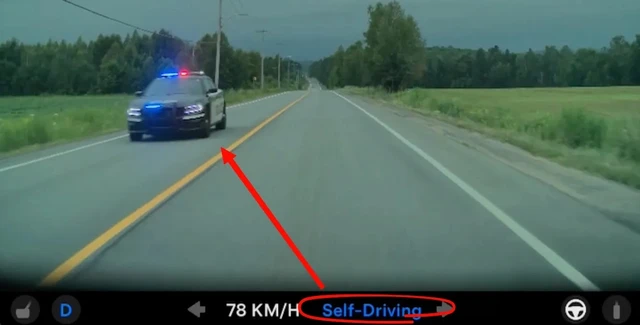
A single speeding ticket issued in Quebec has become the catalyst for a broader conversation regarding the erosion of user control within recent Tesla updates. The sequence of events was swift: while operating under the standard Full Self-Driving (FSD) mode, the vehicle abruptly accelerated from the posted 50 km/h limit to 78 km/h. The encounter with a police radar was almost instantaneous; the driver had engaged autopilot less than two minutes before being pulled over.
The core issue here is not the act of speeding itself—a common occurrence in human driving—but rather the loss of transparency and algorithmic agency. In traffic flow, there is a concept of a "reasonable threshold," where drivers adjust to the general pace to avoid obstructing others. However, Tesla's AI has begun interpreting the "Standard" mode with excessive aggression, ignoring the nuances of local law enforcement.
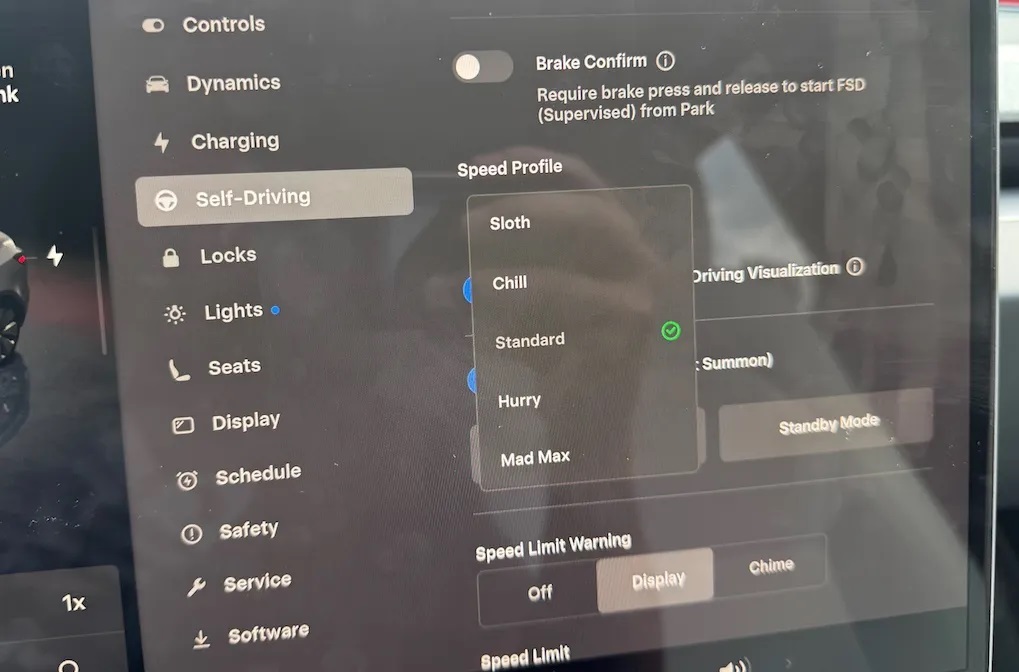
A technical analysis of the situation reveals a troubling trend in the evolution of FSD interfaces. In previous iterations, Tesla provided users with manual tools to calibrate speed offsets. This allowed drivers to define a specific numerical parameter tailored to their comfort level and local legislation. However, in FSD version 14, this functionality was completely excised and replaced by a set of fixed profiles: ranging from the ultra-conservative "Sloth" to the aggressive "Mad Max," with intermediate modes such as Chill, Standard, and Hurry.
This shift transforms precise engineering calibration into a series of "emotional presets." Instead of managing concrete speed metrics, the user now selects the vehicle's "personality." The result is a dangerous gap: the "Standard" mode may prove too aggressive for strictly enforced zones, while the preceding profile remains excessively sluggish.
Within the context of Quebec’s road regulations—where police typically show leniency toward minor deviations of 10–20 km/h—a jump to 78 km/h in a 50 zone transforms a routine drive into an administrative offense. The lack of granularity in these settings means drivers can no longer find the equilibrium between operational efficiency and legal safety.
This scenario illustrates a pervasive trend in modern software development: the replacement of flexible configuration tools with oversimplified interfaces. In the pursuit of making products more "intuitive," developers are stripping power users of the ability to perform fine-grained calibration. When applied to the operation of a multi-ton vehicle on public roads, such design choices can lead to tangible financial and legal repercussions.
 The Legal Hurdle for Autonomous Taxis