The clash between generative AI developers and content creators has reached its first major financial flashpoint. This collision—pitting the paradigm of "open training" against traditional copyright law—has culminated in one of the most significant legal settlements in U.S. history. The resolution of the Anthropic case establishes a precedent that is either perilous or essential, depending on one's perspective, for the entire Large Language Model (LLM) ecosystem. Intellectual capital is no longer an abstract concept; it has become a quantifiable figure that will dictate the rules of engagement within the global data marketplace.
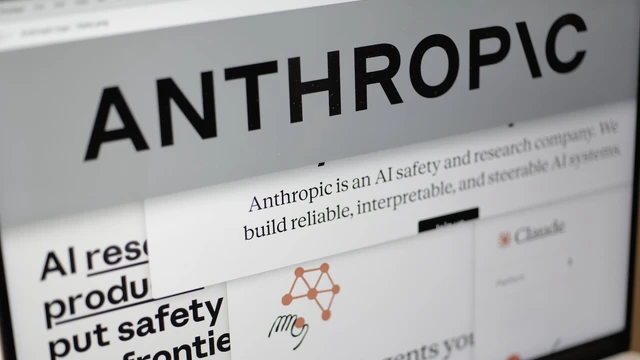
For years, the artificial intelligence industry has leaned heavily on the doctrine of "Fair Use," arguing that training neural networks is not an act of copying, but rather a process of extracting statistical patterns. However, the legal battle involving Anthropic and its Claude model has demonstrated that the line between technological progress and blatant piracy can be perilously thin. The U.S. District Court for the Northern District of California has approved a $1.5 billion settlement in favor of book publishers and authors, effectively establishing a market value for "training rights."
The conflict centered on data acquisition methods. At the heart of the controversy were reports that Anthropic had systematically purchased, scanned, and subsequently destroyed millions of physical books to train Claude. While the defense attempted to argue that the AI training process itself complied with copyright law, the court identified a critical vulnerability in Anthropic's position. The issue was not so much the training process as it was the creation of a "central library" housing over 7 million pirated copies of works. The existence of such an archive—which was not directly linked to the active training process—shifted the case from the realm of technological innovation into the territory of direct legal infringement.
The financial terms of the settlement have sparked mixed reactions. The $1.5 billion payout translates to approximately $3,000 per work used. For many authors, this figure seems negligible compared to the potential damages—which could have reached hundreds of billions of dollars had the case proceeded to a full trial. Furthermore, a significant portion of the funds was allocated to legal fees; the court awarded attorneys over $101 million, triggering protests from some of the plaintiffs.
Nevertheless, the court rejected the objections to the deal, noting that the grievances regarding the payout size were not based on a realistic assessment of risk. In U.S. legal practice, a settlement is often a more pragmatic path than years of litigation with an uncertain outcome. For Anthropic, this move was a strategic necessity to avoid catastrophic losses and scrub its reputation before further scaling the product.
This case is merely the first stone in the foundation of a new legal reality. Parallel proceedings are unfolding against other tech giants; for instance, a group of major publishers, including Hachette Book Group and Elsevier, has already filed suit against Google for the unauthorized use of millions of works to train the Gemini model.
The market is pivoting toward an era of legalized datasets. While LLM developers previously relied on "wild" data harvesting from the open web and shadow libraries, the industry is now transitioning toward a licensing model. The Anthropic precedent confirms that data is no longer free fuel for AI; it has become a high-value asset that must be paid for—either through direct contracts or multi-billion dollar legal settlements.
 The Legal Hurdle for Autonomous Taxis