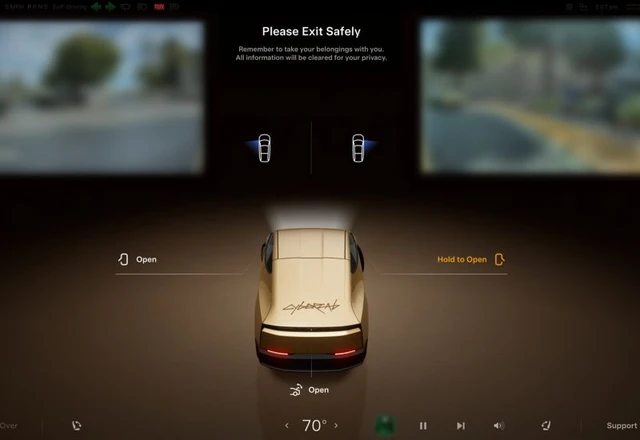
The era of autonomous transportation is ascending to a new tier of network independence. The integration of Starlink terminals into the Cybercab robotaxi marks a strategic pivot toward total connectivity redundancy; while on-board intelligence manages real-time navigation, the satellite link ensures seamless fleet orchestration regardless of geographic constraints. This move underscores the profound synergy between Elon Musk’s aerospace and automotive ambitions within his overarching technological ecosystem.
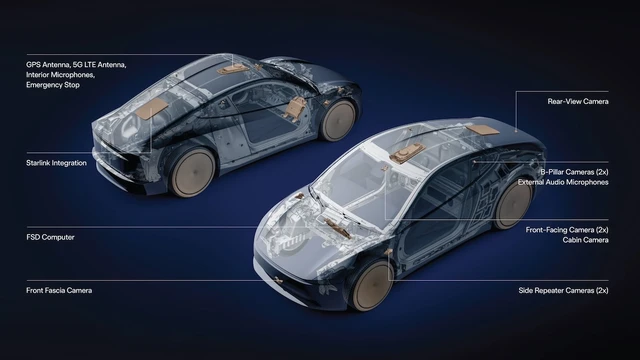
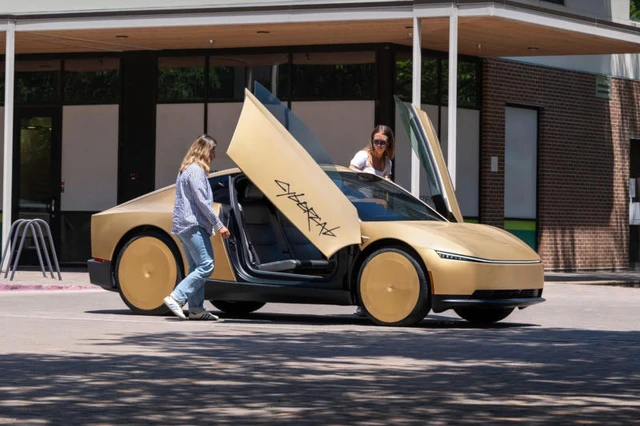
The addition of a satellite antenna to the Cybercab's roof was as surprising as it was logical—a calculated evolution in Tesla's autonomous systems. Technical analysis reveals the integration of a Starlink V5 terminal, an updated solution boasting impressive efficiency metrics. The fifth-generation hardware delivers data speeds exceeding 375 Mbps while significantly slashing power consumption to just 35–50W, nearly halving the requirements of its V4 predecessor. Furthermore, the antenna is one-third more compact and 62% lighter—optimizations critical for maintaining the electric vehicle's aerodynamics and overall energy efficiency.
However, this integration presents a compelling technical paradox. According to industry reports, V5 terminals were originally engineered for stationary indoor use rather than mobile deployment. Attempting to adapt them for dynamic movement within the chaos of urban traffic could pose a significant challenge to both signal stability and hardware durability.
To understand the true objective behind this integration, one must distinguish between vehicle control and network interaction. At the heart of the Cybercab lies the AI4 hardware platform—a powerful onboard computer that manages the entire cognitive load: environmental perception, route planning, and direct motion control. This process is entirely autonomous and requires no external connectivity. In doing so, Tesla adheres to a philosophy of "local intelligence," ensuring passenger safety remains independent of cellular signal availability.
In this context, satellite internet serves as a high-level orchestration layer. It is essential for real-time routing, fleet dispatching, and remote vehicle support during unforeseen contingencies. Additionally, Starlink facilitates seamless over-the-air (OTA) software updates and provides passengers with high-speed content, transforming the commute into a fully realized digital experience.
Currently, the Cybercab is operating within limited geofenced zones in major American cities—Austin, Houston, Dallas, and Miami. In these locations, cellular connectivity is stable, rendering the satellite link redundant. However, the strategic vision extends far beyond the metropolis. As robotaxis venture into rural or remote areas where 4G/5G coverage becomes fragmented, Starlink evolves from an "optional extra" into a critical tool for fleet survival.
Beyond the technical implementation lies a pragmatic economic calculation. We are witnessing a tight integration of business structures within Musk's empire. Tesla's investments in xAI—which was subsequently absorbed by SpaceX (evolving into SpaceXAI)—create a closed-loop resource exchange. Every Starlink terminal installed on a Cybercab effectively turns the vehicle into a paying subscriber of SpaceX services, funneling capital from the transport division into the aerospace sector.
Yet, the industry still faces formidable hurdles. The experience of other firms—such as Japan's Fire Hydrant Sign, which has experimented with Starlink in urban infrastructure—highlights the difficulty of deploying this technology in dense built-up environments. Moreover, users are already reporting network congestion in high-demand regions and a sharp increase in tariffs for corporate clients.
Ultimately, the satellite terminal on the Cybercab acts as a "fail-safe." In a future where thousands of autonomous vehicles must be coordinated in a single synchronized flow, any large-scale cellular outage could paralyze an entire city's transport system. A redundant communication channel from space is designed to eliminate this risk, ensuring operational continuity even in the event of a digital collapse.
 The Legal Hurdle for Autonomous Taxis