18 Aug 2026
 Digital Cannibalism: The Erosion of Rare Print Publications
The scramble for high-fidelity training data for Large Language Models (LLMs) has reached a critical juncture. While digital scraping has become the industry standard, an insatiable appetite for unique knowledge is driving tech giants toward physical archives. A recent investigation has uncovered a disturbing trend: rare printed editions are being sacrificed on the altar of neural network weights. This process effectively converts cultural heritage into proprietary data, leaving nothing behind but shredded remnants of paper.
18 Aug 2026
 Visual Intelligence in the New AirPods
The boundary between audiovisual perception and the digital interface is becoming increasingly blurred. Apple is striving to engineer wearables capable of not just auditory input, but visual awareness of their surroundings. Recent discoveries within the macOS Tahoe 26.7 codebase point toward the imminent arrival of AirPods featuring integrated cameras—a move that transforms a ubiquitous accessory into a sophisticated instrument for real-time environmental analysis.
18 Aug 2026
 Diversifying Google Pixel Manufacturing
Global electronics supply chains are undergoing a fundamental transformation. Escalating geopolitical tensions between the U.S. and China are compelling tech giants to diversify their manufacturing footprints to mitigate risk and bypass trade restrictions. Google is accelerating the migration of its Pixel ecosystem away from Chinese manufacturing hubs, aiming to decouple its operations from a single geographic region. This strategic pivot is a direct response to the mounting pressure of import tariffs and a broader drive toward hardware autonomy.
18 Aug 2026
 The Evolution of Accessible Audio by CMF
The TWS market has long been a crowded battlefield where raw technical prowess is frequently eclipsed by aggressive marketing strategies. CMF, the sub-brand spawned by Nothing, continues to navigate the delicate equilibrium between avant-garde design and accessibility, carving out a distinct and recognizable identity. Recent teasers from the company hint at the imminent arrival of a new generation of audio gear—a move that underscores the brand's ambition to broaden its accessory ecosystem, pivoting its strategic focus from mobile hardware toward the wearables market.
18 Aug 2026
 Tesla’s Autonomous Expansion in Urban Environments
The transition to fully autonomous transportation has evolved from a technological utopia into a pressing operational challenge for the world's industrial titans. Tesla is taking a decisive leap forward with the introduction of the Cybercab—a vehicle entirely devoid of traditional controls. This Texas-based pilot is designed to validate the viability of the robotaxi concept amidst the unpredictability of real-world urban traffic. This is not merely the launch of a new product, but a fundamental shift in the paradigm of urban mobility.
18 Aug 2026
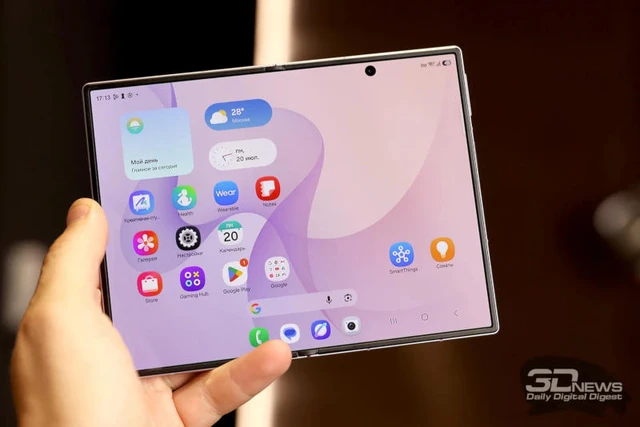 Samsung Reimagines the Form Factor of Foldable Smartphones
The era of foldable devices is decisively transitioning from a phase of technological experimentation into a mainstream consumer staple. While the success of the Galaxy Z Fold series has underscored a robust demand for large-format displays, current ergonomic standards still leave significant room for optimization. Samsung is now preparing a radical overhaul of its device proportions, aiming to dismantle the primary barrier separating professional productivity from seamless content consumption. This strategic pivot will serve as the cornerstone for a new generation of hardware slated for release by 2027.
18 Aug 2026
 Samsung’s Strategic Expansion into China
The global semiconductor landscape is undergoing a fundamental transformation, catalyzed by the meteoric rise of generative AI. At the epicenter of this shift is Samsung Electronics, whose financial trajectory is now inextricably linked to its ability to navigate the friction between the world's dominant geopolitical blocs. Recent corporate filings reveal a surprising pivot: the Chinese market has overtaken the U.S. as the primary driver of profitability. This trend underscores the profound interdependence of tech titans and the intricate complexities of the modern global division of labor.
18 Aug 2026
 China Continues Its Expansion into Space
Space exploration is inherently fraught with high stakes and the inevitability of technical failure. While the recent malfunction of the Long March 7A rocket served as a rigorous stress test, it failed to derail China's ambitious orbital timeline. The rapid restoration of launch operations underscores the exceptional resilience and scalability of the nation's aerospace infrastructure. Amidst the global scramble for lunar resources, such operational agility is becoming a decisive competitive advantage.
18 Aug 2026
 The Resilience of Chinese Robotics Against US Sanctions
The geopolitical rivalry between the U.S. and China is entering a phase of technological protectionism, with the robotics sector now squarely in the crosshairs. U.S. lawmakers are weighing a comprehensive ban on the import of Chinese robotics—a move that threatens to destabilize global supply chains. Yet, a granular analysis of market metrics suggests that such a maneuver may be less detrimental to Beijing than initially presumed. The global distribution of demand, coupled with the unique dynamics of the consumer segment, provides a significant buffer against external pressures.
18 Aug 2026
 The Technological Leap of Google Pixel Modems
The quest for seamless connectivity and optimal power efficiency remains one of the most formidable challenges in the modern smartphone industry. For years, the Google Pixel lineup has been plagued by systemic network issues that have consistently throttled the devices' full potential. The transition to the new Tensor G6 chipset marks a fundamental pivot in the company's hardware strategy; replacing the Samsung modem with a MediaTek solution is designed to eliminate long-standing bottlenecks and elevate the user experience to a new echelon of battery autonomy.
18 Aug 2026
 The Engineering Purism of Noctua Cooling Systems
The contemporary PC hardware market has long since devolved into a competition of visual spectacle, where RGB lighting and integrated OLED displays frequently take precedence over raw technical specifications. In this pursuit of aesthetic flair, it is easy to lose sight of the fundamental purpose of cooling systems: efficient thermal dissipation and acoustic refinement. Noctua has maintained a steadfast position, deliberately distancing itself from the industry's prevailing trends. Their strategy is rooted in a commitment to pure performance over superficial ornamentation.
18 Aug 2026
 Dark Power Pro 14 IO: The Intelligent Standard
Modern high-performance systems demand more than just raw wattage; they require precision power delivery. As next-generation GPUs and professional rendering workstations evolve, power quality has emerged as a critical determinant of system stability. Be quiet! addresses this challenge with the launch of the Dark Power Pro 14 IO series—units that fuse uncompromising 80 PLUS Titanium efficiency with sophisticated digital control.
