The aerospace industry is on the cusp of a fundamental paradigm shift in orbital payload delivery. Following a series of suborbital test flights, SpaceX is gearing up for the full orbital debut of its super-heavy launch system, Starship. This mission will serve as a critical litmus test, evaluating not only the vehicle's structural and engineering resilience but also the viability of a novel approach to deploying satellite constellations. A successful mission will pave the way toward full reusability and the deep-space exploration of our solar system.
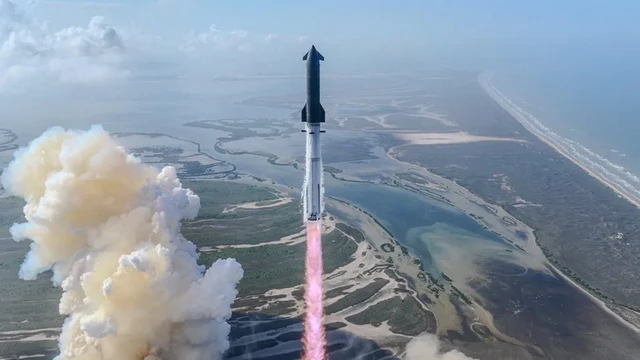
September 22nd marks a potential inflection point in the history of modern rocketry. SpaceX is preparing for its fourteenth Starship launch, and while previous attempts have already demonstrated the system's colossal power, they remained confined to suborbital hops. Now, the 124-meter giant is slated for a full orbital insertion, transforming the mission from a series of technical trials into a fully operational flight. The launch is scheduled from Starbase in South Texas, where, within a 75-minute window, SpaceX will attempt to break the gravitational barrier and establish a stable presence in space.
The transition to orbital flight is far more than a mere formality; it represents a quantum leap in development. While previous missions lasted approximately one hour and concluded with a splashdown in the Indian Ocean, the upcoming flight involves six complete orbits around Earth at an altitude of roughly 275 kilometers. Total time in space will extend to ten hours, after which the spacecraft will execute a controlled maneuver for a splashdown in the Pacific Ocean, west of Chile. This trajectory subjects the vehicle to significantly more severe thermal and mechanical stresses than suborbital trajectories.
Central to this mission is the deployment of the first batch of Starlink V3 satellites. These units significantly outperform their predecessors in both power and throughput—capabilities that are critical for realizing the ambitious goal of a 100,000-unit constellation. The 14th flight aims to deliver up to 26 of these satellites, effectively positioning Starship as the primary logistics hub for the expansion of the global communications network.
Of particular interest is a technical experiment involving three specialized Starlink satellites equipped with cameras. Their objective is to capture the state of the upper stage's (the Ship) heat shield during its reentry into the dense layers of the atmosphere. The resulting data will allow engineers to conduct a granular analysis of ceramic tile wear and heat dissipation efficiency—a critical juncture in ensuring the system's full and rapid reusability.
As for the first stage—the Super Heavy booster—the flight profile remains conservative and proven. The massive booster is expected to perform a standard maneuver and splash down in the Gulf of Mexico seven minutes after liftoff. Although SpaceX has already successfully tested the capture of the booster using the launch tower's mechanical arms, such a high-risk operation is not planned for this iteration. The priority remains a stable orbital insertion and the verification of the payload.
In the long term, this flight lays the groundwork for far more complex operations. SpaceX eventually intends to implement a tower-catch standard for the Ship itself, eliminating the need for splashdowns and allowing the vehicle to be returned to service within hours. However, the ultimate objective remains the mastery of orbital refueling—the technological "holy grail" without which missions to the Moon and Mars are impossible. Thus, the 14th launch is not merely another test, but a transition from the prototyping phase to the era of full-scale deep space exploration.
 China’s Commercial Space Sector Accelerates SpaceSail’s Expansion