The global race for dominance in Low Earth Orbit (LEO) connectivity has entered a phase of open confrontation. As SpaceX solidifies its lead, China is deploying a comprehensive counter-strategy through the development of its own SpaceSail constellation. The primary catalyst accelerating this shift is the convergence of private capital and cutting-edge technology with state-driven ambitions. The recent launch of LandSpace's methane-powered rocket signals a pivotal transition from experimental demonstrations to the industrial-scale deployment of space infrastructure.
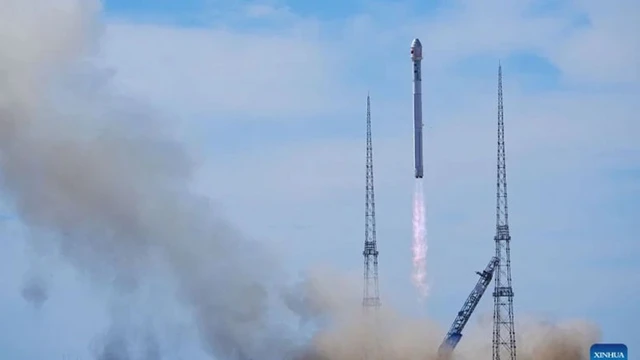
September's developments served as a pivotal indicator of a paradigm shift within China's space program. The launch of the Zhuque-2E Y7 from the Jiuquan Satellite Launch Center was more than just another successful orbital insertion; it represented a strategic pivot. For the first time, the batch delivery of satellites for the SpaceSail internet constellation was entrusted to a private operator, LandSpace, rather than state-run agencies. The ten new spacecraft deployed are integral to a massive national broadband initiative designed to serve as a comprehensive counterweight to the expansion of Starlink.
The technological stack of the Zhuque-2E Block 2 demonstrates significant engineering maturity. Standing approximately 56 meters tall with a liftoff mass of 267 tonnes, the vehicle prioritizes environmental sustainability and efficiency by utilizing a methalox (liquid methane and liquid oxygen) propellant pairing. Four TQ-12A engines on the first stage provide a combined thrust of 3,312 kN, while the second stage is powered by a TQ-15A engine featuring a steerable nozzle. These specifications enable the vehicle to deliver up to 6 tonnes of payload to Low Earth Orbit (LEO) and 4 tonnes to a Sun-Synchronous Orbit (SSO) at an altitude of 500 km.
The upgrades introduced in the Block 2 version merit particular attention. Engineers have implemented a sub-cooled propellant loading system, which increases the density of both the methane and oxygen. This is a critical optimization: it allows for a greater volume of fuel without increasing the physical dimensions of the tanks. Furthermore, the adoption of a common bulkhead between the tanks has significantly reduced the structure's dry mass, enhancing overall system efficiency.
From the perspective of space sustainability, the update to the second stage is perhaps the most significant. It is now capable of up to three engine restarts. Beyond the primary orbital insertion and corrective maneuvers, a final impulse is used to de-orbit the stage after satellite separation. In an era of increasing orbital congestion, China is employing these measures to minimize the accumulation of large-scale space debris and prevent the onset of the Kessler Syndrome.
The SpaceSail constellation (also known as Qianfan) is currently in a phase of aggressive deployment. This latest launch marks the 15th batch of satellites, bringing the network's total to 248 units. Although some units have failed, the overall growth trajectory remains impressive. The Zhuque-2 has already secured its place in history as the world's first methalox rocket to successfully reach orbit, and the Block 2 modification is designed to transform this milestone into a reliable, high-cadence delivery pipeline.
For a long time, the primary tool for deploying the network was the Long March family of heavy-lift rockets from the state-owned CASC. However, the widening gap with Starlink—which has already surpassed 11,000 active satellites—demands a radical acceleration. Integrating private firms like LandSpace provides China with the operational agility and speed necessary for rapid deployment. Looking ahead, this process will be augmented by the introduction of reusable launch systems, the final piece of the puzzle in Beijing's quest for parity in the global satellite race.
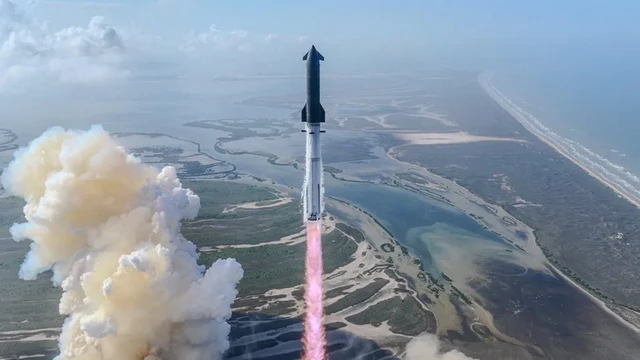 The Orbital Leap of the Starship System