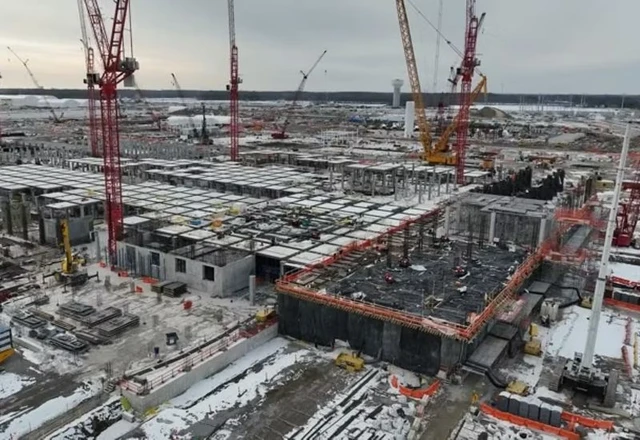
The global microelectronics industry is currently navigating a turbulent era of regionalization, one where geopolitical ambitions are colliding with stark economic realities. Washington's efforts to reshore the production of cutting-edge semiconductors are being hampered by operational complexities and prohibitive resource costs. At the epicenter of this shift is Intel's Ohio facility—once envisioned as a beacon of American industrial resurgence, it is now increasingly becoming a focal point for Asian industry titans. A potential strategic alliance between Intel and SK hynix could prove pivotal in reshaping the memory supply chain for the age of artificial intelligence.
The crises of recent years have forced Intel to pivot away from its strategy of total production control. Long driven by a quest for complete autonomy, the company has begun opening its doors to competitors, granting access to its facilities to players such as UMC and Tower Semiconductor. However, the most consequential shift may be a potential alliance with South Korea's SK hynix, which has shown keen interest in the burgeoning Ohio complex.
Intel's initial roadmap was ambitious: mass production using the 18A process node was slated for 2025. Yet, leadership changes and a reassessment of market prospects led to the freezing of certain capacities deemed redundant. Consequently, the full-scale launch of the site has been pushed back to 2030 or even 2031, creating a strategic void that SK hynix is well-positioned to fill.
For the South Korean giant, Ohio represents a strategic asset in terms of logistics and the production cycle. While SK hynix is currently establishing a chip testing and packaging facility in Indiana, that operation remains dependent on wafers shipped from South Korea. Localizing primary silicon wafer processing within the U.S. would allow the company to build a nearly closed-loop supply chain on American soil.
Two primary scenarios emerge: a direct lease of Intel's capacity or the formation of a joint venture. In the latter case, major cloud providers—desperate for stable memory volumes for their data centers—could enter as equity partners. The crown jewel here is HBM (High Bandwidth Memory), a field where SK hynix maintains global leadership. While Samsung Electronics already operates plants in Texas, it has yet to produce memory chips directly within the U.S., leaving a gap that SK hynix could seize.
However, this technological alliance may face stiff resistance from Seoul. The South Korean government is extremely cautious about exporting sensitive proprietary know-how, and the production of advanced memory types is classified as a "core technology." Any move to relocate such processes abroad requires rigorous coordination with state authorities to prevent the leakage of intellectual property.
Economic pragmatism also casts doubt on the viability of such a move. Establishing production in the U.S. inevitably entails higher overhead: labor and construction costs are significantly steeper than in Asia. Furthermore, the supply chains for raw materials and consumables would remain tethered to Eastern markets, offsetting some of the advantages of localization.
This is a clash of two divergent philosophies. On one side is the political pressure from the U.S. administration, incentivizing the relocation of manufacturing through subsidies and the threat of increased tariffs. On the other are the financial calculations of SK Group, which plans to invest hundreds of billions of dollars into expanding domestic capacity. Without a clear business case, political dividends are unlikely to be the deciding factor for Korean investors.
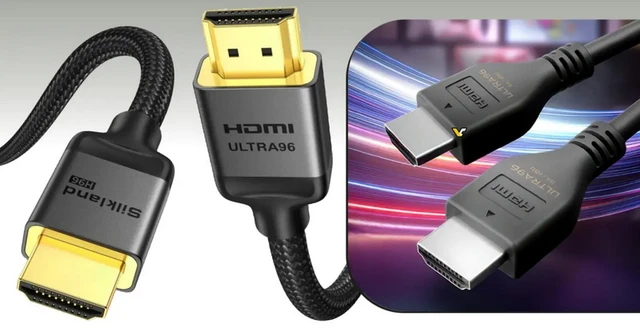 HDMI 2.2: The New Standard for Data Transmission