The global compute market is grappling with a systemic crisis that transcends a mere shortage of components. The meteoric rise of artificial intelligence has exposed critical vulnerabilities within the supply chains and manufacturing capacities of the industry's dominant players. Today, the sector faces a reality where demand for hardware exponentially outweighs supply, creating long-term risks for the evolution of data center infrastructure. At the eye of this storm sits Intel, whose current production capacity is unable to satisfy even half of the market's demand.
The contemporary technology stack has become a victim of its own exponential growth. The current state of the semiconductor market is characterized not merely by a temporary disruption, but by a deep-seated structural deficit. One of the most acute pain points is memory availability; forecasts suggest that supply chains will not stabilize until 2028. This has triggered a precipitous price surge—with costs in certain segments skyrocketing five- to seven-fold—forcing tech companies to freeze or postpone the timelines of large-scale projects.
Parallel to this, there is a critical shortfall in CPU supply. Intel has essentially conceded its inability to satisfy more than 50% of current CPU demand. This phenomenon is driven by the industry's pivot toward AI inference—the execution phase of trained models. In this paradigm, the role of the central processor is being redefined: CPUs have become indispensable for managing GPU workloads, handling general-purpose computing, and orchestrating complex application environments.
However, the crisis extends beyond silicon. The infrastructure collapse is bleeding into peripheral domains: there is a severe shortage of efficient cooling systems and a critical lack of power capacity for new data centers. In an attempt to bypass these barriers, Intel is investing in innovative liquid cooling systems based on micro-circulatory principles, designed to combat the escalating thermal output of modern chips.
Fiscal strain on the market is further intensified by pricing strategies. Over the past year, there has been a systemic upward trend in the cost of PC and server processors. Regular price adjustments, including recent average increases of 10%, reflect the company's attempts to equilibrate supply and demand amidst limited resources. In the server segment, the cost of specific chip models has climbed by thousands of dollars, underscoring the immense premium placed on compute capacity in the era of Big Data.
Particular attention must be paid to chip packaging—a critical stage that has now become one of the primary bottlenecks. While advanced packaging methods unlock massive performance gains, they are hindered by a shortage of consumables, specifically substrates. The market for these components is highly consolidated, with effectively only four companies across Taiwan and Japan controlling the supply. This has forced Intel to employ prepayment mechanisms to secure priority for its orders.
The technological challenge is further compounded by low production yields. For instance, in the manufacturing of EMIB packaging substrates, Japanese suppliers are demonstrating efficiency rates of only 45%. Although this figure is expected to rise to 55% by early next year, such progress remains sluggish against the aggressive demands of the market.
In the long term, the industry is betting on a transition to next-generation process nodes. Mass production under the cutting-edge 14A standard is expected to commence in the first quarter of 2027. Meanwhile, the current 18A process is showing steady progress: die yields are increasing by approximately 7% annually, offering hope for a gradual resolution of the production crisis and the eventual stabilization of the global semiconductor market.

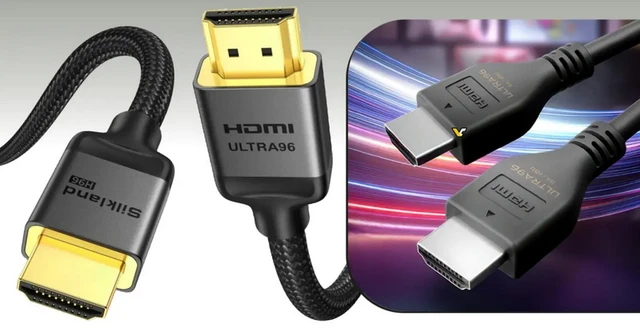 HDMI 2.2: The New Standard for Data Transmission