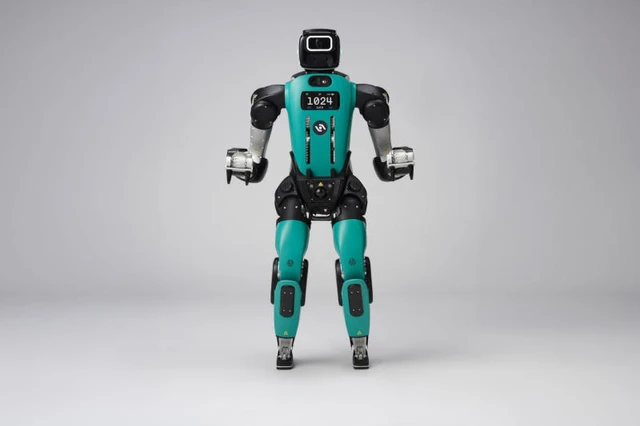
The vision of seamless human-machine interaction is evolving from the realm of science fiction into a tangible industrial standard. For years, the primary barrier to the widespread adoption of humanoid robots has been safety—specifically, the necessity of physically isolating machines from human personnel. Agility Robotics aims to dismantle these barriers with the introduction of Digit 5, a platform engineered for intuitive coexistence within shared environments. This transition signals a fundamental paradigm shift: moving away from rigid zoning toward a model of flexible, secure integration.
In the realm of industrial automation, safety has traditionally been synonymous with isolation. Robots operated behind towering fences or within closed loops to eliminate any risk of human collision. Digit 5, however, proposes a fundamental paradigm shift: safety is no longer an external constraint, but an internal behavioral algorithm. Rather than simply reacting to an obstacle, the robot demonstrates a form of social intelligence; upon detecting a human, Digit 5 can shift aside, pause to yield the right of way, or even crouch if the distance becomes critically small.
This level of interaction demands formidable processing power and a sophisticated sensory array. The architectural foundation of Digit 5 is powered by the Nvidia Thor IGX, while the safety logic is governed by the specialized Nvidia Halos for Robotics software stack. This synergy allows the robot to process onboard sensor data in real time, leveraging AI algorithms to make instantaneous decisions. Crucially, Agility Robotics is not limiting itself to internal testing; the company is actively shaping global benchmarks, collaborating with the International Organization for Standardization (ISO) on the ISO 25785-1 regulation for industrial mobile robots.
The practical deployment of humanoids has moved beyond the theoretical. Previous iterations of Agility's robots have logged over 65,000 hours in real-world environments across North American warehouses and factories. Operational experience with industry giants such as GXO, Amazon, and Toyota Motor Manufacturing Canada has demonstrated that the market is ready for the transition to autonomous bipedal assistants. As the global robotics race between the US and China intensifies, the challenge of safe interaction remains the primary bottleneck—one that Digit 5 is engineered to resolve.
The technical specifications of the new model underscore its orientation toward heavy-duty industrial application. Standing 180.3 cm tall, the robot can reach objects at a height of nearly 2.2 meters and lift loads weighing up to 22.7 kg. Particular emphasis has been placed on energy efficiency: despite a 90-minute autonomous runtime, a full charge takes only 9 minutes. This operational cadence allows Digit 5 to function for over 20 hours a day, effectively eliminating downtime.
The device's functionality is further expanded through modularity. The design allows for the rapid swapping of end-effectors, transforming the robot from a basic logistics unit into a versatile operator. Digit 5 is now capable of performing complex palletizing tasks, synchronizing its actions with employee schedules and navigating shared corridors safely.
Mass production of the new model is being deployed at the facility in Salem, Oregon. The first customer shipments are expected in the first half of 2027, with a wider commercial release planned by the end of that year. This marks a pivotal step toward an environment where robots cease to be hazardous tools kept behind barriers and instead become fully integrated coworkers on the factory floor.
 HDMI 2.2: The New Standard for Data Transmission