23 Jul 2026
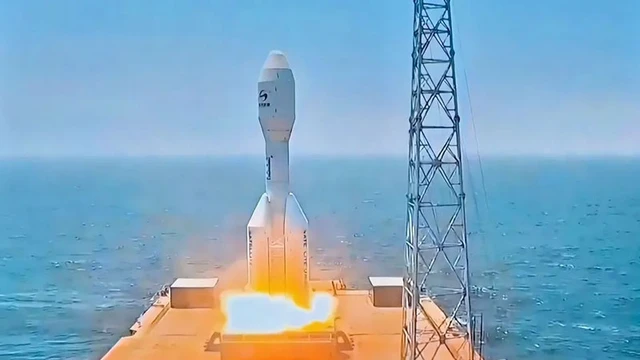 China’s Breakthrough in Solid-Fuel Space Propulsion
The contemporary race for orbital access is pivoting toward maximum operational agility and deployment flexibility. Chinese aerospace firm Orienspace is defying conventional paradigms regarding the capabilities of solid-propellant systems by engineering launch vehicles of unprecedented scale. The successful third mission of the Gravity-1 rocket validates the efficacy of maritime launch strategies combined with high payload capacity—a strategic milestone that paves the way for the next generation of global satellite constellations.
23 Jul 2026
 The Boundaries of Tesla’s Autonomous Expansion
The global race to realize fully autonomous urban transit is entering a period of stark reckoning. While Tesla continues to broaden the geographic reach of its robotaxi service, troubling statistical patterns are emerging beneath the veneer of success. An analysis of recent data reveals a precarious deceleration in growth rates—a trend that may signal systemic failures in scalability. In this climate, quantitative expansion has ceased to be a proxy for qualitative progress.
23 Jul 2026
 Traces of Orbital Decay in Queensland
The threshold between the void of space and the Earth's surface is growing increasingly porous. Recent findings along the Australian coastline lay bare the systemic risks inherent in uncontrolled orbital decay. When the sealed remnants of foreign launch vehicles wash up on these shores, they bring with them pressing questions regarding global space traffic management. This incident serves as a stark reminder that the era of "launch and forget" has reached its definitive end.
23 Jul 2026
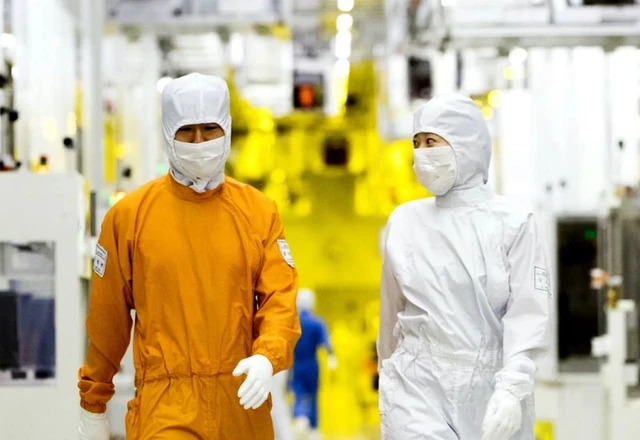 Bonus Fever in South Korea's Tech Sector
Massive payouts at Samsung Electronics have ignited an unforeseen social upheaval within one of Asia’s most disciplined economies. What began as a precedent of staggering bonuses for memory engineers has evolved into a catalyst for widespread unrest, rippling through the nation’s largest conglomerates. The struggle for financial equity is now inextricably linked to an existential dread regarding automation and the rapid integration of artificial intelligence. South Korea is grappling with a systemic crisis of wealth distribution in the age of high technology.
23 Jul 2026
 Alphabet’s Cloud Leap in the Era of AI
The global cloud computing market is undergoing a fundamental transformation, catalyzed by the rise of generative AI. In this high-stakes race for computational capacity, Google Cloud is evolving from a supporting utility into the primary growth engine for the entire Alphabet conglomerate. This shift transcends mere revenue growth; it represents a paradigm shift in how intelligent systems are monetized. Today, cloud infrastructure has become the bedrock upon which the new data economy is being constructed.
23 Jul 2026
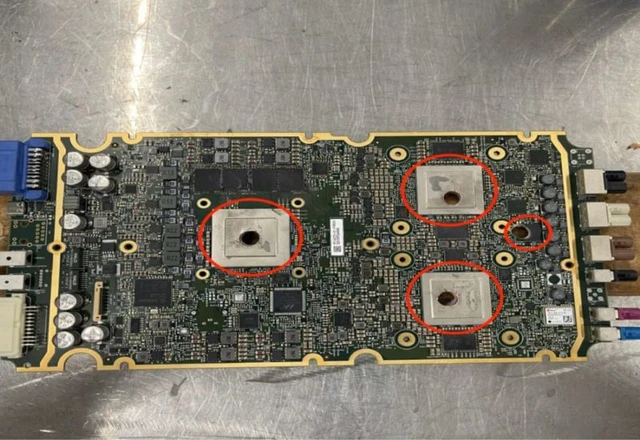 The Boundaries of FSD’s Capabilities
The ambition for total autonomy is colliding with the stark realities of road safety. As Full Self-Driving (FSD) systems scale, the resulting surge in incidents is casting serious doubt on the reliability of existing algorithms. Central to this crisis is a fundamental disconnect between software aspirations and the physical constraints of the underlying hardware. The industry is now witnessing a moment where technological optimism hits the hard ceiling of hardware limitations.
23 Jul 2026
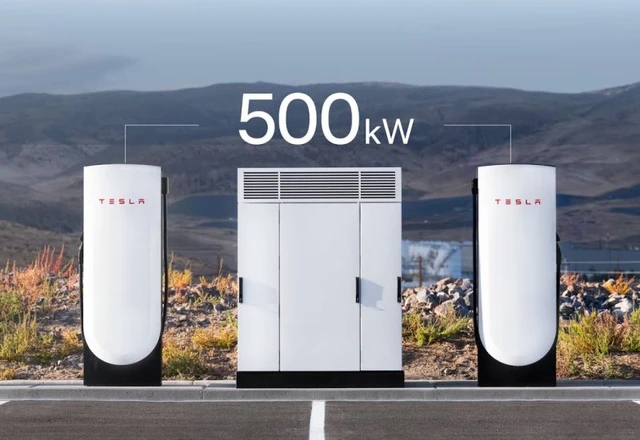 The Convergence of Tesla’s Energy Grids and Neural Networks
Today’s global race for AI supremacy is no longer defined solely by algorithmic sophistication; it has become a battle over access to staggering amounts of energy. Traditional data centers are becoming increasingly unwieldy, hampered by their critical dependence on localized power grids. Elon Musk proposes a radical pivot: a transition toward a distributed, modular computing infrastructure. By leveraging Tesla’s existing charging network, routine power points could be transformed into the nodes of a planetary-scale supercomputer.
23 Jul 2026
 The Reboot of China's Robotaxi Industry
The pursuit of autonomous mobility has emerged as one of the defining technological frontiers of the decade. While China long maintained a dominant position in the field, recent systemic failures compelled regulators to impose a temporary moratorium on the industry's expansion. Today, following comprehensive audits and a rigorous overhaul of safety standards, metropolitan streets are once again opening to robotaxis. This pivot marks a critical transition: moving away from an era of high-risk experimentation toward the establishment of a robust regulatory framework for the future of urban transit.
23 Jul 2026
 Thermal Profile of Jupiter’s Most Volatile Moon
Jupiter’s moon Io has long been established as the most volcanically active object in the Solar System, yet the precise nature of its internal heat has remained a subject of theoretical contention for decades. Recent data transmitted by the Juno probe have provided an unprecedented glimpse beneath the surface of this infernal world, capturing empirical thermal profiles of its crust. The resulting thermal gradient reveals the fundamental mechanisms governing energy transfer from the moon's interior to its surface. These discoveries do more than just reshape our understanding of planetary body dynamics; they provide an unexpected new lens through which to analyze volcanism on Earth itself.
23 Jul 2026
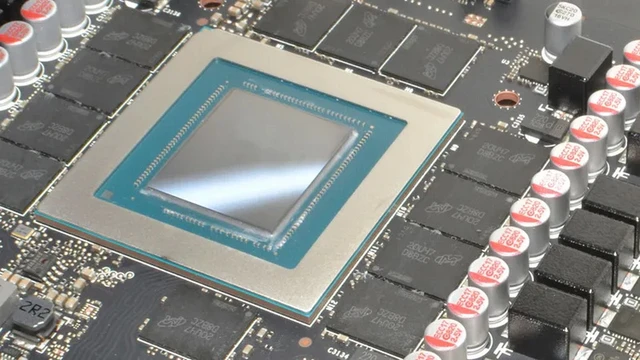 Memory Costs Drive GeForce Pricing
The contemporary graphics accelerator market has reached a critical flashpoint, where escalating component costs are beginning to directly dictate release schedules and product availability. Nvidia, leveraging its dominant position in the GPU sector, is currently restructuring supply terms for its integration partners. At the heart of this shift is a significant price surge for GPU chipsets and GDDR6/GDDR7 memory standards—a trend that is introducing systemic economic pressures across the entire high-performance computing (HPC) landscape.
23 Jul 2026
 The Information Density Limit of a Single Electron
The modern data storage industry is rapidly approaching its physical ceiling, where traditional recording methodologies are becoming prohibitively energy-intensive and cumbersome. In an era defined by the explosive growth of neural networks, the requirement for ultra-dense memory—positioned in immediate proximity to compute cores—has become critical. Researchers at Fudan University have proposed a paradigm shift, moving data storage down to the level of fundamental particles. By utilizing a single electron to represent a bit of data, this innovation opens the door to devices characterized by unprecedented density and extreme energy efficiency.
23 Jul 2026
 Investment Risk in the Era of Neural Networks
The global technology market is grappling with a stark paradox: colossal investments in artificial intelligence are triggering immediate corrections in equity valuations. As corporations race toward Artificial General Intelligence (AGI), investors are beginning to question the tangible return on investment for these staggering expenditures. The acute volatility seen in Alphabet and Tesla shares underscores a widening rift between the long-term ambitions of industry titans and the immediate demands for financial stability. This era marks a pivotal transition—a shift from blind faith in neural networks toward a rigorous demand for concrete products and operational efficiency.
