The pursuit of autonomous mobility has emerged as one of the defining technological frontiers of the decade. While China long maintained a dominant position in the field, recent systemic failures compelled regulators to impose a temporary moratorium on the industry's expansion. Today, following comprehensive audits and a rigorous overhaul of safety standards, metropolitan streets are once again opening to robotaxis. This pivot marks a critical transition: moving away from an era of high-risk experimentation toward the establishment of a robust regulatory framework for the future of urban transit.
The trajectory toward full autonomy is seldom a straight line, and recent months in China have served as a stark illustration of this reality. This spring, the industry hit a severe crisis of confidence when a massive technical failure within Apollo Go—the ride-hailing service operated by tech giant Baidu—paralyzed more than a hundred autonomous vehicles in Wuhan. The cars came to an abrupt halt in the middle of dense urban traffic, leaving passengers trapped inside frozen machines. This incident became a critical inflection point, prompting Chinese regulators to take drastic action: starting in late April, the issuance of robotaxi operating licenses was completely frozen.
Incidents in the autonomous transport sector are typically attributed to so-called "edge cases"—rare, unforeseen scenarios that AI algorithms fail to interpret correctly in real time. However, when a hundred vehicles lose mobility simultaneously, the issue is no longer a localized sensor glitch; it is a systemic failure within the cloud infrastructure or fleet management protocols. This explains why the subsequent audit was so exhaustive: authorities needed absolute certainty that safety mechanisms could prevent such a collapse from recurring.
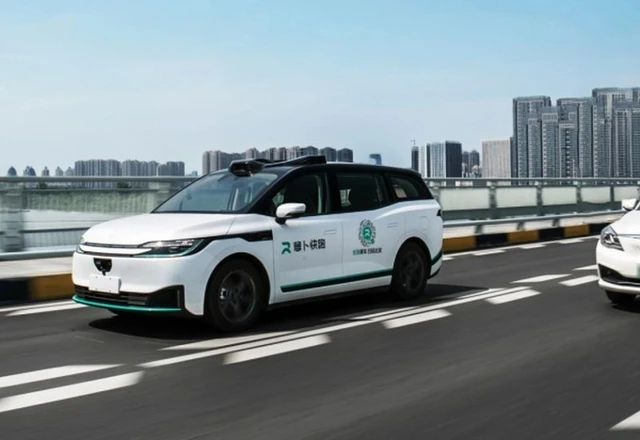
Three months later, the regulatory hiatus has ended. The resumption of licensing in select cities indicates that technical flaws have been isolated and safety protocols updated. Among the first companies to receive authorization was Momenta Global, which is now launching pilot trips in Shenzhen. Notably, the government's approach to regulation has become more flexible; service provision rules have been "democratized," effectively lowering the barrier to entry for new players and expanding the operational footprint across entire metropolises.
In Wuhan, the epicenter of the spring failure, activity is also returning. Since July, Baidu’s robotaxis have reappeared on the city's streets. They are currently operating in a hybrid mode: some vehicles run fully autonomously, while others are overseen by safety drivers ready to intervene should a critical situation arise.
This transition is part of a broader national strategy to establish a unified legal framework for autonomous transport across China. The country possesses a unique advantage for scaling such technologies: rapid infrastructure development paired with the exceptionally low cost of electric vehicles, which serve as the ideal hardware platform for integrating LiDAR, cameras, and high-performance computing modules. Consequently, the temporary ban acted not as an obstacle, but as a necessary filter, allowing the industry to pivot from chaotic growth toward disciplined, regulated evolution.
 The Triumph of 3nm Chip Manufacturing