The contemporary graphics accelerator market has reached a critical flashpoint, where escalating component costs are beginning to directly dictate release schedules and product availability. Nvidia, leveraging its dominant position in the GPU sector, is currently restructuring supply terms for its integration partners. At the heart of this shift is a significant price surge for GPU chipsets and GDDR6/GDDR7 memory standards—a trend that is introducing systemic economic pressures across the entire high-performance computing (HPC) landscape.
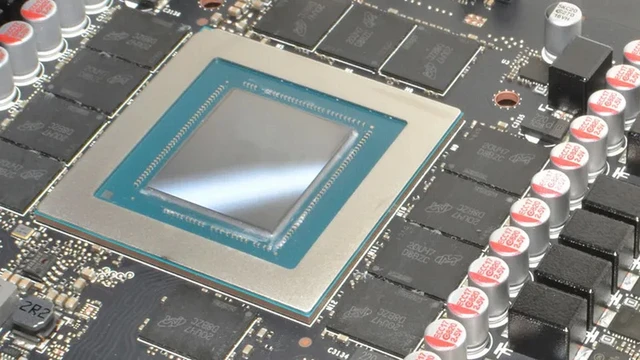
The graphics card industry operates under a distinct supply chain hierarchy: Add-in Card (AIC) partners, such as ASUS, MSI, and Gigabyte, do not actually manufacture the GPU dies themselves. Instead, they procure integrated kits from Nvidia, which in turn delegates the physical fabrication of the silicon to semiconductor giants TSMC and Samsung. Typically, GPUs are bundled with video memory (VRAM) modules; the cost of this "kit" serves as the primary driver for the device's final retail price.
Recent advisories from Nvidia indicate a scheduled price hike for these kits. Notably, this adjustment extends beyond the latest Blackwell-based solutions utilizing GDDR7 memory, impacting older GeForce lineups relying on the GDDR6 standard. This suggests a systemic rise in memory production costs that transcends the implementation of any single technology. Similar shifts were observed as early as May, when pricing was adjusted for flagship RTX 5090 kits and their various iterations.
Particular attention should be paid to the economic friction surrounding memory density. The industry is witnessing a stark pricing disparity between chips of different capacities: while a standard 2GB module costs approximately $20, higher-capacity 3GB GDDR7 chips command between $60 and $70 per unit. This price surge has emerged as one of the primary catalysts for the delayed release of the GeForce RTX 50 Super series, as the integration of high-cost memory fundamentally alters the product's unit economics.
Beyond semiconductor costs, there is a general uptick in expenditures for ancillary components. The production of cooling systems, multi-layer PCBs, and even packaging has become more expensive. While these overheads are growing at a slower pace than VRAM costs, their cumulative effect creates additional pressure on the profit margins of GPU manufacturers.
At present, Nvidia and its partners have yet to issue formal announcements regarding a revision of retail pricing for the end consumer. However, historical precedent suggests that cost increases at the B2B level inevitably lead to either an increase in market price or a strategic reduction in technical specifications to preserve profitability.
 The Triumph of 3nm Chip Manufacturing