The threshold between the void of space and the Earth's surface is growing increasingly porous. Recent findings along the Australian coastline lay bare the systemic risks inherent in uncontrolled orbital decay. When the sealed remnants of foreign launch vehicles wash up on these shores, they bring with them pressing questions regarding global space traffic management. This incident serves as a stark reminder that the era of "launch and forget" has reached its definitive end.
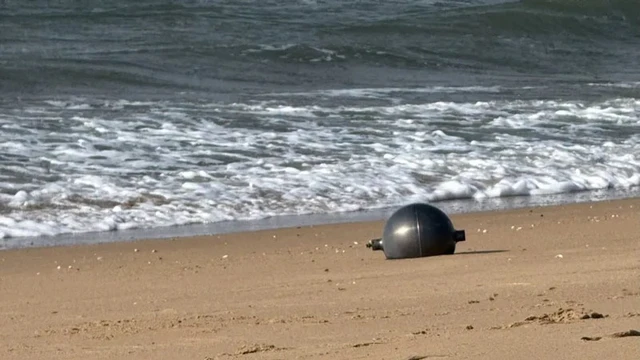
The scenes unfolding on Forrest Beach in northern Queensland might have seemed like a surreal cinematic sequence, were it not for the gravity of the situation. Six metallic spheres, cast ashore by the ocean tide, became the focus of intense scrutiny by hazardous materials specialists and the National Emergency Agency. The authorities' initial response was one of extreme caution: a 50-meter safety perimeter and responders clad in chemical protection suits underscored the potential danger of these unknown objects before they were officially declared safe.
From a technical standpoint, these objects are high-pressure sealed vessels. In modern aerospace engineering, such components are utilized in fuel and pneumatic systems where they must withstand colossal internal loads. Their ability to survive passage through the dense layers of the atmosphere is a result of their material composition: typically heat-resistant titanium alloys or metallic cores reinforced with composite shells. It is precisely this combination of thermal resilience and structural integrity that makes such parts the most frequent "visitors" to Earth following the disintegration of spacecraft.
The physics of their descent is equally intriguing. The hollow spherical geometry creates a specific aerodynamic profile that promotes more intensive atmospheric braking compared to solid metal debris. This significantly reduces the impact velocity upon hitting the surface, which often allows the object to maintain its structural integrity and even acquire buoyancy.
However, identifying such finds evolves into a complex forensic puzzle. The process of uncontrolled reentry from Low Earth Orbit (LEO) is inherently chaotic; a craft may cross different hemispheres and regions of the planet multiple times. The final point of disintegration depends on a multitude of variables—upper atmospheric density, entry angle, and hull orientation. Even a minimal deviation in descent geometry can shift the projected impact zone by thousands of kilometers.
Furthermore, the ocean, covering the majority of the Earth's surface, acts as a massive filter and distributor. Empty sealed vessels can drift with currents for extended periods before washing up on a shore far from the actual site of reentry. Simple visual inspection is insufficient to establish an object's origin; it requires orbital tracking data, analysis of serial numbers, and cross-referencing with international launch registries, as external markings are frequently incinerated in plasma during hypersonic descent.
This incident in Australia highlights the global crisis of space debris, which is becoming increasingly acute as the volume of commercial and government launches grows. The situation demonstrates that orbital space has ceased to be an infinite resource where spent stages and modules can be left unsupervised. Today's "gifts" on the beaches of Queensland are a stark warning of the need to overhaul our approach to the disposal of space objects, ensuring that the problem of orbital decay does not evolve from a local incident into a global security crisis.
 Dragonscale’s Radical Battery Warranty