14 Jul 2026
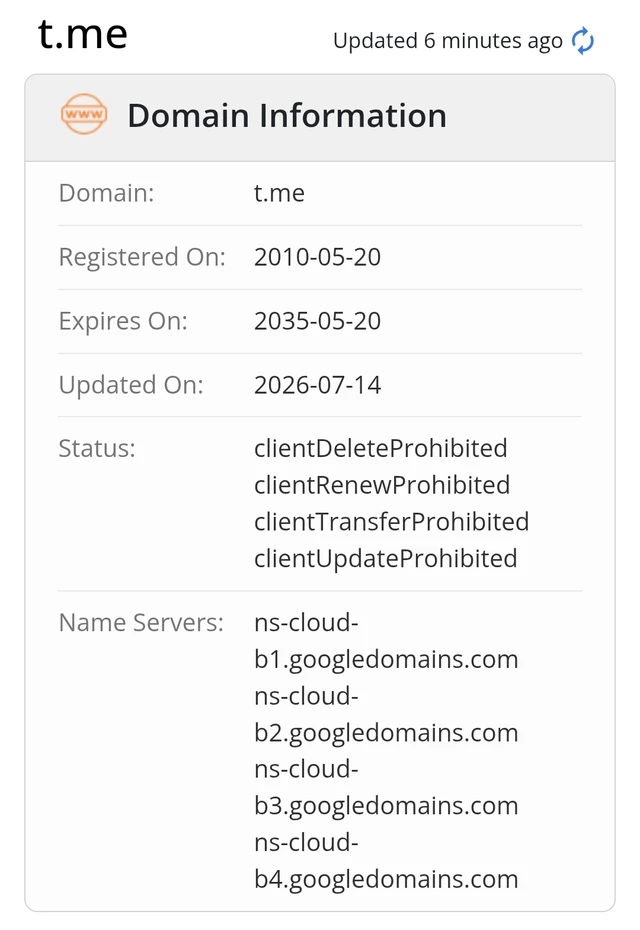 The Return of Telegram’s Short Link Functionality
The stability of global network infrastructure frequently hinges on the seamless operation of critical bottlenecks within naming systems. A sudden failure in one of the most recognizable short domains can trigger a systemic disruption, severing the connection between millions of users and their content. The recent incident involving the t.me domain serves as a stark reminder that even the most dominant services remain vulnerable to the administrative levers of domain registries. As access is restored, the familiar dynamics of interaction within the messenger's ecosystem are returning to normal.
14 Jul 2026
 Managing Information Flow in Discord
Modern communication platforms are evolving beyond rudimentary chat interfaces into sophisticated content management ecosystems. For years, the pervasive "spoiler culture" within gaming and cinema communities has forced users to rely on makeshift workarounds to safeguard sensitive plot details. Discord is addressing this friction by implementing a native mechanism for isolating sensitive content—a move that signals a shift toward more granular user agency over the consumption of narrative data.
14 Jul 2026
 Restoring Access to the t.me Domain
The infrastructure of modern messaging platforms relies on the mission-critical stability of traffic redirection systems, where even a momentary disruption can paralyze content distribution. A recent incident involving the availability of Telegram's short links underscored the precariousness of relying on external domain registrars. The restoration of the primary URL shortener reinstates the seamless interconnectivity of the service's digital ecosystem, ensuring that the user journey from an external link to a specific message is once again frictionless.
14 Jul 2026
 Returning to the Roots of Childhood Connectivity
In an era of pervasive digitalization, the boundary between childhood and screen addiction has become alarmingly thin. Today's parents are increasingly seeking ways to shield their children from the cognitive overload induced by social media and the relentless torrent of digital content. The rise of devices with intentionally limited functionality signals a strategic pivot back to the purity of voice communication. Pinwheel’s latest offering seeks to resolve this paradox, blending the nostalgic aesthetic of a landline telephone with contemporary networking capabilities.
14 Jul 2026
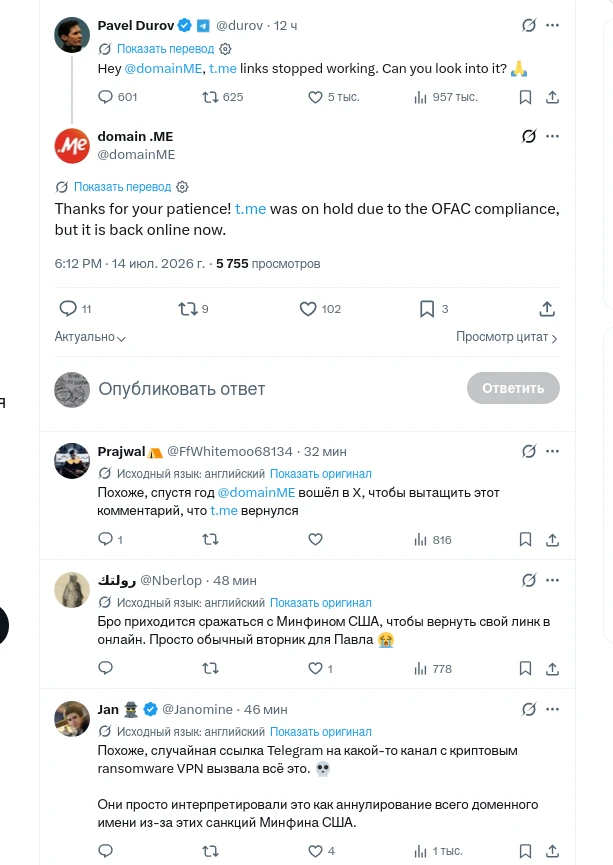 Regulatory Oversight and the Temporary Paralysis of t.me
Global internet infrastructure frequently falls victim to political maneuvering and administrative lapses. When US financial regulators levy sanctions, the technical execution of these mandates can trigger unforeseen, wide-scale disruptions. The incident involving the t.me domain serves as a stark reminder of the fragility inherent in the governance of national TLDs. A simple misinterpretation of requirements resulted in a brief but significant paralysis of one of the world's most ubiquitous URL shortening systems.
14 Jul 2026
 The First Discovery of Genuine Sugars in Deep Space
The origin of life remains one of the most profound enigmas of modern science, existing at the intersection of chemistry and astrophysics. For decades, researchers have grappled with whether complex organic compounds could emerge within the sterile void of space long before the Earth ever took shape. The recent detection of erythrulose molecules at the center of the Milky Way provides a significant catalyst for research into prebiotic chemistry, lending weight to the hypothesis that the fundamental building blocks of life are ubiquitous throughout the cosmos.
14 Jul 2026
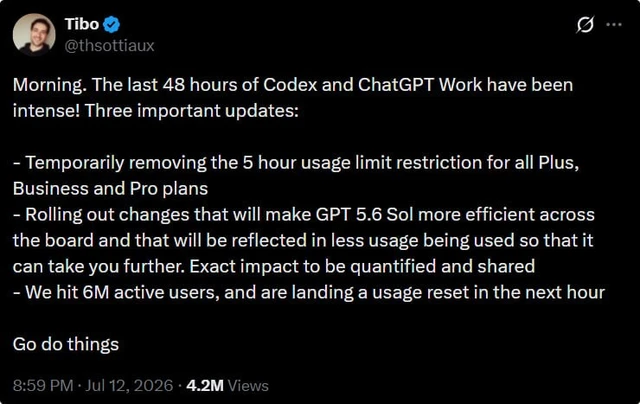 Democratizing Access to GPT-5.6 Sol
The global LLM arms race is shifting its focus from raw computational power toward accessibility and operational efficiency. OpenAI’s decision to temporarily lift short-term constraints on GPT-5.6 Sol underscores a systemic tension between escalating compute costs and the rigorous demands of the professional market. As AI evolves into a mission-critical productivity tool, rigid rate limits cease to be mere safeguards and instead become prohibitive bottlenecks. This move signals a strategic imperative to retain the platform's most high-value cohort: developers and enterprise teams.
14 Jul 2026
 Samsung’s Strategic Leap into the World of AI
The personal computing landscape is undergoing a fundamental pivot toward on-device AI execution. However, traditional strategies for integrating neural processors into central modules are increasingly hitting the "memory wall"—the physical limitations of memory bandwidth. In response, Samsung is taking a bold leap forward with a radically different approach to computational architecture. Project GAIA aims to redefine the very logic of data interaction and processing, transforming memory from a passive storage medium into an active hub for computation.
14 Jul 2026
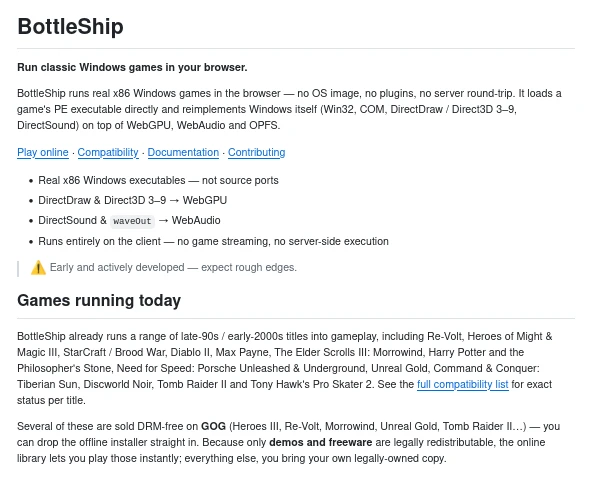 Windows Classics Reborn: Bringing the Legacy to the Browser
Preserving the digital heritage of video games from the late nineties and early aughts has long been a persistent technical hurdle. This era exists as a sort of "blind spot": titles from this period are too sophisticated for basic DOS emulators, yet far too archaic to operate stably on contemporary versions of Windows. The BottleShip project provides an elegant resolution to this dilemma by porting a comprehensive Win32 environment directly into the web browser. Consequently, these legendary titles are now accessible without requiring third-party software or relying on server-side resources.
14 Jul 2026
 Transforming Google Images into a Gallery of Ideas
Visual search is experiencing a paradigm shift, evolving from a mechanism of mere data retrieval into a process of active discovery. For a quarter-century, Google Images served primarily as a utility for locating specific files; today, it is transforming into a comprehensive engine for inspiration. The convergence of personalized curation and generative AI is fundamentally altering the dynamics of how users interact with visual content. This evolution underscores a strategic pivot toward an ecosystem where content proactively discovers the user.
13 Jul 2026
 Setting a New Standard for Apple Pencil Repairability
The era of "disposable" electronics is steadily receding, driven by mounting regulatory pressure and global environmental initiatives. For years, a devotion to minimalist aesthetics and hermetically sealed enclosures took precedence over serviceability, often rendering even minor hardware failures catastrophic. The industry now stands on the precipice of a fundamental paradigm shift, as the "right to repair" evolves from a grassroots movement into a mandatory regulatory requirement. Consequently, Apple is being compelled to overhaul its approach to accessory design to align with the stringent mandates of European legislation.
13 Jul 2026
 The Memory Limits of the New M7 Ultra Processor
The global tech industry is currently grappling with a severe shortage of memory components, forcing manufacturers to rethink available device configurations. Against this backdrop, Apple’s ambitions to push the boundaries of its silicon appear particularly bold. The forthcoming M7 Ultra processor promises to restore a level of scalability to professional workstations that was largely sacrificed during the transition to proprietary chips—specifically, a return to terabyte-scale capacities capable of sustaining the most demanding professional workloads.
