The personal computing landscape is currently witnessing a seismic shift toward ARM-based architectures, promising users an unprecedented leap in battery longevity and power efficiency. Yet, technological progress is frequently hampered by rigid hardware constraints—cases where cost-cutting on fundamental components evolves into a critical failure. Microsoft’s latest Surface Laptop stands as a cautionary tale: a vivid illustration of how inadequate RAM can effectively neutralize the gains of a cutting-edge processor. In an era of increasingly resource-hungry software, 8GB of memory has become a crippling bottleneck, transforming what should be a premium machine into a catalyst for system instability.
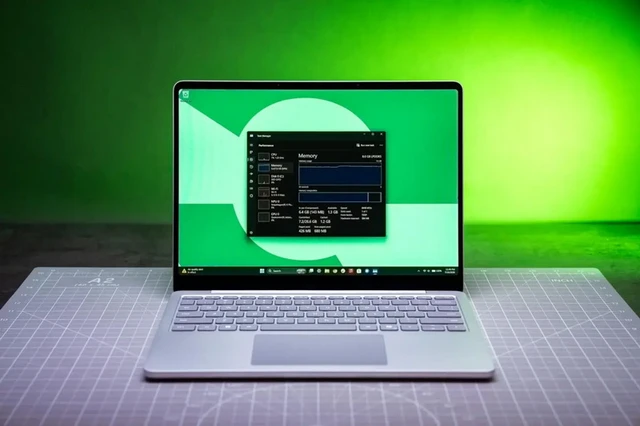
The new 13-inch Surface Laptop, powered by the Snapdragon X Plus processor and a 256GB SSD, is positioned as a modern solution for mobile productivity. At first glance, the device appears flawless: premium build quality, an ergonomic keyboard, a responsive trackpad, and impressive battery life create the image of the ideal professional tool. However, beneath this polished exterior lies a critical technical oversight—the inclusion of a mere 8GB of LPDDR5X memory at a price point of approximately $950.
The core issue is that the modern Windows ecosystem, coupled with its myriad background processes, consumes significant resources before a user even launches their first application. Analysis reveals that immediately following a reboot—even with a minimal set of startup programs—the system occupies roughly 4.2 GB of RAM. In real-world usage, consumption easily climbs to 6.7 GB of the available 7.6 GB, leaving an alarmingly slim margin for maneuverability.
This leads to performance degradation in scenarios that are considered baseline today. A typical workflow—ten open Chrome tabs alongside Slack and Signal—pushes the laptop to its absolute limit. The breaking point occurs when using corporate communication tools; for instance, receiving a short video clip during a Microsoft Teams call can trigger a total system freeze lasting several seconds. Similar incidents recur even when working within Google Docs with video calls disabled.
Attempts to optimize the load by capping open tabs at six and abandoning virtual desktops can reduce memory consumption to 5.5 GB. In this restricted mode, basic web surfing and video playback remain stable, but the device effectively loses its capacity for multitasking. The most concerning aspect is that this flaw is terminal: the RAM is soldered to the motherboard and cannot be expanded. The user is essentially locked into a limited resource pool with no path for an upgrade.
This situation borders on economic absurdity when compared to previous iterations of the product. In 2025, the base Surface Laptop was offered at $899 for a version with 16GB of RAM. Yet, a later configuration with only 8GB—released amidst DRAM chip shortages—actually costs more, reaching $950. Consequently, consumers are paying a premium for a device that is objectively slower and less capable due to hardware limitations. Despite current official store discounts bringing the price down to $849, the fundamental memory deficit makes this laptop a risky investment for anyone whose needs extend beyond simple web browsing.
 AMD’s Strategic Approach to the Budget Segment