The global race for nanometer-scale precision is evolving from a series of laboratory experiments into a phase of industrial scaling. The transition to the 2nm process node represents a pivotal juncture for the semiconductor industry, one that will define the architecture of computing systems for the next decade. TSMC, maintaining its technological hegemony, continues to demonstrate an unparalleled ability to rapidly deploy highly sophisticated production lines amidst intensifying competition. Achieving new wafer throughput milestones confirms the giant’s readiness for a mass migration toward fundamentally new transistor architectures.
The semiconductor industry has entered an era defined by a relentless pursuit of efficiency at the micron level. Taiwan's technological titan, TSMC, has reached a pivotal milestone, ramping up its N2 process silicon wafer production to 20,000 units per month. Currently, Fab 20 serves as the epicenter of this expansion, effectively acting as the proving ground for mass-production workflows. While the company’s long-term roadmap includes the launch of five specialized sites, Fab 20 is currently providing the critical scaling momentum required ahead of a full-scale market rollout in the fourth quarter of 2025.
TSMC's current financial architecture reflects a classic generational transition: while mature 5nm and 3nm nodes continue to drive the bulk of revenue—collectively accounting for over 60%—the contribution from 2nm solutions currently stands at just 3%. However, these figures mask an aggressive growth trajectory. The production volume for N2 chips is already four times higher than that of its predecessor, the N3 flagship process, during the same stage of its development cycle.
The core technological leap here is the transition to the GAAFET (Gate-All-Around Field-Effect Transistor) architecture. Unlike traditional FinFETs, where the gate wraps around the channel on three sides, the "all-around" architecture allows for far more precise control over leakage current and electrostatics. This translates into tangible performance gains: either a 15% boost in processing power while maintaining existing energy consumption, or a radical reduction in power draw—up to 30%—while sustaining current clock speeds.
These metrics position N2 as the only viable choice for developers of high-performance systems. Among the most invested players are Apple, which is preparing its A20 Pro chips for the upcoming iPhone 18 Pro series, and AMD, planning to leverage this process for its EPYC Venice server processors. Demand for new capacity is growing exponentially, evidenced by a fourfold increase in the number of clients who have moved into the N2 design phase.
Simultaneously, a high-stakes rivalry with Intel is unfolding. The American competitor claims comparable success with its Intel 18A process, reporting a volume of 30,000 wafers per month. However, Intel distributes this load across two sites—Fab 52 in Arizona and a facility in Oregon—highlighting a divergent strategy regarding the geographic distribution of capacity.
TSMC's technological foundation relies on low-NA (numerical aperture) EUV lithography scanners from ASML, specifically the TWINSCAN NXE:3800E model. Although the industry is gradually pivoting toward High-NA EUV to achieve even denser transistor packing, current systems remain the primary workhorse. Nevertheless, the relationship between TSMC and ASML is currently experiencing a period of turbulence as the latter seeks to revise its pricing policy for equipment, creating additional tension within the supply chain of the most expensive tooling in human history.
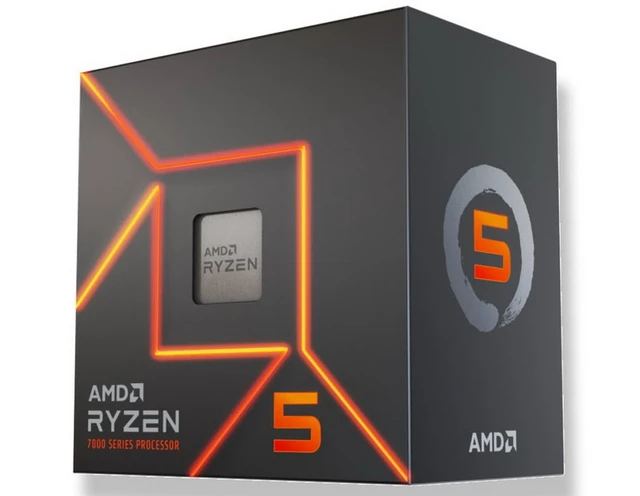 AMD’s Strategic Approach to the Budget Segment