In the realm of flagship GPUs, the relentless pursuit of thermal efficiency frequently results in contentious engineering trade-offs. Modern hardware demands more than just raw power; it necessitates innovative approaches to airflow management within increasingly dense cooling architectures. The latest implementation found in the Aorus RTX 5080 Infinity Wood pushes these boundaries to their absolute limit. By attempting to optimize breathability through physical modifications to the PCB's architecture, the design raises serious questions regarding the device's structural integrity.
In the high-performance GPU sector, combating overheating has long evolved beyond simply increasing heatsink surface area. The current industry trend favors "through-flow" air circulation systems designed to efficiently dissipate heat from both sides of the device. With the new Aorus GeForce RTX 5080 Infinity Wood, Gigabyte has implemented its "Double Flow Through" concept—albeit via a highly unconventional method that has raised eyebrows among experts and enthusiasts alike.
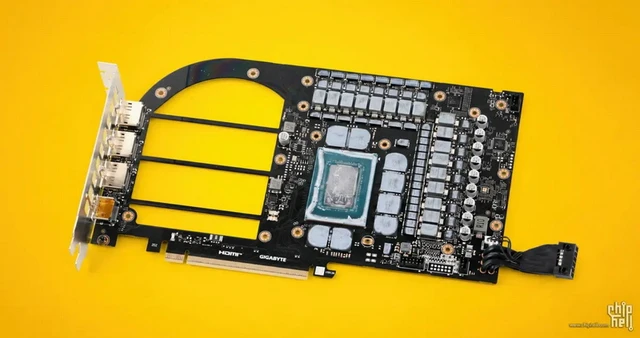
While Nvidia’s Founders Edition reference designs utilize a sophisticated multi-layered PCB stack to facilitate unobstructed airflow, Gigabyte's engineers opted for radical simplification. Rather than engineering a complex PCB "sandwich," they utilized a single substrate with four massive apertures cut directly into the board.
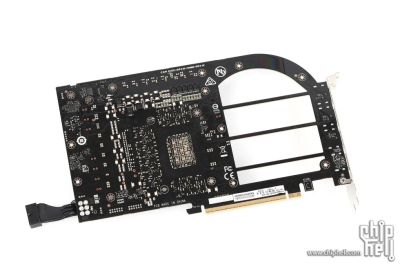
This approach allows air to pass through the GPU chassis without resistance, mimicking the advantages of reference cooling systems. However, this optimization comes at a steep price: significant sections of the PCB are missing, leaving only narrow strips of fiberglass to hold the components together. These slender bridges house critical signal traces connecting various parts of the circuitry. While such a topology is electronically viable, it presents a serious mechanical challenge. The lack of a rigid base makes the board exceptionally vulnerable to warping and bending, particularly during disassembly or when extracting the device from the cooling system's metal frame.
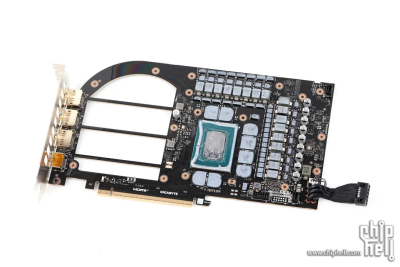
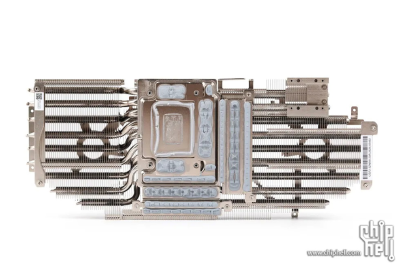
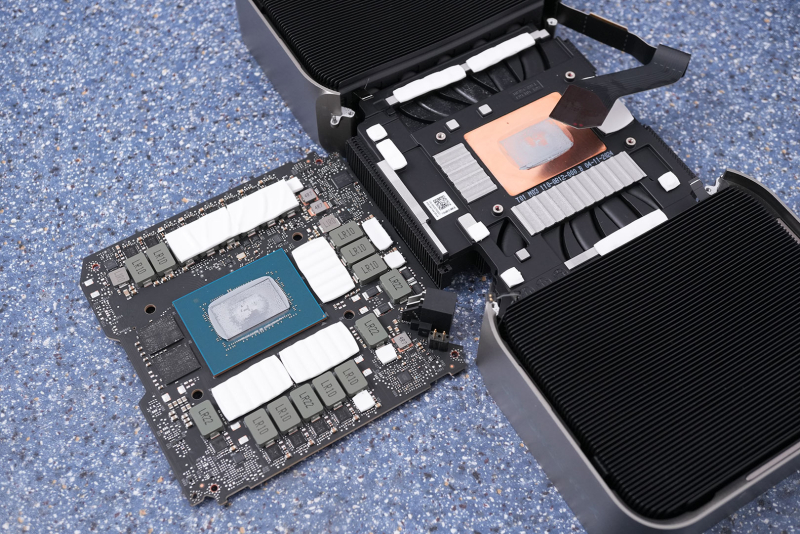
Beyond the physical architecture of the PCB, Gigabyte has significantly overhauled the power delivery scheme. In the Infinity Wood model, the MSVDD rail has been shifted to the right side of the GPU—a direct departure from the Founders Edition layout, where primary connectors are positioned to the left. Power is delivered via a recessed 16-pin connector featuring an integrated six-wire extension, designed to reduce strain on the main connector and improve cabling ergonomics.
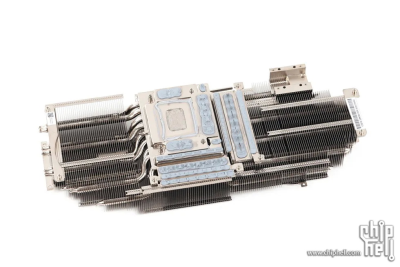
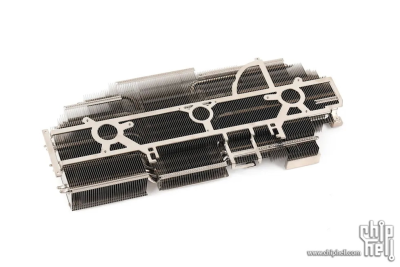
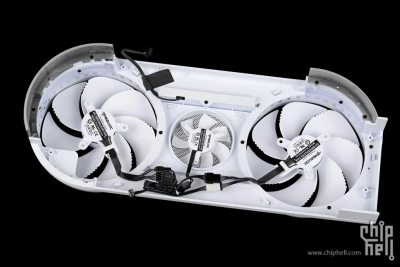
The mechanical support for this connector is equally noteworthy. A massive metal block is mounted to the heatsink to secure the 16-pin interface. Upon closer inspection, it becomes evident that there are no thermal pads or conductive paste between this block and the connector itself. This confirms that the metal structure serves exclusively as a structural reinforcement to prevent mechanical damage to the port, rather than acting as an auxiliary heat sink for the power circuitry.
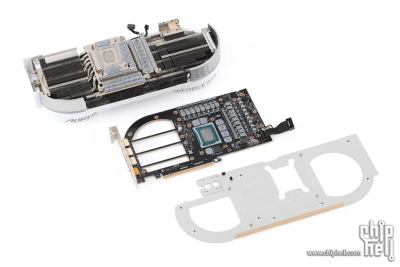
Ultimately, the Aorus RTX 5080 Infinity Wood is a bold but precarious experiment. The pursuit of maximum airflow has resulted in a device that is visually striking and thermodynamically efficient, yet demands extreme caution during any physical handling. It serves as a textbook example of how optimizing for a single parameter can introduce new, critical points of vulnerability into the design of a high-tech product.
 AMD’s Strategic Approach to the Budget Segment