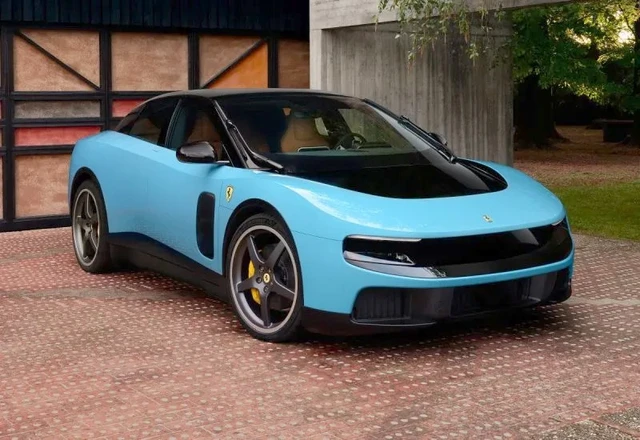
The luxury sector's transition to electric propulsion represents one of the most high-stakes gambles for legacy automakers—a space where ancestral heritage frequently collides with the imperatives of technological progress. Ferrari, having long guarded the sanctity of the internal combustion engine, has introduced the Luce: a provocative experiment merging haute design with a new energy paradigm. Despite initial skepticism, the vehicle has triggered phenomenal market demand, most notably within the Asian theater. This triumph signals a profound generational pivot among supercar aficionados, for whom technological minimalism is emerging as the definitive new marker of status.
The debut of the Luce represents a watershed moment, not only for Maranello but for the entire landscape of industrial design. Enlisting Jony Ive, Apple’s former design chief, transformed the vehicle's creation into a synthesis of two divergent philosophies: Italian passion for speed and Californian pursuit of functional perfection. While the market initially greeted the product with hesitation, in practice, it proved to be precisely what the new global elite had been anticipating.
The sales trajectory of the Luce has outpaced even Ferrari's most bullish projections. Within just two months of launch, the company achieved milestones originally slated for 2026. Where Ferrari had conservatively pegged demand at five hundred units for the current period, reality revealed a far deeper appetite for the ultra-luxury electric segment.
China emerged as the primary catalyst for this growth. The region has cultivated a unique EV ecosystem where the expansion of brands like Geely, Lynk & Co, and Zeekr primed the public consciousness for electric mobility. For affluent Chinese buyers, the Luce—priced at €550,000—became the ultimate instrument of social signaling: a seamless blend of environmental consciousness and the undisputed prestige of the Ferrari marque.
Parallel to the Asian market, the model resonated strongly within U.S. tech hubs, most notably Silicon Valley. For IT entrepreneurs accustomed to the Apple aesthetic and the efficiency of digital systems, the Luce felt like an organic extension of their lifestyle. Here, the electric vehicle is viewed not merely as transportation, but as a sophisticated piece of hardware capable of delivering uncompromising performance with zero carbon footprint.
Ferrari’s strategy regarding the Luce is one of calculated restraint. The company avoids the lure of mass-market appeal, which could dilute the brand's exclusivity. The long-term roadmap envisions a production run of approximately 2,500 units by 2030—roughly 600 vehicles annually. Representing just five percent of total volume, this allows Ferrari to maintain a delicate equilibrium between its traditional combustion heritage and an electric future.
The Luce's status as a collectible is underscored by the upcoming auction of the first production model. With estimates suggesting the price could exceed $1.1 million, the vehicle has effectively transitioned into an investment asset. In doing so, Ferrari has executed a masterful strategic pivot: transforming a technological transition into a new revenue stream and a magnet for a younger demographic, all while preserving its legendary aura of unattainability.
 Anthropic’s Strategic Expansion into the Public Market