The inner Solar System is a realm of extreme temperatures and violent transformations. Mercury, the innermost planet, has long been a focal point of geological debate due to its anomalous density and structural composition. Recent findings indicate that this rocky world is contracting at a rate far exceeding the predictions of classical models. Deciphering this process provides the key to unlocking the true composition of the planet's core and reconstructing its thermal evolution.
The genesis of terrestrial planets approximately 4.5 billion years ago was marked by a massive discharge of energy. The collision of protoplanetary debris and the accretion of matter created a primordial thermal peak, which planets began to gradually dissipate. For Mercury, this cooling process became the primary driver of its geological evolution: as the interior temperature dropped, the planet physically contracted. The result of this thermal contraction was the emergence of global tectonic wrinkles—colossal scarps and ridges that effectively "crumpled" the planet's outer crust.
For a long time, however, the true scale of this process remained obscured. The culprit was the relentless bombardment of the surface by cosmic bodies. Asteroids did more than just carve craters; they ejected vast volumes of regolith and debris that filled the lowlands and masked tectonic fractures. Consequently, the evidence of contraction was buried under "cosmic dust" and ejecta, leading to a significant underestimation of the rate at which the planet's diameter was shrinking.

Contemporary analytical methodologies have finally allowed researchers to overcome these limitations. By correlating detailed geological maps with topographic data, scientists identified a clear pattern: in regions with the highest degree of roughness and debris accumulation, the number of visible folds was minimal. This provided direct evidence that secondary geological overlays were concealing the true extent of the contraction.
By focusing on the most "pristine" zones—where the influence of ejecta was minimal—researchers recalibrated their models. The findings reveal that Mercury is shrinking 10–30% more intensely than previously estimated. While earlier projections suggested a diameter reduction of 4–16 kilometers, updated data points to a figure closer to 23 kilometers.
This correction has profound implications for planetary science. More intense contraction points directly to the specifics of Mercury's internal composition. It suggests the planet likely possesses a denser metallic core containing fewer light elements, such as silicon. An alternative hypothesis proposes that the planet's initial temperature was significantly higher, which would have accelerated the subsequent cooling and contraction process.
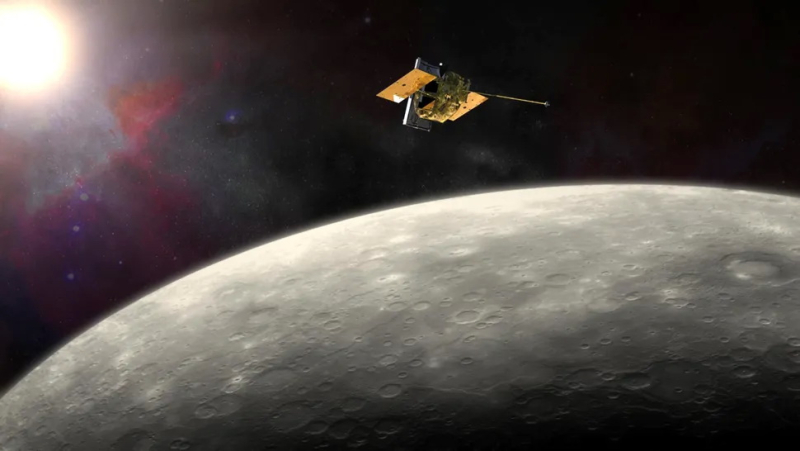
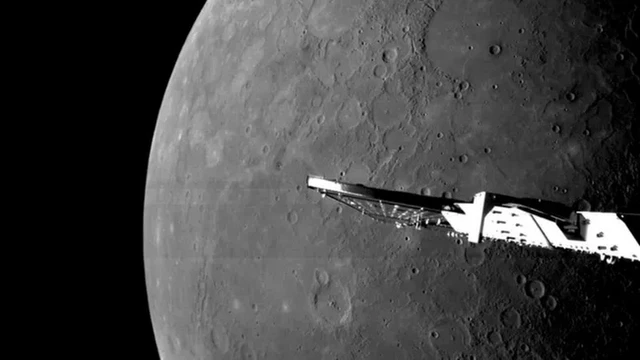
It is important to note that current conclusions are based on data from the MESSENGER spacecraft, whose resolution could only capture features larger than five kilometers. This implies that even the current figures may be conservative. The BepiColombo mission, scheduled to begin detailed surface scanning in November 2026, is expected to provide far higher resolution data. This will enable the detection of the finest signs of contraction and finally reconstruct the chronology of the thermal collapse of the innermost planet of our solar system.
 Orbital Foundries for Advanced Semiconductors


