The transition from bespoke laboratory setups to mass production remains the primary objective of the modern quantum industry. For years, progress has been stifled by the cumbersome nature of laser systems and the formidable challenge of scaling physical qubits. IonQ’s new Superion 256 platform is designed to break this deadlock, fusing ion-trap technology with semiconductor manufacturing processes. This shift marks the transformation of quantum computing from a scientific curiosity into a scalable industrial tool.
The evolution of computing has historically followed a predictable trajectory: transitioning from cumbersome prototypes to miniaturized semiconductor crystals. Quantum computing is currently at a similar tipping point. The emergence of the Superion 256 platform signals that the industry has finally identified a viable path toward mass production. At the heart of the system are ion traps—one of the most promising methods for qubit implementation, where particles are suspended in a vacuum by electromagnetic fields.
A pivotal milestone has been the development of fully integrated 256-qubit Quantum Processing Units (QPUs), manufactured in collaboration with SkyWater. This partnership has enabled a radical optimization of the design cycle, slashing it from nine months to just two. In effect, the quantum processor is evolving from a bespoke, handcrafted instrument into a standardized product of the semiconductor pipeline.
The technological breakthrough of Superion lies in the transition to Electronic Qubit Control (EQC). Traditionally, ion manipulation required intricate laser positioning systems, rendering machines massive and hypersensitive to environmental noise. EQC replaces these optical requirements with standard semiconductor processes. This approach not only streamlines the architecture but also enhances precision; as of October 2025, this technology achieved a record-breaking two-qubit gate fidelity of 99.99%.
IonQ’s scaling strategy is phased. The current 256-qubit architecture is merely the foundation. The next leap will be the Superion 10K, powered by CMOS technology. This is where the "Walking Cat" concept comes into play, enabling the management of massive qubit arrays without sacrificing coherence. In the long term, this paradigm paves the way for systems with millions of qubits, effectively marking the transition to full-scale fault-tolerant computing.
The economic implications of this shift are profound. Replacing laser-based control with semiconductor processes is expected to slash the cost per qubit by more than 300-fold. This transforms the quantum computer from a prohibitively expensive scientific experiment into a commercially viable product.
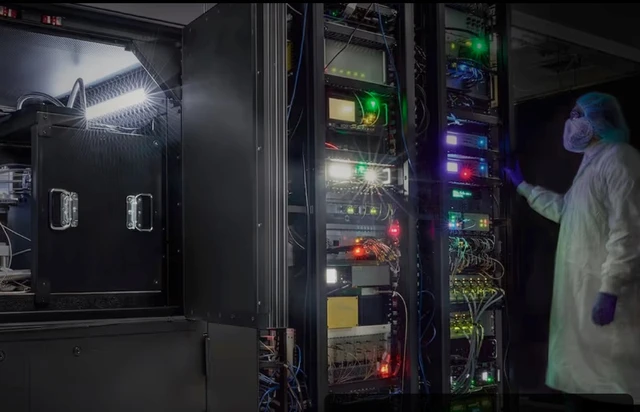
Particular attention has been paid to the system's physical footprint. Superion is engineered to integrate seamlessly into modern data center infrastructure. It occupies a standard server rack slot and requires no specialized facility engineering. Its power consumption is comparable to a typical GPU rack, and its cooling system is fully compatible with industry-standard data center heat dissipation methods.
The deployment roadmap is ambitious: initial customer shipments are slated for 2027, with full-scale commercial production beginning by 2028. Parallel to physical deliveries, Superion's capabilities will be accessible via cloud services, allowing enterprises to integrate quantum acceleration into their workflows without the capital expenditure of hardware ownership.
Ultimately, Superion 256 represents more than just an incremental increase in qubit count; it marks a fundamental shift in the philosophy of quantum architecture. The industry is moving from the era of "artisanal assembly" to the era of industrial scaling.
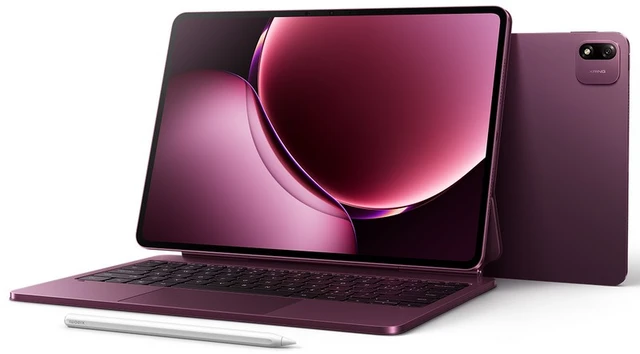 Power and Poise: The Xiaomi Pad 9 Pro Max