Space missions are defined by a precarious equilibrium between mass, energy, and time. The journey of the Nancy Grace Roman Space Telescope to the L2 Lagrange point has emerged as a masterclass in orbital precision. Due to extraordinary fuel conservation, the observatory's projected operational lifespan has more than doubled, transforming the mission from a ten-year study into a long-term endeavor to decode the fundamental mysteries of the cosmos.
In modern astrophysics, the L2 Lagrange point—situated roughly 1.5 million kilometers from Earth—serves as the ideal gateway to deep space. Here, the gravitational forces of the Earth and the Sun reach an equilibrium, allowing an observatory to maintain a stable position while keeping both the planet and the star behind it. However, the journey to this point demands surgical precision; any miscalculation or erratic maneuver could lead to a catastrophic depletion of fuel.
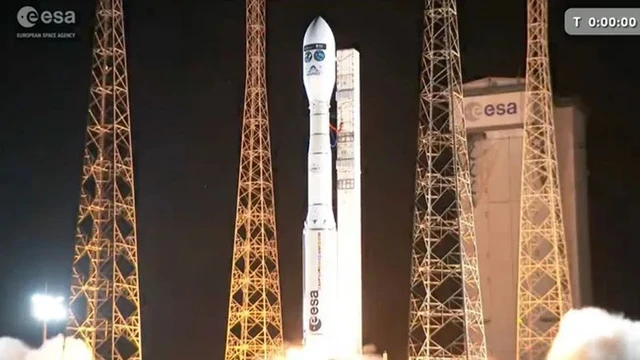
The initial deployment phases of the Nancy Grace Roman mission have demonstrated a rare synergy between engineering theory and operational execution. The high-precision orbital injection provided by the SpaceX Falcon Heavy laid the groundwork for success, but the true breakthrough came during the first trajectory correction. While design specifications anticipated a fuel expenditure of 200 kg for this phase, the actual consumption was a mere 18 kg. This staggering 99% efficiency gain has effectively gifted the observatory several additional years of operational life.
This efficiency was further bolstered during pre-flight preparations. During final assembly, the spacecraft's actual mass proved lower than the projected design. In the aerospace industry, every kilogram of "dry mass" saved translates directly into the ability to carry more propellant. Consequently, the observatory's tanks were filled to maximum capacity, which, coupled with the flawless first maneuver, has extended the potential active mission lifespan from ten years to 22 or more.
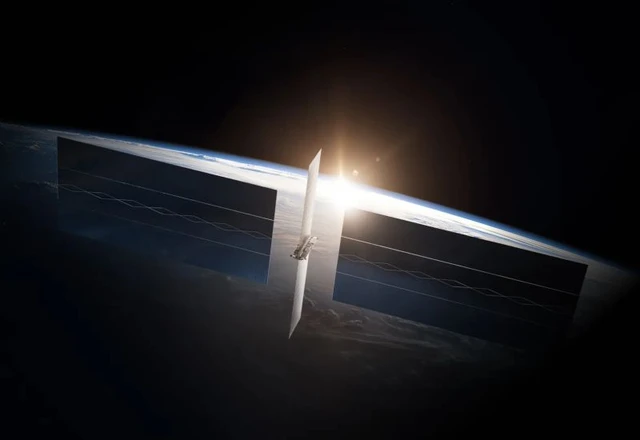
To maintain its station at L2, the telescope utilizes hydrazine-based chemical thrusters. Even after reaching its operational orbit, the work continues: approximately every 28 days, the spacecraft must perform micro-corrections. These are essential to compensate for gravitational perturbations and solar radiation pressure, which literally nudge the observatory off course.
The current flight schedule remains optimistic. The second and final course correction is slated for late September and, given the previous success, promises to be equally economical. The observatory is expected to reach the L2 point in early December, where it will execute the critical maneuver to lock into position.
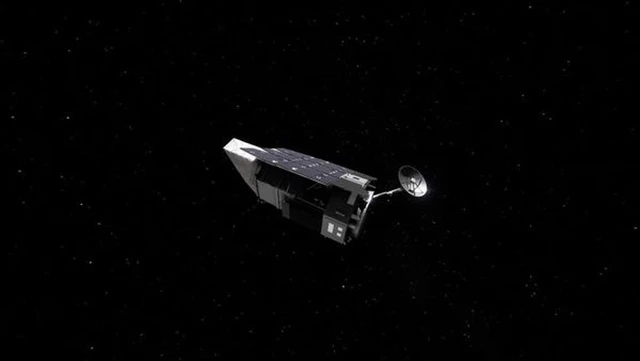
From a scientific perspective, such an extension of service life is of monumental importance. The Nancy Grace Roman is equipped with a 2.4-meter mirror and a Wide Field Instrument. Its field of view is approximately 100 times greater than that of the legendary Hubble, enabling a shift from studying isolated objects to large-scale cosmic mapping.
An additional decade of operation will allow astrophysicists to gather an unprecedented volume of data on dark energy and dark matter—the forces driving the evolution of the universe. Furthermore, the observatory will focus on detecting exoplanets via gravitational microlensing, a technique that identifies distant worlds by the bending of light from their parent stars. Thus, the technical precision of a single maneuver has opened a window into deep space that will remain open for decades longer than originally envisioned.
 The Energy Efficiency Ceiling of Modern Electric Vehicles