For years, the pursuit of extended EV range has been largely a matter of brute force—simply scaling up battery capacity. However, the industry has reached a critical juncture where the chemical potential of batteries is hitting a wall, giving way to the fundamental laws of physics and aerodynamics. Volkswagen’s new Mission Efficiency concept presents a radical approach to energy management, sculpting the vehicle into a nearly flawless aerodynamic form. This experiment challenges the established design paradigms of contemporary electric mobility.
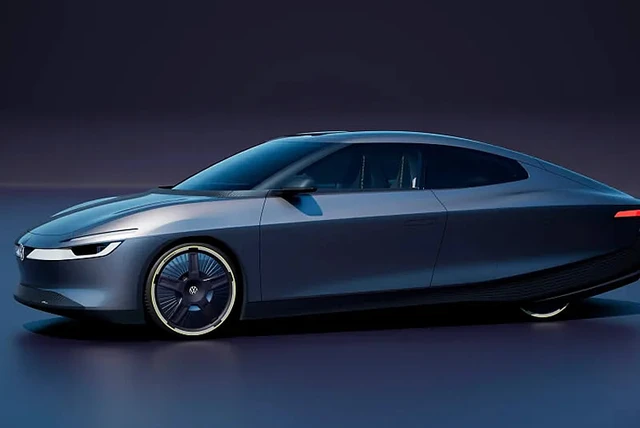
In the modern electric vehicle industry, an obsession with energy density has taken hold: manufacturers strive to install increasingly massive battery packs to combat "range anxiety." However, the Mission Efficiency project upends this paradigm, proving that the key to true autonomy lies not in cell chemistry, but in the mastery of airflow. The results of this approach are staggering: the prototype covered a distance of over 1,200 kilometers on a single charge, setting a new benchmark for efficiency in a vehicle closely aligned with mass production standards.
The vehicle's technological foundation is the MEB+ platform, augmented by front-wheel-drive components from the prospective ID. Polo and ID. Cross models. Yet, the crowning engineering achievement is a drag coefficient of Cd 0.158. In the world of automotive engineering, such figures border on the fantastical, rendering the bodywork virtually seamless. When cruising at a constant speed of 68 km/h with auxiliary systems—including climate control—disabled, the vehicle's energy consumption dropped to a record-breaking 6.48 kWh per 100 kilometers.
The practical validation of this concept took place during a real-world drive from Wolfsburg to Vienna. The vehicle covered 1,278.36 km using a battery with a net capacity of just 54.9 kWh. To grasp the scale of this achievement, one only needs to compare it to a base Tesla Model 3: with a comparable battery capacity (57.5 kWh), the American EV provides a range of approximately 438 km. Consequently, the German prototype proved to be nearly three times more efficient than its competitor. The average energy consumption during the trip was 6.89 kWh per 100 km, and upon arrival at the destination, the system still showed a remaining range of 164 km.
The visual identity of Mission Efficiency is a triumph of functionalism over aesthetics. The teardrop silhouette, fully covered wheel arches, frameless windows, and recessed door handles all serve a single purpose: minimizing turbulence. Particular attention was paid to the underbody, where specialized protective panels guide the airflow and eliminate vortices beneath the chassis.
The interior space has also been radically reimagined. In the pursuit of weight reduction and energy efficiency, the cabin was stripped of the traditional central touchscreen. Instead, a "Bring Your Own Device" (BYOD) concept was implemented, where the user utilizes their own docking station for a smartphone or tablet. An additional power source is provided by roof-integrated solar panels, which can add up to 30 km of range by powering auxiliary electronics.
The most critical conclusion of this experiment is that these record-breaking figures were achieved without the use of exotic materials or experimental battery types. The engineers focused on optimizing body geometry, effectively rethinking the design of the compact ID. Polo. This proves that immense potential for efficiency gains remains hidden within the realms of industrial design and aerodynamics.
While many automakers are currently pursuing optimization, one question remains: to what extent will consumers be willing to accept such a specific, "teardrop" aesthetic in exchange for a colossal increase in autonomy. Mission Efficiency serves as a reminder that true progress in electromobility is not merely about cell capacity, but about harmony with the laws of physics.
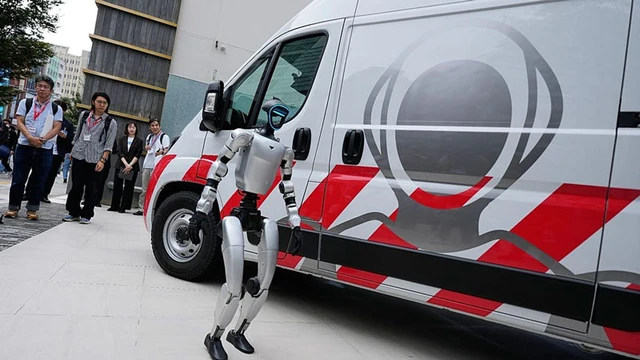 Mobile Support for Humanoid Robots