21 Jul 2026
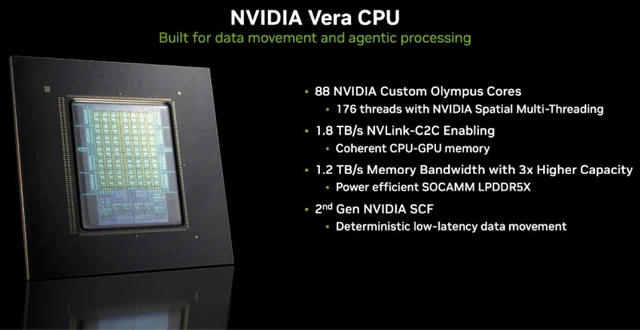 Nvidia’s Strategic Expansion into the CPU Market
The era of GPU dominance in artificial intelligence is entering a transformative new phase. Driven by the rise of autonomous AI agents and the increasing complexity of large-scale data processing, industry demand is pivoting toward high-performance central processing units (CPUs). Recognizing this shift, Nvidia is mounting a strategic offensive against the established incumbents of the market. The company aims to architect a seamless, holistic ecosystem where the CPU becomes an indispensable component of the overall computational pipeline.
21 Jul 2026
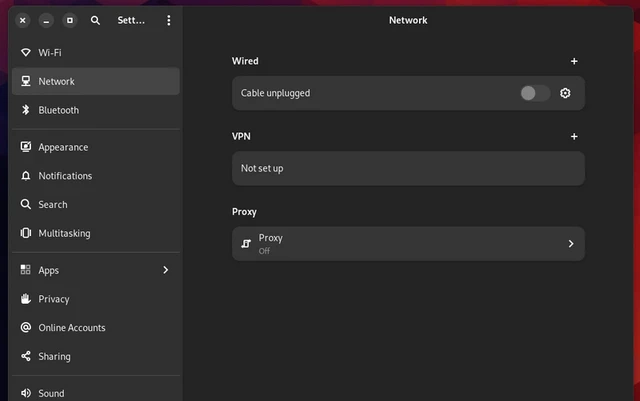 New Network Management Standards in NetworkManager 1.58
Modern operating systems demand impeccable network interface management as connectivity infrastructures grow increasingly complex. The launch of NetworkManager 1.58 marks a pivotal milestone in the evolution of Linux administration tools, blending support for the latest hardware standards with deep system-level optimizations. This update focuses on expanding wireless networking capabilities and implementing advanced tunneling protocols, underscoring the developers' commitment to creating a flexible, transparent, and highly automated traffic management ecosystem.
20 Jul 2026
 CXMT’s Expansion into the LPDDR6 Market
The global semiconductor market is undergoing a profound transformation, where the pursuit of data transfer speeds has become the definitive metric of competitiveness. While industry titans pivot toward specialized AI-driven solutions, a strategic vacuum is opening in the standard high-speed memory segment. China’s ChangXin Memory Technologies (CXMT) intends to seize this opportunity, aggressively accelerating the development of its next-generation silicon. The transition to the LPDDR6 standard represents CXMT's bid to break beyond domestic boundaries and challenge the entrenched oligopoly of global DRAM manufacturers.
20 Jul 2026
 The Open Artificial Intelligence Manifesto
The contemporary AI landscape is increasingly consolidated within a handful of private corporations, precipitating a perilous digital divide. In this paradigm, language and culture are subordinated to commercial profitability, while indigenous data is frequently exploited without consent. Countering this challenge requires the development of an open infrastructure comparable in scale and accessibility to the early internet. Current AI has set itself an ambitious mission: to transform AI from a tool of corporate control into a global public good.
20 Jul 2026
 The Environmental Threshold for Artificial Intelligence
The meteoric rise of generative AI has transformed data centers into some of the most energy-intensive assets in the modern global economy. Amidst a deepening climate crisis, the unchecked expansion of computational capacity is increasingly colliding with the fundamental resource needs of the general population. Australia is pioneering a systematic regulatory approach to this challenge, implementing stringent environmental benchmarks for AI infrastructure. This strategy is designed to strike a critical balance between maintaining technological leadership and ensuring national energy security.
19 Jul 2026
 China Launches Space-Based Computing Network
The era of transmitting raw data from orbit to Earth is fading, giving way to the paradigm of deep-space edge computing. The global race for technological supremacy has evolved beyond simple connectivity, shifting toward the deployment of distributed computational power in Low Earth Orbit (LEO). Leading this charge, Shanghai Xingshu Tiansuan is taking a decisive leap by deploying infrastructure capable of processing massive data arrays directly in the vacuum of space. This strategic maneuver is designed to radically slash latency and fundamentally redefine the operational architecture of satellite constellations.
19 Jul 2026
 Unlocking the Hidden Potential of Nvidia GPU Thermal Monitoring
Modern graphics accelerators are marvels of engineering—complex systems where thermal management directly dictates both operational stability and hardware longevity. For too long, users have relied on aggregated temperature metrics, broad averages that often mask the critical state of individual components. Recent research has revealed that Nvidia's hardware provides far more granular data than standard software interfaces typically expose. This discovery unlocks new potential for precision diagnostics and the deep optimization of cooling architectures.
19 Jul 2026
 The Evolution of Digital Privacy in Whonix 18.2
In an age of ubiquitous digital surveillance, the line separating private data from the public domain has grown perilously thin. Achieving absolute anonymity requires more than a mere collection of tools; it demands a fundamental reimagining of how an operating system interacts with the network. Whonix tackles this challenge through a radical decoupling of the workstation environment from the network gateway, effectively neutralizing data leaks at the kernel level. The latest release, version 18.2, advances this mission by hardening security mechanisms and optimizing the core security layer.
19 Jul 2026
 Privacy Pitfalls: The Legal Traps Within the LG Ecosystem
The line between technological convenience and pervasive surveillance is blurring as artificial intelligence becomes deeply embedded in consumer electronics. Today's smart devices are no longer mere utilities; they have evolved into data-harvesting nodes woven into the very fabric of our private lives. Recent updates to LG’s terms of service signal a troubling trend: a strategic shift of legal liability regarding privacy from the manufacturer to the end-user. This precedent marks a new chapter in corporate risk management—one where the cost of seamless functionality is the erosion of the right to privacy.
18 Jul 2026
 The High Cost of Technological Appropriation: The Viasat Case
Intellectual property disputes within the semiconductor industry often dictate the financial trajectory of entire product portfolios. A recent clash between a memory titan and a satellite operator vividly illustrates how niche aerospace innovations can evolve into the bedrock of mass-market consumer hardware. A Texas court has quantified the value of this technological convergence in the hundreds of millions of dollars—a precedent that underscores the intricacies of a patent landscape where sectoral boundaries increasingly dissolve in the pursuit of superior data storage efficiency.
18 Jul 2026
 The Cult Status of Jensen Huang’s Signature Leather Jacket
In the contemporary tech landscape, personal branding often wields more influence than corporate identity. Jensen Huang’s leather jacket has long since evolved beyond a mere wardrobe staple; it has become an iconic totem of the era of exponential AI growth. A recent Sotheby’s auction vividly illustrated that the market value of such an artifact is dictated not by the quality of its leather, but by the scale of its owner's impact. It is a quintessential example of apparel transforming into a tangible embodiment of success and technological dominance.
18 Jul 2026
 The Engineering Legacy of Nokia’s DCT3 Architecture
The era of feature phones left behind more than mere nostalgia; it bequeathed a vast repository of engineering ingenuity that has now become a subject of digital archaeology. As modern smartphones continue to evolve, access to original hardware from the late nineties grows increasingly elusive, transforming these legacy devices into rare artifacts. The advent of an open-source emulator for the DCT3 platform brings this experience directly into the browser, repositioning legendary Nokia handsets as subjects for rigorous technical analysis. This project represents a concerted effort to safeguard software heritage through an uncompromising commitment to hardware fidelity.
