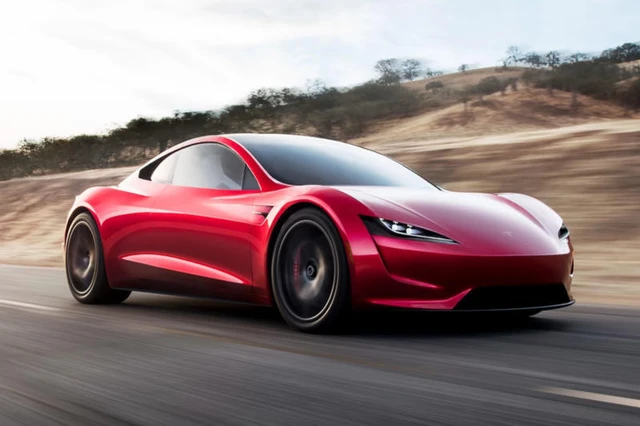
The evolution of electric vehicles has reached a critical juncture where the boundaries between automotive engineering and aerospace technology are beginning to blur. The long-anticipated Tesla Roadster promises to be more than just an ultra-high-performance sports car; it is poised to be a definitive manifesto of technological dominance. Following years of delays and a fundamental conceptual overhaul, the project is finally entering its final phase of realization. At the heart of this endeavor is an ambitious attempt to fuse road-going dynamics with the principles of vertical takeoff.
The anticipation surrounding the new Roadster has evolved into a trial of patience for both the industry and the brand's devotees. What began as an audacious pledge in 2017 has since been clouded by a haze of rumors, repeated delays, and technical recalibrations. However, recent indicators suggest the era of uncertainty is drawing to a close: the unveiling of the updated electric vehicle is now expected by the end of August.
The central intrigue of the project remains the synergy between Tesla and SpaceX. This is far more than a mere marketing partnership; it is a deep-seated engineering integration. A special edition of the Roadster is slated to feature cold gas thrusters. Borrowed from the aerospace sector, this technology would allow the vehicle to momentarily break contact with the ground, enabling short-duration lift. Such a leap transforms the vehicle into a hybrid of a car and an aircraft, fundamentally redefining the concept of urban mobility.
The journey toward the final design has been fraught with challenges. Internal debates raged over whether to adhere to the aesthetic of the seven-year-old prototype or to forge something entirely new. At one stage, an extensive overhaul of the Model S Plaid—Tesla's current benchmark for performance—was considered. Internal design proposals even incorporated elements reminiscent of the iconic Lamborghini Countach, underscoring an ambition to create the aggressive, wedge-shaped silhouette characteristic of the great supercar era.
The development history of the Roadster serves as a vivid illustration of Elon Musk’s idiosyncratic approach to timelines. Public forecasts have been in constant flux: first April, then May, and finally, the ambiguous assurances from Chief Designer Franz von Holtzhausen that the release would happen "soon." The market has grown accustomed to these delays, viewing them as the inevitable byproduct of a relentless pursuit of perfection.
It is evident that Tesla sought to create a product that does not merely compete on raw performance metrics, but offers a fundamentally new user experience. Crafting a "singular" object requires colossal resources and exhaustive iterations, which explains the protracted development cycle. Now, as the timeline crystallizes, the industry holds its breath to see whether the Roadster will emerge as a triumph of engineering or remain the most ambitious experiment in the history of electric vehicles.
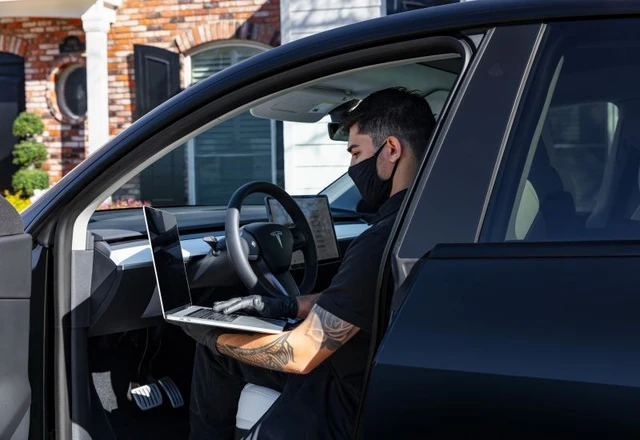 Driver Attention Monitoring in Tesla Electric Vehicles