22 Jul 2026
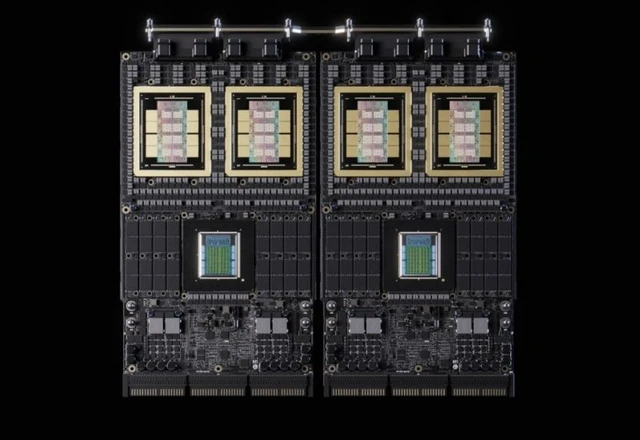 A Strategic US Launchpad for the Vera Rubin Systems
The global race for AI supremacy has fundamentally shifted; the battleground is no longer defined by algorithmic breakthroughs, but by the mastery of physical infrastructure. For the United States, establishing a vertically integrated production cycle for high-tech hardware has evolved into a strategic imperative for both national security and economic resilience. The opening of Wistron’s facility in Texas marks a decisive pivot away from reliance on Asian manufacturing hubs toward the cultivation of an autonomous technological cluster—a move that lays the essential groundwork for the large-scale deployment of next-generation computing systems.
22 Jul 2026
 Scaling the Vera Rubin Generation Infrastructure
The global AI arms race is shifting its focus from algorithmic debates toward the raw physics of hardware scaling. Nvidia is finalizing the rollout of its next-generation server architectures—systems designed to serve as the bedrock for the next evolutionary leap in Large Language Models (LLMs). This isn't merely a quest for higher throughput; it represents a fundamental paradigm shift in how data centers are conceived and constructed. Computational efficiency is now inextricably linked to the infrastructure's capacity to manage staggering thermal demands and complex logistical overhead.
22 Jul 2026
 Charting the Course: The Future of Supersonic Flight and Urban Air Mobility
The global aviation landscape is poised for a fundamental transformation as the boundaries between urban air mobility and high-speed transit begin to blur. The rise of eVTOL technology and the resurgence of supersonic flight are moving beyond the realm of futuristic speculation, evolving into tangible regulatory imperatives. To address this, the Federal Aviation Administration (FAA) is overhauling its frameworks to expedite the integration of these innovations into shared airspace—a shift that signals a strategic pivot from rigid oversight toward a collaborative partnership with the industry.
22 Jul 2026
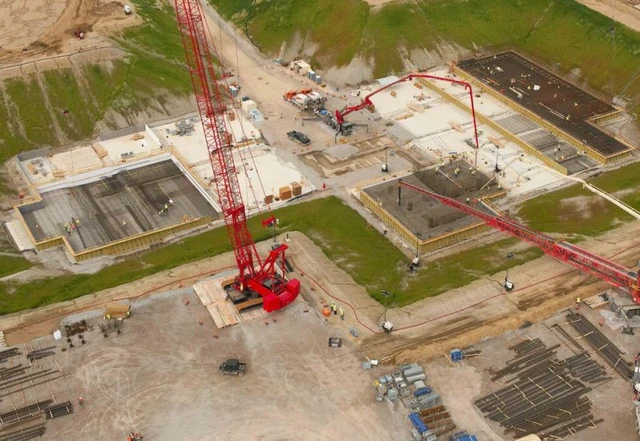 Speculation Surrounding U.S. Semiconductor Manufacturing Capacity
The global semiconductor market is currently navigating an era of profound regionalization and a fierce pursuit of technological sovereignty. In such a climate, the slightest inkling of strategic mergers or asset transfers between industry titans immediately sparks market volatility. Rumors surrounding SK hynix’s potential acquisition of Intel’s stalled Ohio project serve as a textbook example of how investor anticipation can outstrip corporate reality. Despite a brief surge of market optimism, the underlying reality points to a far more cautious stance from both corporations.
22 Jul 2026
 Digital Minimalism in the Light Flip Format
The modern world has fallen captive to dopamine loops and algorithms engineered for the total capture of human attention. The smartphone is no longer merely a tool for communication; it has morphed into the primary engine of cognitive noise and digital dependency. In response to this systemic crisis, there is a growing demand for mindful technology consumption and the reclamation of personal agency over time. Light Flip emerges as the physical manifestation of this philosophy, proposing a radical reimagining of device interaction through the lens of functional minimalism.
22 Jul 2026
 The Hidden Intelligence of Garmin Wearables
The wearables market has long devolved into a competition over display dimensions and luminosity—features that often distract the user from the very activity they are tracking. In this relentless pursuit of feature-creep, the original objective—unobtrusive, deep physiological monitoring—has been sidelined. The introduction of the Garmin Cirqa Smart Band marks a strategic pivot back toward "invisible" technology, where actionable data takes precedence over visual noise. By prioritizing the integrity of biometric analysis, this device offers a mindful alternative to the conventional smartwatch.
22 Jul 2026
 The Gigawatt Alliance: AMD and Anthropic
The global AI arms race is shifting its focus; it is no longer merely a contest of algorithmic refinement, but a battle for colossal computational horsepower. Today, access to energy and specialized silicon has emerged as the primary strategic lever for scaling Large Language Models (LLMs). The alliance between AMD and Anthropic signals a pivot toward infrastructure on an unprecedented scale—a paradigm shift where capacity is measured not just in teraflops, but in gigawatts. This partnership is designed to lay the foundation for a new generation of AI systems engineered to sustain the surging demand for Claude.
22 Jul 2026
 Managed Update Distribution for Closed Networks
Maintaining software currency within isolated environments has long been regarded as one of the most grueling challenges in systems administration. Stringent security protocols and the absence of direct connectivity to external repositories frequently transform routine updates into cumbersome, manual undertakings. Canonical addresses this friction point with the Enterprise Store—a dedicated on-premises proxy designed for the controlled distribution of software. This tool is engineered to bridge the gap between rigorous compliance mandates and the imperative for agile scaling within modern infrastructure.
22 Jul 2026
 The AI Diplomacy of Two Superpowers
The race for technological hegemony in artificial intelligence is migrating from the laboratory to the diplomatic table. Upcoming official summits between the United States and China represent a pivotal attempt to establish the global rules of engagement for the era of frontier models. At stake are not only safety protocols but a fundamental ideological conflict: closed, proprietary ecosystems versus the ethos of open source. The outcome of this dialogue will define the trajectory of neural network evolution for the next decade, shaping the future of the global community.
21 Jul 2026
 Compute Sovereignty and the Expansion of Z.AI
The global AI arms race has decisively shifted its focus: it is no longer merely a battle of algorithms, but a struggle over physical infrastructure. Faced with stringent export controls and a precarious reliance on Western silicon, China is pivoting toward a strategy of absolute technological sovereignty. The unveiling of Z.AI’s massive new data center—powered entirely by homegrown chips—marks a watershed moment in this transition. The debate over the viability of domestic AI accelerators has now moved beyond theoretical speculation and into the realm of large-scale industrial deployment.
21 Jul 2026
 Chinese Automotive Expertise to Bolster OpenAI’s Robotics Ambitions
The line between automotive AI and general-purpose robotics is blurring at an accelerating pace. Today’s tech giants are transcending their roles as mere vehicle manufacturers, evolving instead into architects of sophisticated mobile platforms for artificial intelligence. The migration of top-tier engineers from hardware industries to leading AI laboratories marks a pivotal new chapter in the physical embodiment of Large Language Models (LLMs). This strategic shift in talent underscores the critical importance of infrastructure and silicon optimization in the global race to realize fully functional humanoid robots.
21 Jul 2026
 OpenAI’s Marketing Mirage
The meteoric rise of generative artificial intelligence is shifting from an era of technological wonder to a phase of rigorous scrutiny over its financial viability. As OpenAI races to replicate the scale of Google’s advertising empire within an aggressive timeframe, market analysts are highlighting a profound disconnect between corporate ambition and actual demand. The collision of the startup’s bullish projections with the stark realities of industry data exposes systemic risks inherent in chatbot monetization—a tension that serves as a cautionary signal for a potential financial bubble within the AI sector.
