The contemporary race for deep-space exploration demands a fundamental overhaul of ground infrastructure. Blue Origin is leveraging the aftermath of its May mishap as a catalyst for a significant technological leap. The expansion of its launch complex at Cape Canaveral signals a transition into the era of super-heavy-lift launch vehicles—assets poised to redefine the logistics of lunar missions. The strategic focus has shifted beyond mere recovery; the goal is now the creation of a redundant, agile launch ecosystem.
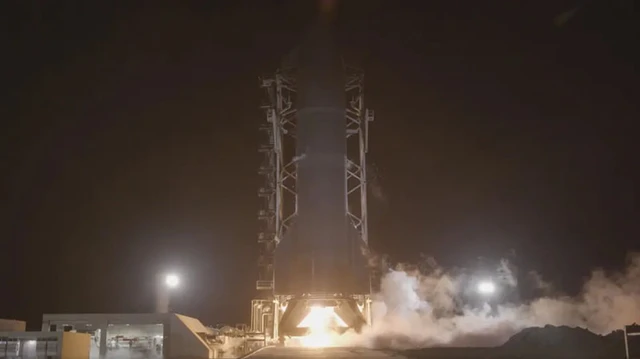
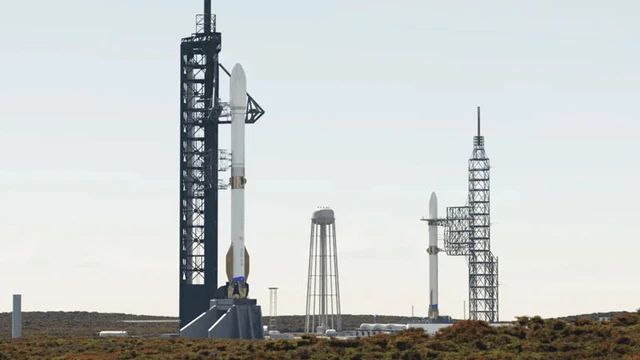
Developments at Cape Canaveral, Florida, are currently demonstrating a textbook engineering pivot: transforming a systemic failure into a catalyst for expansion. Following a devastating accident in May that decimated a portion of its infrastructure, Blue Origin is not merely restoring what was lost, but is effectively doubling its operational capacity. Launch Complex 36 is being bifurcated into two distinct functional zones: the existing pad is now designated LC-36A, while a completely new position, LC-36B, is being constructed alongside it.
This strategy is designed to address two fundamental objectives: increasing launch cadence and ensuring operational redundancy. The availability of two independent launch pads allows for maintenance or repairs on one site without halting the overall flight schedule—a critical requirement for maintaining the momentum of NASA's lunar program, in which Blue Origin is deeply embedded.
The centerpiece of this new infrastructure is the preparation for the super-heavy modification of the New Glenn rocket, designated as the 9×4. This nomenclature directly reflects a significant upgrade to the propulsion system. While the standard New Glenn 7×2 utilizes seven BE-4 methane engines on the first stage and two BE-3U hydrogen engines on the second, the 9×4 variant increases these figures to nine and four, respectively.
Such a scaling of power fundamentally shifts the system's lift capacity. According to design specifications, the New Glenn 9×4 is capable of delivering over 70 metric tons of payload to Low Earth Orbit (LEO) and more than 14 tons directly into Geostationary Orbit (GEO). Most significant is its capacity for trans-lunar trajectories—exceeding 20 tons—positioning the rocket as a primary tool for lunar exploration and colonization. To accommodate such massive modules, the fairing diameter has been expanded from 7 to 8.7 meters.
Parallel to the development of LC-36B, a supporting ecosystem is being deployed. This includes a Vertical Integration Facility (VIF), specifically engineered for the dimensions and mass of the 9×4 variant, as well as a new Payload Processing Facility (PPF). The latter is being developed in partnership with the U.S. government and will serve as a universal hub, supporting not only Blue Origin's projects but also other participants in the space program at the Eastern Range.
Of particular note is the overhaul of the assembly logistics. The company is transitioning to a hybrid integration strategy: stages are mated horizontally, after which the entire vehicle is transported to the pad and hoisted into a vertical position via crane. The payload is integrated only during the final stage, once the rocket is already vertical.
This approach significantly streamlines ground support equipment (GSE) and reduces turnaround time between launches. The necessity for this optimization was driven by a harsh reality: the transport complex for the 7×2 version was completely destroyed during the May explosion and is beyond repair.
Currently, the primary objective remains a return to flight operations by the end of the year. The validation of transport and assembly processes using engineering mock-ups should enable the rapid deployment of operations across the new pads, effectively turning a technological crisis into the strategic foundation for dominance in the super-heavy launch segment.
 The Phenomenon of the Supermassive Galaxy IC 1101