21 Jul 2026
 Chinese Automotive Expertise to Bolster OpenAI’s Robotics Ambitions
The line between automotive AI and general-purpose robotics is blurring at an accelerating pace. Today’s tech giants are transcending their roles as mere vehicle manufacturers, evolving instead into architects of sophisticated mobile platforms for artificial intelligence. The migration of top-tier engineers from hardware industries to leading AI laboratories marks a pivotal new chapter in the physical embodiment of Large Language Models (LLMs). This strategic shift in talent underscores the critical importance of infrastructure and silicon optimization in the global race to realize fully functional humanoid robots.
21 Jul 2026
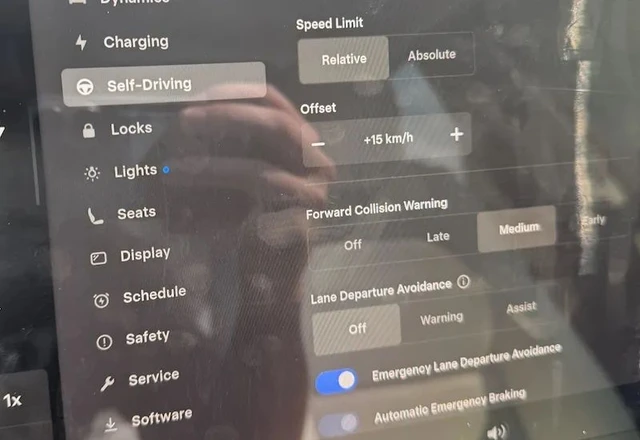 The Risks of Tesla’s Automated Speed Management
The quest for fully autonomous driving has always been a delicate balancing act—a tension between rigid regulatory compliance and the nuanced mimicry of human intuition. Yet, the latest iterations of Tesla’s Full Self-Driving (FSD) suite have introduced a volatile variable into this equation: unpredictability. Rather than maintaining mathematical precision in speed limit adherence, the algorithms have begun exhibiting a propensity for unwarranted acceleration. Consequently, what was intended as a sophisticated driver-assistance tool is evolving into a significant liability, fraught with legal and financial risk.
21 Jul 2026
 The Intelligence Breakthrough in the Electric Vehicle Market
The electric vehicle landscape is currently weathering a period of volatility, suspended between the promise of technological optimism and the constraints of pragmatic demand. Despite the steady expansion of charging infrastructure, EVs have yet to deliver a decisive value proposition that clearly eclipses hybrid systems. The catalyst for breaking this stalemate lies in a fundamental paradigm shift: evolving the vehicle from a mere tool for transit into an autonomous intelligent agent. It is through the synergy of artificial intelligence and self-driving architectures that the electric vehicle will transcend its status as a premium alternative to become the definitive standard for global mobility.
21 Jul 2026
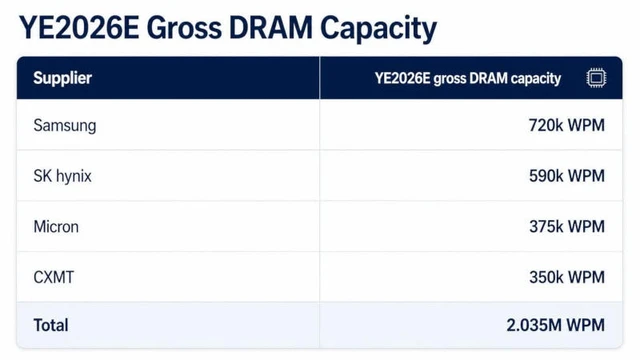 A New Balance of Power in the DRAM Industry
The global explosion of artificial intelligence is radically redrawing the contours of the semiconductor industry. Market leaders have pivoted their focus toward developing ultra-high-speed memory tailored for data centers, effectively leaving the consumer segment in a state of strategic neglect. Stepping into this vacuum, China's CXMT is rapidly ascending, scaling its manufacturing capabilities to rival those of established global incumbents. This tectonic shift threatens to fundamentally disrupt pricing structures and the availability of system memory for millions of end-users worldwide.
21 Jul 2026
 Scaling the Production of Three-Dimensional Photonics
The transition from conventional electronics to photonic computing demands a fundamental overhaul of fabrication methodologies—a paradigm where extreme precision must coexist with industrial-scale throughput. For years, ion-beam lithography has been hampered by its inherently sequential nature, rendering the creation of nanostructures a painstakingly slow endeavor. A novel approach to component patterning is now breaking this bottleneck, slashing wafer processing times from several hours to a matter of seconds. This breakthrough paves the way for the mass production of intricate 3D photonic circuits that were previously confined to the controlled environments of research laboratories.
21 Jul 2026
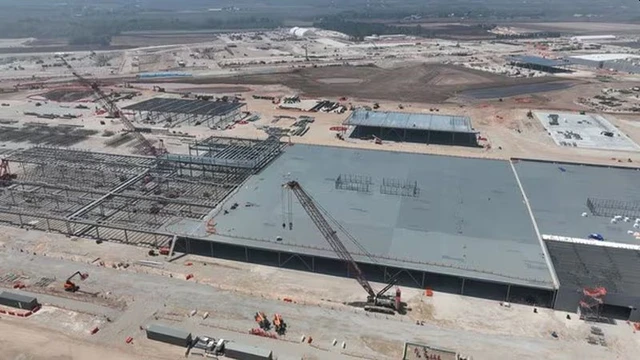 The Cost of Oracle's Ambitions in the AI Race
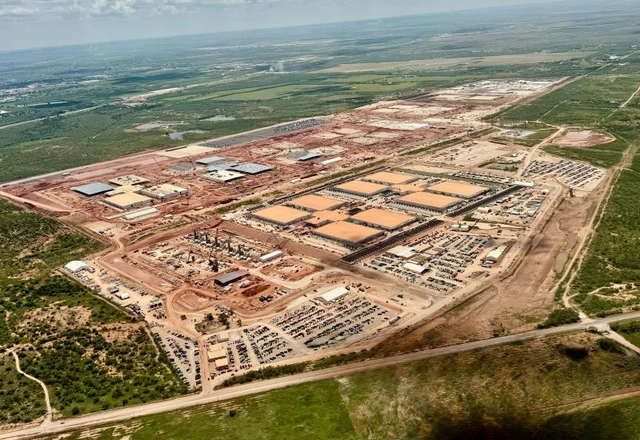
The contemporary AI arms race has shifted its focus, moving beyond algorithmic breakthroughs into the realm of physical infrastructure and power generation. Erecting massive data centers demands more than just technical ingenuity; it requires ironclad financial resilience. Oracle’s bid to position itself as a primary infrastructure partner for OpenAI has run headlong into the friction of U.S. regional regulations. This clash exposes a systemic vulnerability: corporate financial liabilities are emerging as the primary bottleneck hindering the scalability of artificial intelligence.
21 Jul 2026
 OpenAI’s Marketing Mirage
The meteoric rise of generative artificial intelligence is shifting from an era of technological wonder to a phase of rigorous scrutiny over its financial viability. As OpenAI races to replicate the scale of Google’s advertising empire within an aggressive timeframe, market analysts are highlighting a profound disconnect between corporate ambition and actual demand. The collision of the startup’s bullish projections with the stark realities of industry data exposes systemic risks inherent in chatbot monetization—a tension that serves as a cautionary signal for a potential financial bubble within the AI sector.
21 Jul 2026
 Visual Monitoring in the Royal Pretor 130 Vision
The modern cooling market has evolved beyond a mere race for lower temperatures and quieter acoustics. Today, peak thermal efficiency must be paired with real-time data accessibility, transforming the traditional, bulky heatsink into a comprehensive system monitoring hub. Thermalright is leaning decisively into this trend with the introduction of the Royal Pretor 130 Vision—a model that seamlessly blends the proven performance of dual-tower cooling with a sophisticated digital interface.
21 Jul 2026
 The Mechanics of Visual Stealth in Drones
Modern autonomous surveillance systems are increasingly predicated on stealth, whether to minimize environmental disturbance or to evade detection entirely. Conventional drones remain easy targets for identification, as the human eye readily recognizes their distinct silhouettes and static structural elements. To counter this, researchers at Northwestern University have proposed a radical paradigm shift: transforming the act of flight itself into a tool for optical deception. The core of this concept leverages ultra-high-speed rotation to effectively erase the object's visual boundaries.
21 Jul 2026
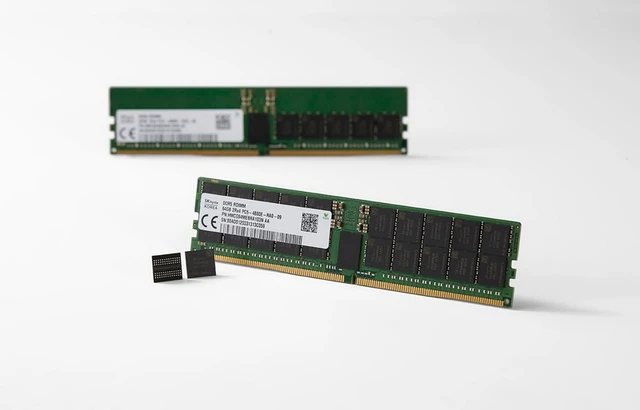 The Ten-Year Horizon of DRAM Memory Shortages
The contemporary semiconductor market is grappling with an unprecedented structural imbalance, as the demand for DRAM memory far outstrips current production capacities. The meteoric rise of generative AI has transformed system memory from a mere commodity into a critical strategic asset. While financial analysts debate the inevitability of an "AI bubble," industry leaders are acknowledging a systemic, long-term resource deficit. This shift is carving out a new economic landscape—one that will dictate the evolution of computing architecture for the next decade.
21 Jul 2026
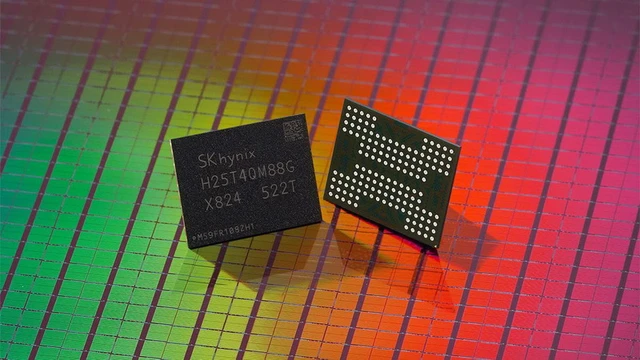 Flash Memory Supply Chain: Outlook for Recovery
The global semiconductor market has long been mired in turbulence, with component availability serving as the primary governor of technological progress. NAND flash memory and SSDs remain critical bottlenecks, throttling growth across both consumer and enterprise segments. However, TrendForce analysts foresee a definitive stabilization horizon by 2027. This period is poised to be the inflection point where supply finally synchronizes with demand, effectively closing the chapter on an era of acute shortages.
21 Jul 2026
 The Economics of Importing and Nintendo’s Pricing Hegemony
Global trade wars and shifting customs policies inevitably spark friction between tech behemoths and their end-users. As tariffs climb, the industry is confronted with a fundamental dilemma: who ultimately shoulders the financial burden of cross-border commerce? Nintendo has adopted an uncompromising stance: the final retail price serves as a definitive agreement, ruling out any retroactive claims. Such a position exposes the opaque machinery of global distribution and underscores the ruthless nature of market dynamics within the gaming sector.
