20 Jul 2026
 The Economics of Operational Data in Neural Network Tooling
Modern software engineering is increasingly reliant upon autonomous AI agents capable of independently orchestrating codebases and external tooling. Yet, beneath the streamlined interface lies a sophisticated mechanism for managing system context—a factor that directly dictates both operational overhead and latency. A comparative analysis of Claude Code and OpenCode exposes a fundamental divide in their respective approaches to prompt optimization and data orchestration. Research indicates that bloated system instructions can drive token consumption up nearly fivefold without delivering a proportional increase in output quality.
19 Jul 2026
 Modernizing the Legendary PuTTY Terminal
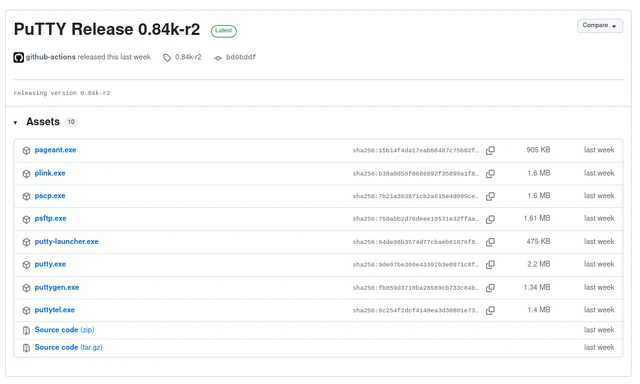
For decades, the realm of systems administration has relied on the reliability and streamlined nature of classic SSH clients. Yet, even the most battle-tested tools eventually require an ergonomic overhaul to keep pace with the demands of modern workflows. The emergence of the modified PuTTY 0.84k-r2 build represents a strategic effort to marry the rock-solid stability of the original software with the flexibility of contemporary user interfaces. At the core of this update is the ambition to reclaim lost functionality from third-party forks, achieved through the integration of artificial intelligence tools.
19 Jul 2026
 Wayland 1.26: New Horizons in Visual Interaction
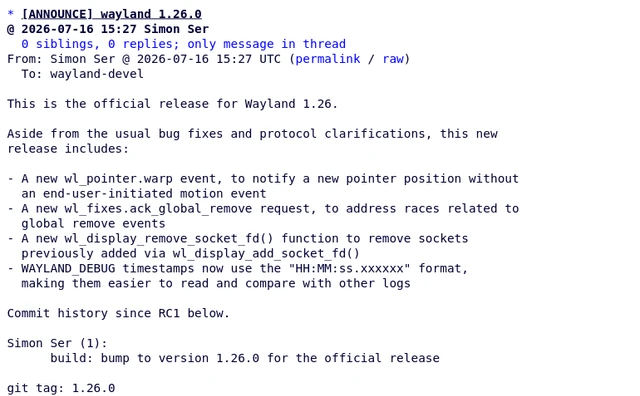
The open-source community’s migration toward a modern display server standard continues apace, steadily phasing out the legacy architecture of X11. The release of Wayland 1.26 marks another milestone in the ecosystem's stabilization process, signaling a shift in focus from foundational functionality to the granular optimization of component interoperability. In this iteration, developers have prioritized the resolution of critical race conditions and the expansion of support for cutting-edge hardware management. The result is a tool engineered for absolute rendering precision and a frictionless user experience.
18 Jul 2026
 Security and Stability in FreeRDP 3.30
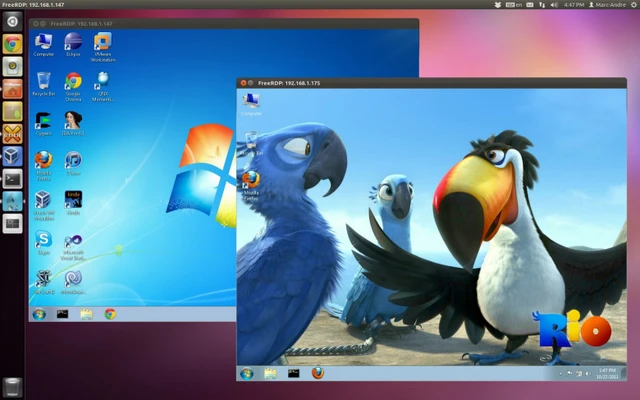
Remote desktop protocols remain a critical pillar of modern IT infrastructure, essential for both systems management and the orchestration of remote workflows. In this environment, any vulnerability within access control mechanisms can serve as an open gateway, potentially compromising the integrity of an entire corporate network. The latest release, FreeRDP 3.30, prioritizes the mitigation of fundamental security risks while significantly enhancing system resilience—marking another milestone in the long-term evolution of one of the most pivotal open-source implementations of the RDP protocol.
18 Jul 2026
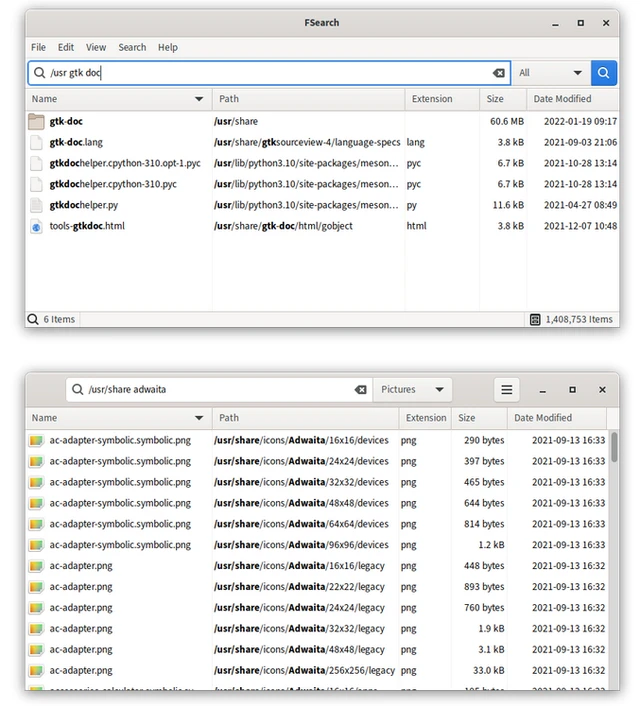 Instant File Search in Open Source
Searching for a specific file among millions of objects often becomes a critical productivity bottleneck, reducing the user experience to one of tedious anticipation. While the Windows ecosystem solved this challenge years ago with the legendary Everything utility, Linux users have long lacked an equivalent in terms of raw speed and efficiency. The arrival of FSearch represents a concerted effort to build a high-performance, standalone tool for filesystem navigation—a project that reimagines data indexing to meet the rigorous demands of power users.
18 Jul 2026
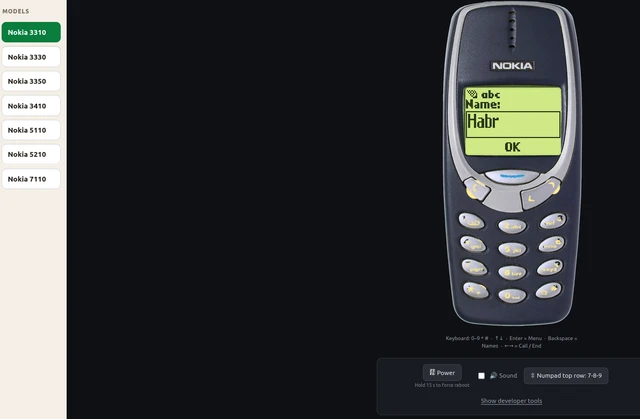 The Engineering Legacy of Nokia’s DCT3 Architecture
The era of feature phones left behind more than mere nostalgia; it bequeathed a vast repository of engineering ingenuity that has now become a subject of digital archaeology. As modern smartphones continue to evolve, access to original hardware from the late nineties grows increasingly elusive, transforming these legacy devices into rare artifacts. The advent of an open-source emulator for the DCT3 platform brings this experience directly into the browser, repositioning legendary Nokia handsets as subjects for rigorous technical analysis. This project represents a concerted effort to safeguard software heritage through an uncompromising commitment to hardware fidelity.
18 Jul 2026
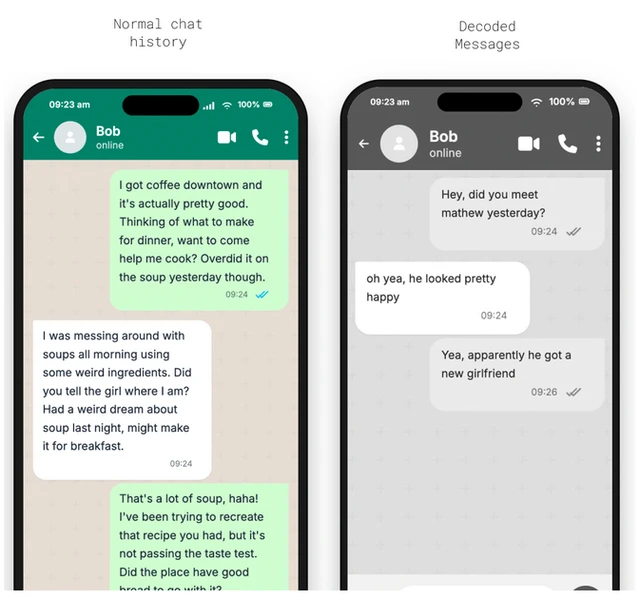 Data Masking via Local Language Models
In an era defined by pervasive digital surveillance, traditional encryption is no longer a sufficient shield; the mere act of transmitting encrypted data often acts as a beacon for scrutiny. Steganography offers a more subtle paradigm—concealing the very existence of secret information within the fabric of mundane content. A new open-source project, Conversation Steganography, elevates this classic discipline to the realm of Large Language Models (LLMs). By weaving hidden meanings into natural dialogue, it effectively camouflages suspicious cryptographic noise as harmless, everyday conversation.
18 Jul 2026
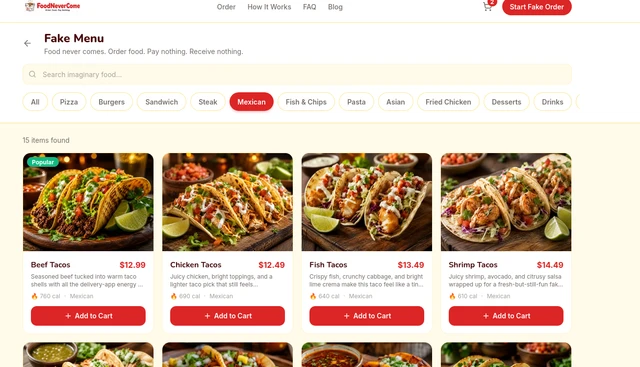 A Dopamine-Driven Virtual Delivery Simulator
Modern user experience in delivery services has long since evolved beyond the mere utility of food procurement, transforming into a meticulously engineered mechanism designed to stimulate the brain's reward system. Often, the true gratification stems not from the meal itself, but from the curated process of selection, the mounting anticipation, and the hypnotic act of tracking a courier’s progress across a digital map. The FoodNeverComes project explores this boundary, offering users a distilled psychological ritual devoid of any physical outcome. It is, in essence, a digital experiment on consumerist addiction, where the primary value shifts to the act of waiting itself.
17 Jul 2026
 Resolving Color Anomalies in the Galaxy S26 Ultra
The pursuit of flawless color accuracy in today's flagship devices frequently reveals a precarious tension between material science and control algorithms. Recent reports of a pervasive red tint affecting Galaxy S26 Ultra displays have sparked significant concern over the integrity and quality control of the latest generation of OLED panels. This issue—manifesting as chromatic shifts or, in more severe cases, distinct pink blotches—has cast doubt on the fundamental hardware reliability of the device. Samsung’s response, however, attempts to shift the narrative away from manufacturing defects, framing the problem instead as a matter of software calibration and optimization.
17 Jul 2026
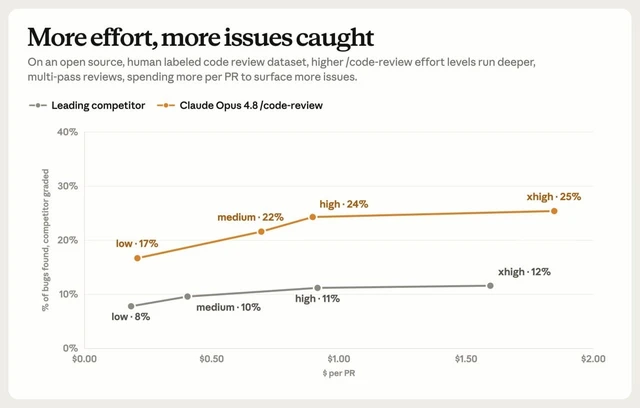 AI Agent Pipeline for Code Review
The software engineering landscape is undergoing a paradigm shift, moving beyond rudimentary chatbots toward sophisticated agentic systems. In this new era, the quality of the output is dictated not by the raw capacity of a single model, but by the orchestration of the workflow itself. Anthropic’s latest update to Claude Code epitomizes this transition, swapping linear prompting for a multi-tiered analysis pipeline. Rather than merely attempting to extend the model's "reasoning" window, the company has implemented a hierarchy of specialized verification pipelines—a strategic move designed to mitigate the inherent cognitive biases AI encounters when auditing its own code.
17 Jul 2026
 The Price of Admission to the AI Elite
The global AI arms race has triggered an unforeseen byproduct: the emergence of a shadow market for recruitment coaching. Securing a position at the world’s premier research labs has evolved into a costly strategic operation—one where raw technical proficiency is no longer sufficient, and insider intelligence has become the primary currency. With hourly rates for these consultants reaching four figures, the job hunt has transitioned from a simple search for employment into a high-stakes financial investment. This trend underscores a fundamental shift in selection criteria, signaling an era where traditional methods of competency assessment are rapidly becoming obsolete.
17 Jul 2026
 The Inkling Adaptive Intelligence Ecosystem
The race for dominance in synthetic benchmarks is gradually giving way to a more pragmatic pursuit of deep specialization. In an era dominated by proprietary, closed-source systems, the industry is facing a critical demand for versatile foundation models that can be seamlessly adapted to specific enterprise requirements. Thinking Machines Lab is entering the fray with Inkling—a large-scale, open-weights solution designed to shift the very paradigm of AI interaction. The core value proposition has evolved: it is no longer about a model's raw "intelligence," but rather the speed and efficiency with which it can be tailored to the end-user's precise needs.
