The wearables market has long since evolved beyond its experimental phase, maturing into a fierce competition centered on battery autonomy and functional utility. Against this backdrop, Core Devices' strategic approach to evolving the Pebble platform serves as a compelling case study in how an open ecosystem can catalyze technological advancement. By pairing aggressive manufacturing scalability with rigorous software optimization, they are establishing a new benchmark for human-device interaction. The industry's focus is now pivoting away from mere notifications toward a comprehensive ecosystem of applications and robust developer tooling.
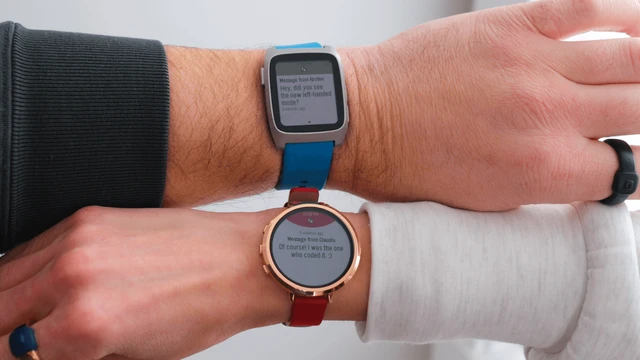
The rollout of the Pebble Time 2 is gaining strong momentum: over 23,000 units were shipped during the first four months of mass production, fulfilling more than 80% of pre-orders. The logistics cycle is expected to conclude by late July, after which the devices will transition to general availability. This phase serves as a strategic foundation for further expanding the lineup, which will include the Round 2 smartwatch and the Index 01 smart ring.
However, the platform's true value lies less in the hardware and more in the evolution of PebbleOS. Power efficiency has long been the primary challenge for wearables, and in this regard, the developers have made significant strides. Thanks to deep kernel optimization, the battery life of the Pebble 2 Duo has nearly doubled, increasing from 17 to over 30 days. The Pebble Time 2 has also delivered impressive results, offering approximately three weeks of operation on a single charge—effectively eliminating the burden of "daily maintenance."
To expand functional capabilities, the Software Development Kit (SDK) has undergone a substantial overhaul. Developers now have comprehensive tools for full integration with the touchscreen, speaker, and RGB backlighting. Particularly noteworthy is the advancement of Alloy, the JavaScript platform: the implementation of a Foreign Function Interface (FFI) to call C code allows for high-performance applications while maintaining the flexibility of a scripting language. Furthermore, the introduction of the XSBUG integrated debugger elevates PebbleOS development to a professional grade, significantly tightening the software iteration cycle.
The result of this approach has been an explosion of user-generated content; the community has already produced over 2,100 apps and unique watch faces. This transforms the device from a closed product into an open platform where functionality is driven by user demand rather than solely by the vendor's vision.
Simultaneously, the mobile client is being modernized. The app now integrates support for the new Index 01 gadget and implements modern interaction protocols, including webhook and MCP support. Data privacy has been prioritized, with backups now protected by end-to-end encryption—a critical requirement for devices collecting personal biometric information.
A pivotal decision was the release of the mobile app's source code under the GPLv3 license. This move not only ensures system transparency but also invites the global developer community to collaborate on product improvements, creating a sustainable ecosystem independent of corporate constraints.
 The Evolution of Ultrabooks: Driven by Solid-State Cooling