The contemporary AI landscape is evolving beyond rudimentary chatbots toward sophisticated multi-agent architectures, where a primary orchestrator manages an ecosystem of specialized sub-agents. Within this paradigm, interaction transparency has emerged as a mission-critical requirement for both system debugging and robust security. Yet, in a surprising pivot toward opacity, OpenAI is implementing the encryption of internal instructions within Codex. This strategic move signals a new epoch in the protection of intellectual property and data privacy, specifically targeting the layer of inter-model communication.
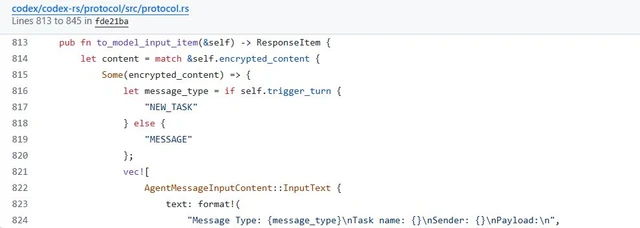
Recent updates to OpenAI's Codex system have introduced a paradigm shift in how the primary AI agent interacts with its subordinate sub-agents. Previously, session histories provided developers with full transparency, exposing task descriptions in plain text; now, these internal instructions are transmitted via encrypted payloads. For end-users and researchers, logs have evolved from readable documents into indecipherable strings, effectively masking the system's internal delegation logic.
This security measure has been implemented selectively, primarily targeting the most powerful models in the GPT-5.6 family—Sol and Terra. Conversely, OpenAI has maintained open communication channels for the compact Luna version, highlighting a tiered approach to model segmentation based on data criticality. Interestingly, GPT-5.5, which previously employed encryption, has reverted to a readable mode, suggesting an ongoing effort to strike a balance between security and operational utility.
The professional community's reaction on GitHub has been polarized. Developers are citing a critical lack of transparency that severely hinders debugging. Furthermore, the technical implementation of this encryption has triggered systemic failures: there are documented instances where an AI agent fails to decrypt a command from another agent, even when both operate on the same model. This results in a break in the execution chain and a total process collapse.
From an analytical standpoint, OpenAI's strategy is driven by two primary drivers. First is the prevention of model distillation; competitors could leverage open internal instructions from high-tier models to train their own lightweight systems, effectively "harvesting" reasoning logic and agent management methodologies. Second is data privacy. Utilizing encrypted intermediate states allows information to be passed between queries without storing plain text on company servers, thereby minimizing the risk of sensitive data leaks.
Parallel to these software pivots, OpenAI is expanding its physical control interface. In collaboration with Work Louder, they have introduced Codex Micro—a specialized macropad that shifts AI agent management into the realm of tactile interaction. Equipped with physical buttons, a joystick, and a rotary encoder, the device allows operators to monitor task status in real-time, trigger complex scenarios, and, most crucially, modulate the model's reasoning depth. This approach transforms the interaction with the neural network from a simple exchange of messages into the comprehensive orchestration of a sophisticated computational engine.
 Nvidia N1X and the New Era of Arm PCs