7 Jul 2026
 Claude Fable 5 Availability Extended
The global race for Large Language Model (LLM) supremacy is no longer defined solely by algorithmic sophistication; it is increasingly dictated by the availability of compute and the complexity of regulatory hurdles. Anthropic’s experience with Claude Fable 5 serves as a stark illustration of how technical constraints and external pressures directly impact the user experience. By once again revising the rollout schedule for its flagship model among paid subscribers, the company has highlighted the precarious balance between the ambition to deliver cutting-edge innovation to the market and the hard limits of existing infrastructure.
6 Jul 2026
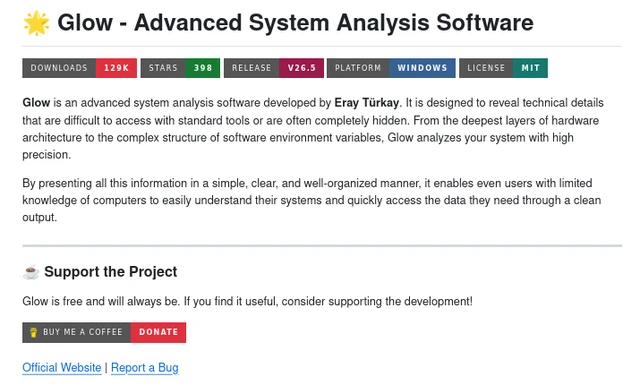 Glow Diagnostic Toolkit v26.11
As modern operating systems grow increasingly complex, deep-dive system analysis has become indispensable for maintaining peak PC stability and performance. In an era of rapid Windows updates, transparency regarding the interplay between hardware and software is now a primary objective for both IT professionals and power users. Open diagnostic tools are key to achieving this level of granularity, enabling independent verification of overall system health. The latest release of Glow represents a paradigm shift in system monitoring, delivering uncompromising precision and reliability.
6 Jul 2026
 The GDID Digital Footprint and the Collapse of Scattered Spider
The apprehension of a young hacker at Helsinki Airport served as the closing act in a sweeping investigation into one of today's most audacious cybercrime syndicates. This case, centered on massive data breaches and multi-million dollar extortion schemes, brought to light an unexpected forensic asset: the deep telemetry integrated into the Windows operating system. At the heart of the matter was a device identification mechanism that effectively transformed consumer software into a sophisticated instrument for digital surveillance. The incident forces the tech industry to confront a pressing dilemma regarding the boundaries of privacy and the extent to which modern operating systems are transparent to state authorities.
6 Jul 2026
 PlayStation Puga: The Forgotten Portable Experiment
The gaming industry's history is replete with ambitious prototypes that never reached the production line, stifled by corporate friction or market barriers. All too often, engineering ingenuity collides with an impenetrable wall of legal red tape and licensing disputes. A prime example of such an artifact is the PS Puga project—Sony’s attempt to redefine the console paradigm by fusing the system with its controller. While intended as a strategic response to severe economic headwinds, the device ultimately became little more than a technical curiosity.
6 Jul 2026
 The Crisis of Trust in the Era of Generative Models
The modern literary landscape is grappling with a profound paradox: human creativity has become subject to algorithmic censorship. The controversy surrounding the Commonwealth Prize has laid bare a systemic crisis of confidence, as winning entries were branded as products of neural networks. This clash underscores the inherent fallibility of current detection tools and their inability to differentiate a distinct authorial voice from mere statistical patterns. At the heart of this debate lies a fundamental question: where does technical optimization end, and true art begin?
6 Jul 2026
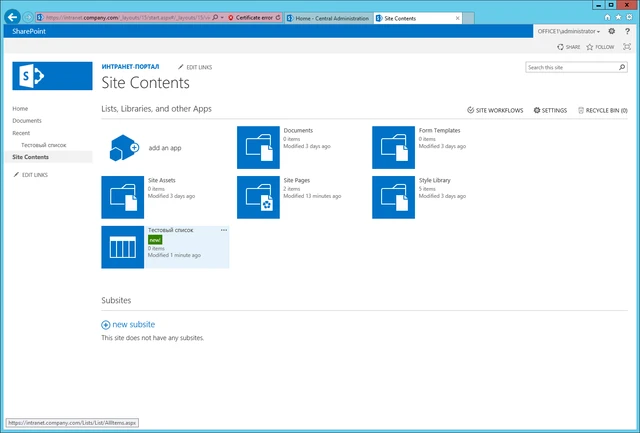 The Evolution of Automation Tools in SharePoint
Microsoft is fundamentally recalibrating its ecosystem strategy, pivoting toward deep AI integration and agile workflows. This transition necessitates an inevitable departure from the legacy constraints of previous decades in favor of modern low-code platforms. The widespread deprecation of several SharePoint services has triggered an urgent mandate for infrastructure modernization across the corporate sector. At stake is not merely a technical refresh, but a fundamental paradigm shift in data management and automation.
6 Jul 2026
 The Hardware Crisis of the Early Steam Machines
The ambition of condensing a full-scale gaming PC into a console form factor frequently collides with the brutal realities of hardware reliability. Early adopters of the Steam Machine were plagued by a critical defect that earned the ominous moniker "the red line of death." Far from being a mere software glitch, this symptom signaled a catastrophic failure of core system components—a scenario that draws unsettling parallels to some of the most notorious disasters in gaming history.
6 Jul 2026
 Anthropic’s Path to Custom Silicon
The AI race has fundamentally shifted: the battleground is no longer just about algorithms, but about physical silicon. Today, access to compute has become the ultimate lever of influence and the primary bottleneck hindering the scaling of neural networks. Anthropic’s move to develop its own proprietary accelerators signals a pivotal transition from resource dependency to technological sovereignty—a strategic play designed to eliminate critical reliance on external suppliers amidst a global hardware crunch.
6 Jul 2026
 New Frontiers in ReactOS Compatibility
Developing a completely open-source alternative to Windows remains one of the most ambitious and technically daunting undertakings in the history of systems programming. For decades, the ReactOS project has pursued total binary compatibility with Microsoft’s proprietary codebase, navigating the formidable obstacles posed by closed-source specifications. Recent milestones achieved by the development team signal a quantum leap, not only in graphical performance but also in the sophisticated implementation of low-level kernel mechanisms. This transition toward supporting more contemporary iterations of the NT architecture paves the way for executing modern software atop an entirely open-source stack.
6 Jul 2026
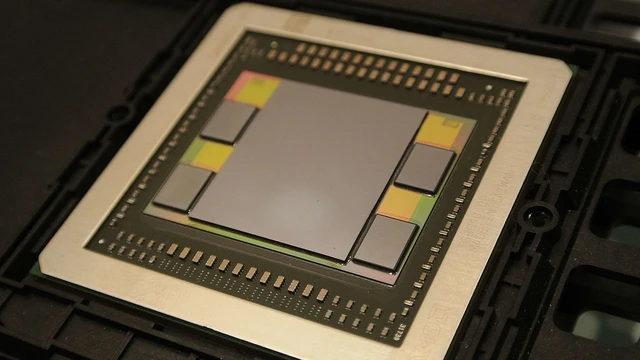 The Paradox of Explosive Growth in the Memory Market
The global AI boom has ignited an insatiable demand for semiconductor memory, driving component costs to stratospheric levels. Yet, this explosive growth has proven to be a double-edged sword, introducing systemic risks for the industry's dominant players. Acute supply shortages are now forcing tech giants to recalibrate their geopolitical footprints and pricing strategies. The market has come to realize that excessive windfall profits inevitably trigger a severe correction.
5 Jul 2026
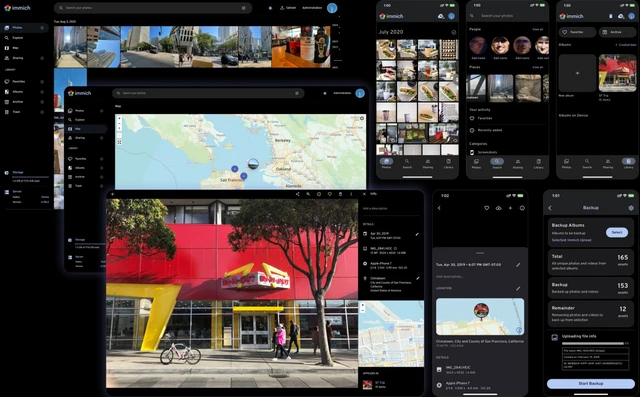 Digital Independence with the Immich 3.0 Update
In an era of ubiquitous reliance on cloud giants, data ownership has evolved into a fundamental question of digital sovereignty. While centralized services offer seamless convenience, they often do so at the expense of privacy and absolute control over personal archives. Immich seeks to resolve this tension, positioning itself as a robust, self-hosted alternative to corporate storage ecosystems. The launch of version 3.0 marks a pivotal shift for the platform, moving beyond its initial rapid development phase toward deep technical optimization and a refined user experience.
5 Jul 2026
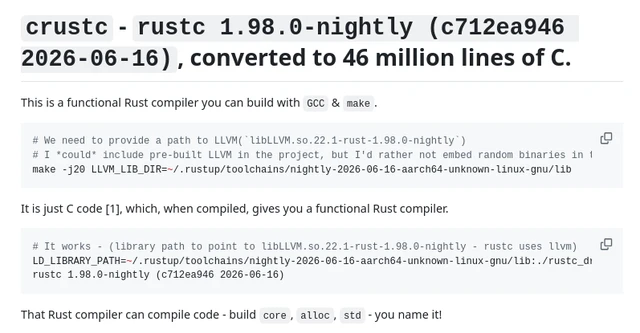 Transpiling Rust into the Universal C Standard
Modern software development tooling relies on powerful yet monolithic infrastructures such as LLVM and GCC. However, the persistence of niche architectures and legacy systems creates a significant barrier to the adoption of modern, strongly-typed languages like Rust. The crustc project proposes a radical solution: the deep transpilation of compiler code into C. This experiment demonstrates that hardware constraints can be effectively bypassed by pivoting back to the universal bedrock of the ANSI C standard.
