7 Jul 2026
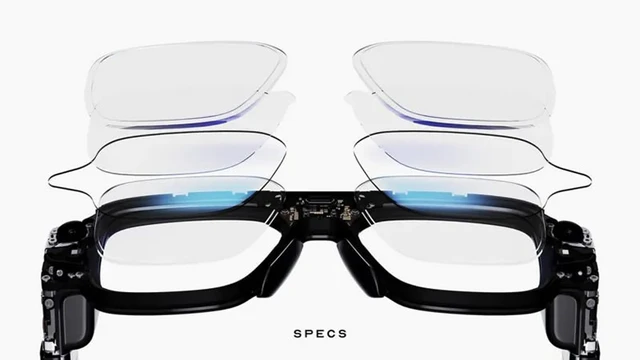 Snap’s Spatial Leap in Augmented Reality
The boundary between the physical world and the digital layer is becoming increasingly porous. While the industry has been polarized between rudimentary smart glasses and cumbersome headsets, a long-awaited middle ground is finally emerging. Snap’s new Specs AR glasses aim to fuse the portability of a daily accessory with the raw power of full-scale spatial computing. The device represents a bold attempt to redefine how humans interact with information in real time.
7 Jul 2026
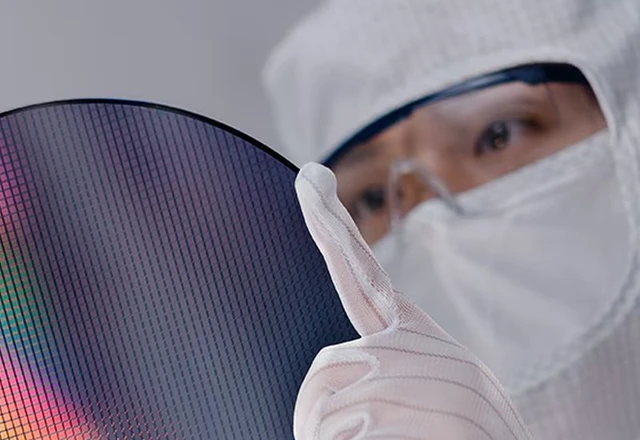 Samsung: The Strategic Reserve of the Tech Titans
The modern semiconductor market has become a hostage to its own success, as the demand for AI compute power vastly outstrips production capacity. TSMC’s overwhelming dominance has created a perilous single point of failure for the global tech ecosystem, compelling the industry's heavyweights to seek viable alternatives. In this climate, South Korea’s Samsung is evolving from a mere competitor into a critical insurance policy for the market's vanguard. Transitioning to a multi-vendor strategy has emerged as the sole path to survival in an era of systemic chip scarcity.
7 Jul 2026
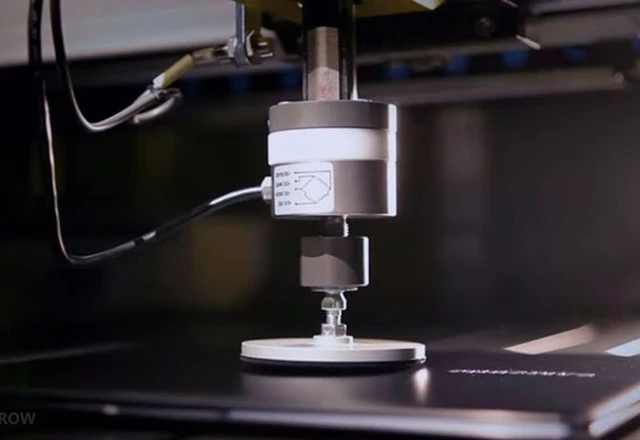 Digital Twins Accelerate Samsung's Development Cycles
Modern industry is undergoing a fundamental paradigm shift toward the comprehensive digitalization of production cycles. Amidst the cutthroat competition of the electronics market, time-to-market has evolved into a critical determinant of survival. South Korean titan Samsung is doubling down on the deep integration of artificial intelligence and the implementation of digital twins. This strategic pivot enables the company to drastically compress product testing timelines by migrating grueling physical trials into the realm of high-fidelity simulations.
7 Jul 2026
 The Intelligent Leap of Wear OS 7
The wearable ecosystem is undergoing a fundamental metamorphosis, evolving from mere notification hubs into sophisticated, autonomous assistants. The launch of Wear OS 7, timed to coincide with the rollout of Android 17, represents Google's latest endeavor to resolve the perennial tension between feature-rich functionality and power efficiency. The focus has shifted beyond the user interface toward the deep integration of generative AI into the fabric of daily routines—a decisive step toward forging a seamless bridge between the user's wrist and the vast capabilities of cloud computing.
7 Jul 2026
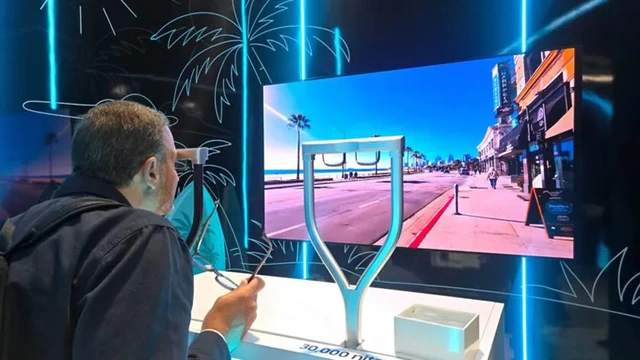 The Evolution of Samsung’s Microdisplays for Augmented Reality
The quest for the definitive wearable interface has shifted decisively from the realm of software optimization to the frontier of hardware innovation. The industry's primary challenge remains the pursuit of a delicate equilibrium: minimizing device weight without compromising visual fidelity. Samsung Display proposes a solution to this dilemma through its new RGB OLEDoS technology—microdisplays capable of fundamentally redefining how humans interact with digital data within a physical environment.
7 Jul 2026
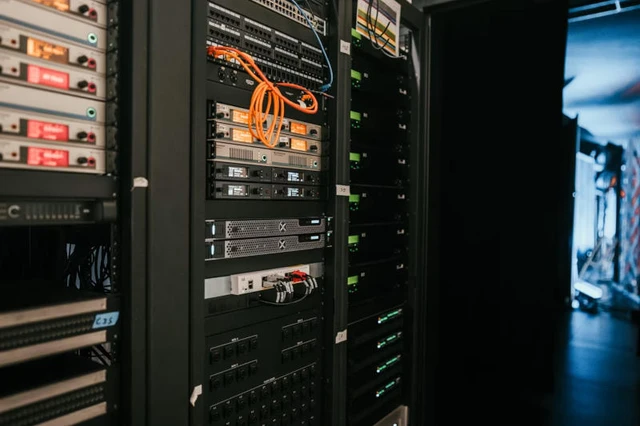 The End of x86 Dominance in Data Centers
The global server hardware market is undergoing a tectonic shift, one that is fundamentally rewriting the industry's rulebook. For decades, the absolute dominance of x86 architectures seemed immutable; however, the rise of artificial intelligence has catalyzed a demand for a new breed of efficiency. Today, alternative computing solutions are rapidly seizing nearly half the market, systematically displacing the traditional incumbents. This transition signals a fundamental paradigm shift in the very architecture of global digital infrastructure.
7 Jul 2026
 Restoring Speech via Neural Decoding
The boundary between human consciousness and machine execution is becoming increasingly porous. For those living with amyotrophic lateral sclerosis (ALS), the loss of speech is among the most devastating dimensions of the disease. However, recent breakthroughs in brain-computer interfaces (BCIs) and artificial intelligence are reframing these clinical challenges as solvable engineering problems. A new system developed at the University of California, Davis, demonstrates that neural interfaces can transcend the confines of sterile laboratories to integrate into the cadence of a full professional life. This represents more than a medical milestone; it is a fundamental paradigm shift in the synergy between humanity and technology.
7 Jul 2026
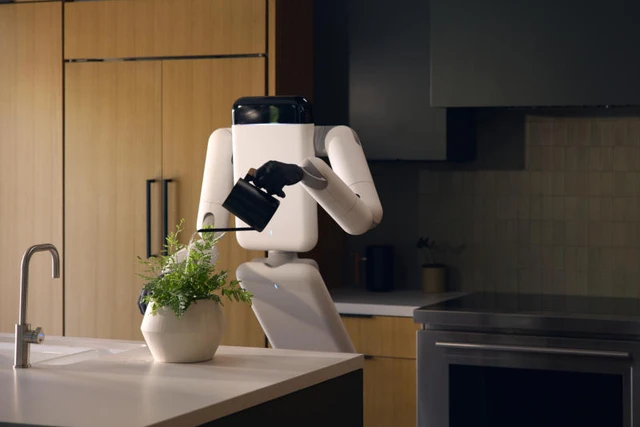 Genesis Eno and the New Aesthetic of Robotics
For years, the race to develop humanoid robots has been driven by an obsession with visual mimicry. Today, however, the industry is pivoting, shifting its focus from superficial aesthetics toward functional efficiency. Genesis AI, a French startup backed by Eric Schmidt, is challenging established norms with the introduction of its robot, Eno. This machine reimagines the very essence of the humanoid concept, prioritizing pragmatism over anatomical fidelity.
7 Jul 2026
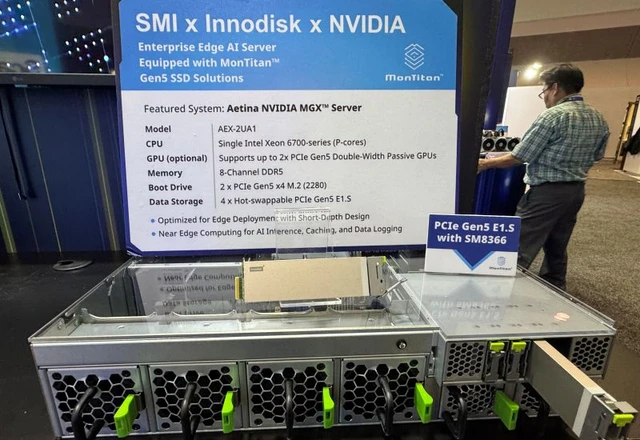 Nvidia Emerges as the Primary Catalyst for PCIe 6.0
For years, the hierarchy of computing interfaces was dictated solely by the x86 titans, Intel and AMD. However, the meteoric rise of artificial intelligence and the migration of computational workloads toward GPUs have radically shifted the balance of power. Today, memory controller architects are increasingly aligning their strategies with Nvidia's roadmaps, effectively acknowledging the company as the new technological hegemon. This pivot signals a departure from a CPU-centric development model toward an ecosystem where data throughput is governed by the insatiable demands of graphics accelerators.
7 Jul 2026
 Managing the Impact of AI on China's Labor Market
The global discourse surrounding AI's impact on the workforce remains polarized, caught between a wave of techno-optimism and the looming specter of mass unemployment. While much of the world is still attempting to forecast the fallout, Beijing is pivoting toward a strategy of rigorous, systemic monitoring. The State Council of the PRC has launched an ambitious five-year plan designed to analyze the transformation of the labor force under the influence of generative AI models. The objective is clear: to transmute an unpredictable technological disruption into a managed process of social adaptation.
7 Jul 2026
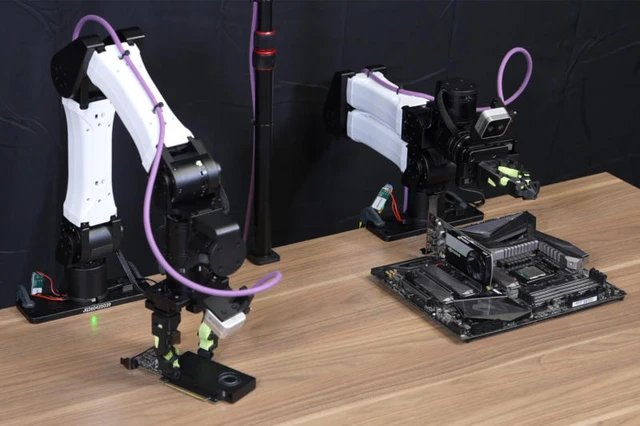 Autonomous Agents Master the Art of Electronics Assembly
The boundary between digital cognition and physical agility is blurring at an accelerating pace. Nvidia’s ENPIRE project showcases the ability of contemporary AI agents to autonomously master intricate real-world manipulations, moving beyond the limitations of rigid, hard-coded programming. By synthesizing the power of Large Language Models (LLMs) with robotic hardware, the system shifts toward a paradigm of experiential learning and iterative error analysis. This evolution clears the path for truly agile, autonomous production environments capable of adapting to new operational demands in real time.
7 Jul 2026
 Optoelectronics with Selective Forgetting Capabilities
Modern artificial intelligence systems are hitting a fundamental wall in energy efficiency, a consequence of the rigid architectural divide between data processing and storage. The incessant shuttling of information between the processor and memory generates immense overhead—a systemic inefficiency widely recognized in the industry as the "von Neumann bottleneck." A potential remedy lies in the shift toward neuromorphic computing, an approach where sensors are imbued with rudimentary cognitive capabilities. In a significant breakthrough, researchers at Oregon State University have unveiled a device that does more than simply capture light; it can selectively "forget" irrelevant data, effectively mimicking the biological mechanisms of the human brain.
