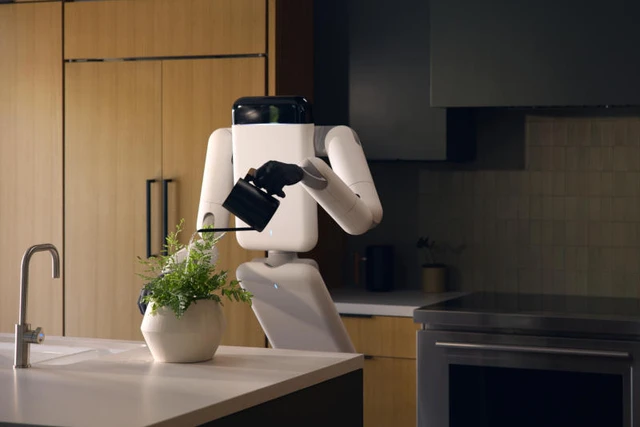
For years, the race to develop humanoid robots has been driven by an obsession with visual mimicry. Today, however, the industry is pivoting, shifting its focus from superficial aesthetics toward functional efficiency. Genesis AI, a French startup backed by Eric Schmidt, is challenging established norms with the introduction of its robot, Eno. This machine reimagines the very essence of the humanoid concept, prioritizing pragmatism over anatomical fidelity.
Modern robotics has long been gripped by a cult of anthropomorphism—the prevailing belief that for a machine to navigate the human world, it must mirror the human form. Genesis AI challenges this paradigm. In developing their robot, Eno, the startup’s engineers looked past the aesthetics of the human body, focusing instead on the sum of its capabilities. The result is a machine that deliberately eschews the classic android silhouette in pursuit of absolute utility.
Rather than relying on traditional legs—which frequently prove to be liabilities in terms of balance and power consumption—Eno utilizes a wheeled platform. This design ensures superior stability and agility within structured environments. Furthermore, the robot features a foldable chassis, reminiscent of a deck chair, significantly streamlining transport and storage. The absence of a head or facial mimicry underscores the creators' core philosophy: "humanoid" status is defined not by appearance, but by the capacity to execute tasks designed for humans.
The primary intersection between Eno and human anatomy lies in its upper extremities. Here, the developers adhered to a principle of strict functional and formal correspondence to the human hand. This choice was driven not by a desire for mimicry, but by cold technical necessity: our entire environment—from simple door handles and light switches to complex industrial machinery—is engineered around the ergonomics of the human grip. By equipping Eno with manipulators that mirror human dexterity, Genesis AI has created a universal agent capable of utilizing existing tools without requiring a costly redesign of the surrounding infrastructure.
This strategy elevates Eno beyond the realm of narrow, single-purpose automation. Unlike robots engineered for a solitary operation—such as sorting laundry or shifting crates—Eno is conceived as a general-purpose platform. Its inherent flexibility allows it to be adapted to a vast array of operational scenarios, dictated solely by the installed software and the objective at hand.
The deployment roadmap for Eno envisions a phased expansion. By the end of 2026, the company intends to begin shipping the first units, prioritizing integration into manufacturing cycles, laboratory research, and logistics chains. Following this industrial baptism, the robots are slated for the service sector—including hospitals and hotels—before eventually entering the consumer market. In parallel, Genesis AI continues to refine additional chassis modifications, ensuring the machine's form can be precisely tailored to specific applied tasks.
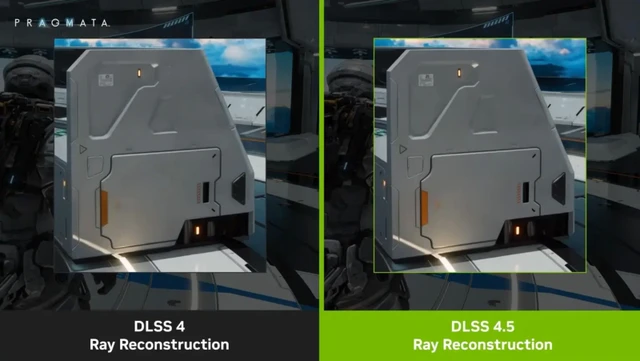 The Evolution of Rendering in DLSS 4.5