The quest for the definitive wearable interface has shifted decisively from the realm of software optimization to the frontier of hardware innovation. The industry's primary challenge remains the pursuit of a delicate equilibrium: minimizing device weight without compromising visual fidelity. Samsung Display proposes a solution to this dilemma through its new RGB OLEDoS technology—microdisplays capable of fundamentally redefining how humans interact with digital data within a physical environment.
The current trajectory of XR technology demands a shift toward radical miniaturization without compromising visual fidelity. At Augmented World Expo 2026, Samsung Display unveiled its latest breakthroughs in RGB OLEDoS (OLED on Silicon)—a technology that integrates organic LEDs directly onto a silicon substrate. Unlike traditional glass-based OLED panels, this approach enables an extraordinary pixel density, a critical requirement for displays positioned in immediate proximity to the human eye.
Of particular interest is a compact 0.62-inch prototype designed for the everyday smart glasses segment. The primary objective of this module is to ensure high interface legibility while maintaining minimal power consumption. This paves the way for truly functional wearables capable of real-time language translation, navigation prompts, or live weather updates, all without burdening the frames with excessive weight or bulky batteries.
For more complex Mixed Reality (MR) scenarios, the company has developed a 1.3-inch model. Its standout feature is a staggering brightness level reaching 40,000 nits. This extreme luminance is necessitated by the nature of AR optics: for digital content to remain visible and high-contrast under bright sunlight, the image source must possess immense luminous intensity.
The technical edge of RGB OLEDoS lies in its streamlined panel architecture. By eliminating complex intermediate layers, the technology not only reduces the overall mass of the device but also optimizes energy efficiency. Coupled with precise color reproduction, this makes the technology the most promising foundation for lightweight electronics, where every milligram of weight and every milliwatt of power is critical.
While Samsung Display officially maintains a distance from the specific roadmaps of Samsung Electronics, market indicators suggest the preparation of several product lines. Insider reports point to the development of two distinct smart glasses concepts. The first, codenamed "Haean," may serve as a proving ground for even more advanced microLED panels. The second model, tentatively called "Glasses," may adopt a minimalist approach, eschewing a dedicated display entirely in favor of integrated cameras and advanced AI-driven voice control.
Such a diversification of strategies indicates that the industry has yet to converge on a standardized form factor. However, the implementation of RGB OLEDoS renders one of these paths—the path of visual reality augmentation—both technically feasible and commercially viable.

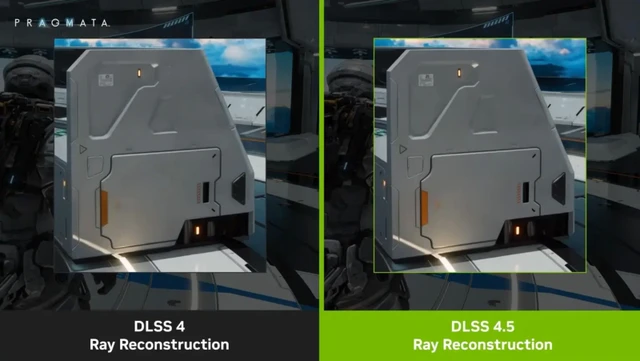 The Evolution of Rendering in DLSS 4.5