The boundary between human consciousness and machine execution is becoming increasingly porous. For those living with amyotrophic lateral sclerosis (ALS), the loss of speech is among the most devastating dimensions of the disease. However, recent breakthroughs in brain-computer interfaces (BCIs) and artificial intelligence are reframing these clinical challenges as solvable engineering problems. A new system developed at the University of California, Davis, demonstrates that neural interfaces can transcend the confines of sterile laboratories to integrate into the cadence of a full professional life. This represents more than a medical milestone; it is a fundamental paradigm shift in the synergy between humanity and technology.
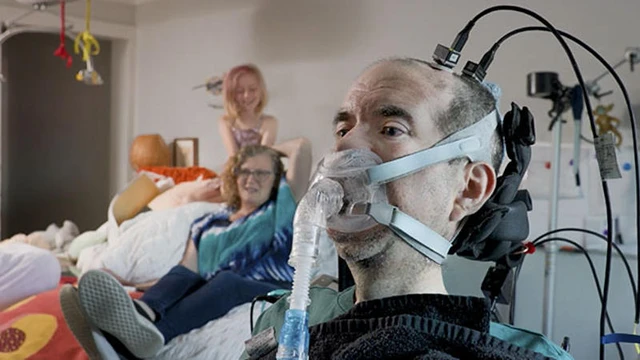
For years, brain-computer interfaces (BCIs) remained largely the domain of academic curiosity—technologies that yielded impressive results in controlled environments but proved too fragile for the complexities of the real world. However, a recent case involving a patient with amyotrophic lateral sclerosis (ALS) marks a pivotal shift from experimental prototypes to viable rehabilitative tools. Through the synergy of implantable hardware and advanced machine learning algorithms, an individual who had completely lost the ability to speak and move has not only regained the power of communication but has returned to professional life, working full-time as an environmental advocate.
At the heart of this breakthrough is the BRAND (Brain-computer interface for Rapidly Adaptive Neural Decoding) software platform, developed by researchers at the University of California, Davis, as part of the extensive BrainGate coalition. Unlike earlier attempts at thought decoding, which often relied on generalized activity patterns, BRAND focuses on the high-precision interpretation of signals from the ventral portion of the precentral gyrus—the specific region of the brain responsible for the motor control of the face, mouth, and jaw.
The process of translating neural impulses into speech is implemented across multiple layers. First, AI algorithms recognize brain activity and translate it into phonemes—the smallest units of sound in a language. Subsequently, additional software layers aggregate these phonemes into words, and those words into grammatically correct sentences. The result is synthesized speech that allows the user to express thoughts with a level of naturalness unattainable through traditional augmentative and alternative communication (AAC) methods.
A critical component of this research was the system's validation outside the laboratory. While phrase synthesis accuracy reached 99% under ideal controlled conditions, the true triumph was maintaining a 92% accuracy rate in daily life. Furthermore, the device demonstrated exceptional stability: over several years of operation, it logged more than 3,800 hours, averaging roughly five hours of daily use. This proves that the system can function autonomously, without the constant supervision of engineers and neurobiologists.
Drawing a parallel between the current state of neural interfaces and the first pacemakers of the 1950s, researchers emphasize the inevitability of form-factor evolution. Just as early cardiac stimulators required connection to bulky external batteries or even the power grid, today's equivalents are miniature and fully implantable. While current BCI systems still rely on powerful external computational nodes, the trajectory is clear: the miniaturization of hardware and the migration of processing directly onto the implant's chip.
This success confirms that neural interfaces are transitioning from the realm of science fiction into practical, applied tools. The ability for individuals with severe neurodegenerative diseases to return to full-time employment and social interaction opens a new chapter in medicine—one where the tech stack becomes a seamless extension of human biology.
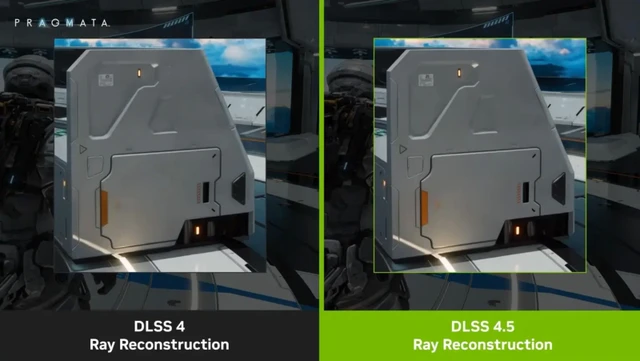 The Evolution of Rendering in DLSS 4.5