The modern semiconductor market has become a hostage to its own success, as the demand for AI compute power vastly outstrips production capacity. TSMC’s overwhelming dominance has created a perilous single point of failure for the global tech ecosystem, compelling the industry's heavyweights to seek viable alternatives. In this climate, South Korea’s Samsung is evolving from a mere competitor into a critical insurance policy for the market's vanguard. Transitioning to a multi-vendor strategy has emerged as the sole path to survival in an era of systemic chip scarcity.
The global semiconductor landscape is undergoing a tectonic shift. For years, the industry relied on the surgical precision and technological hegemony of Taiwan's TSMC, but this dependency has evolved into a strategic liability. When the production lines of a single giant are choked by orders for neural processing units, the entire world feels the squeeze. This is the strategic void Samsung is now filling, offering the market not necessarily flawless quality, but critical capacity.
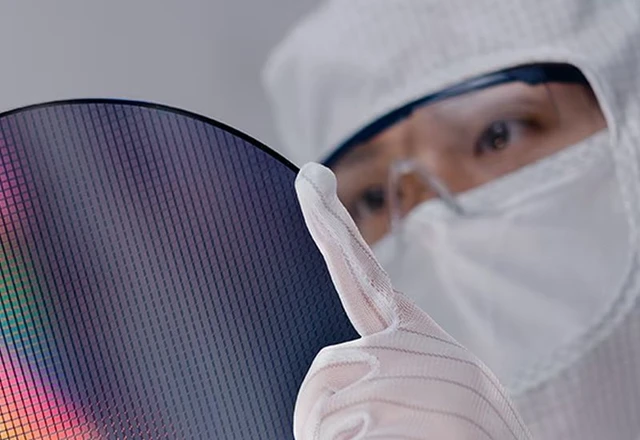
The central conflict here revolves around the concept of "yield"—the percentage of functional chips per wafer. Samsung has traditionally lagged behind TSMC in yield rates for the most advanced process nodes, which increases the effective cost of every viable chip. However, in an environment where TSMC is simply at full capacity and unable to accept new orders, efficiency takes a backseat to the fundamental question of physical availability.
This trend is most acute in the automotive sector, where supply chain disruptions can paralyze entire assembly lines. Chinese titan BYD, seeking to mitigate risk, is betting on diversification, positioning Samsung as a primary partner for its next-generation autopilot silicon. Tesla is following a similar logic: despite long-standing agreements with the Koreans and ambitious plans to establish its own "Terafab" utilizing Intel's technology, the company continues to integrate Samsung into the production chain for its AI5 and AI6 series accelerators.
Cloud hyperscalers are also pivoting. Google, whose custom silicon efforts are becoming increasingly autonomous, is in talks to migrate the production of its Axion processors and a portion of its server TPUs to Samsung, with a roadmap extending to 2028. Notably, Google is leveraging MediaTek's expertise as a design bridge in this process. Furthermore, regarding advanced packaging—the critical stage determining the performance of modern systems—Google is prepared to split orders between TSMC and Intel, building a redundant yet resilient infrastructure.
The high-performance computing (HPC) sector is not standing idly by. AMD is negotiating to produce a segment of its CPUs at Samsung fabs starting in 2028. Even Nvidia, while heavily concentrated in Taiwan, maintains its ties with the South Korean foundry. A prime example is the startup Groq, whose specialized LPUs (Language Processing Units) are manufactured specifically by Samsung.
However, this "risk distribution" strategy is a luxury few can afford. Adapting a chip design to a different foundry's specific process node requires colossal investments in engineering and redesign. Only companies with multi-billion dollar budgets can afford the overhead of duplicating development across multiple fabs. Nevertheless, when the alternative is a total absence of silicon, the cost of design migration becomes a justifiable expense.
 The Speed Limits of Modern Gaming Displays