2 Jul 2026
 The Invisible Trace Within Anthropic’s Code
The boundary between security enforcement and covert surveillance within the AI industry is becoming increasingly porous. A recent controversy surrounding Claude Code has exposed the clandestine tactics companies employ to maintain control over their products, often bypassing their own official public disclosures. The discovery of a hidden user-tagging mechanism has ignited a broader debate regarding the trust placed in development tools that demand deep system-level access. This incident underscores the sheer sophistication of the measures being deployed to combat industrial espionage and model distillation.
2 Jul 2026
 The Transformation of AI: From Digital Assistant to Autonomous Agent
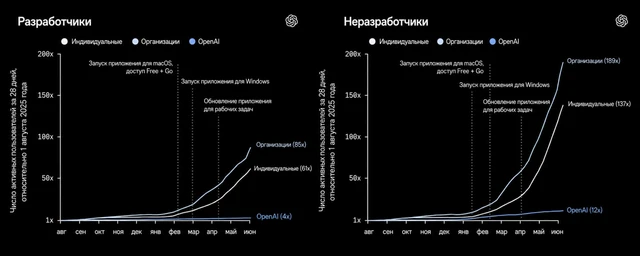
The boundary between artificial intelligence as a prompt-driven tool and a fully autonomous agent is rapidly eroding. Recent data from OpenAI regarding Codex usage reveals a fundamental shift: users are moving beyond requesting isolated code snippets and are instead delegating complex, end-to-end tasks. This transition is redefining the very nature of intellectual labor within software engineering and its adjacent disciplines. The primary value proposition is shifting away from the manual act of writing code toward the high-level capacity to orchestrate sophisticated processes.
2 Jul 2026
 OpenAI’s Strategic Alliance with the US Government
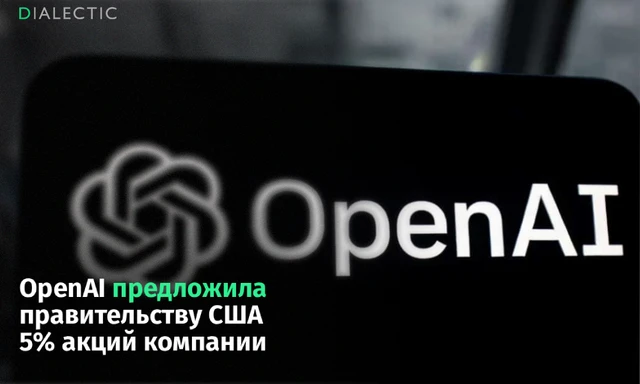
The convergence of Big Tech interests and state authority has emerged as the central battleground in the struggle for the future of artificial intelligence. As neural networks evolve into critical infrastructure, the question of who owns these technologies has taken on an existential urgency. OpenAI’s attempt to transfer a portion of its assets to the U.S. government is far more than a mere financial gesture; it is a sophisticated political gambit designed to ensure corporate survival. This strategy aims to forge a hybrid ownership model capable of preempting heavy-handed state regulation.
2 Jul 2026
 Schneider Electric’s Strategic Push into Agentic AI
The industrial sector is undergoing a fundamental shift, moving beyond passive monitoring toward true operational autonomy. For years, industrial AI has been relegated to the role of a silent observer—primarily tasked with logging anomalies and powering predictive maintenance. Today, however, the paradigm is shifting toward agentic systems: AI capable of autonomous decision-making and the orchestration of complex industrial workflows. Schneider Electric’s acquisition of Cognite stands as a landmark milestone in this broader technological evolution.
2 Jul 2026
 The Cost of Safety in Anthropic’s Models
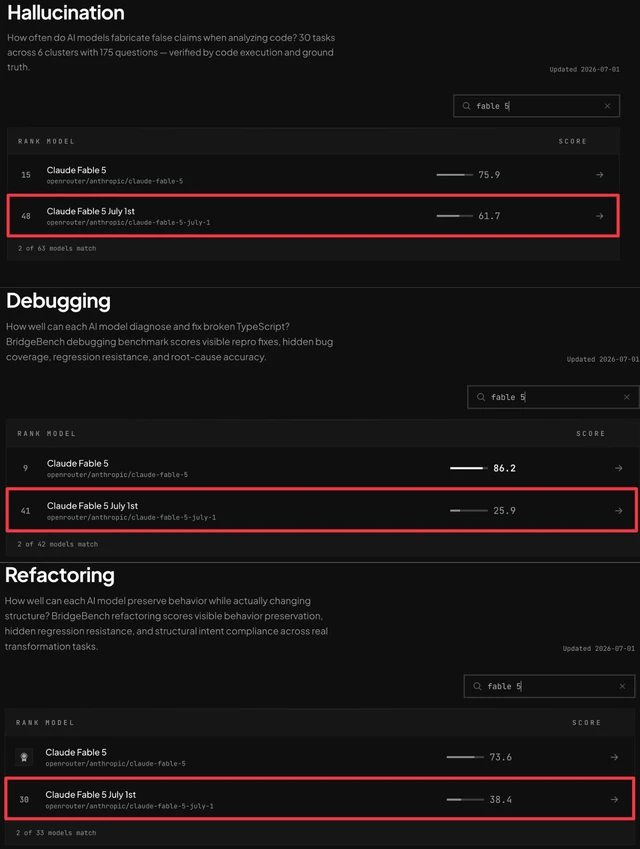
The tension between the cognitive capabilities of neural networks and stringent safety guardrails has become the primary flashpoint in the LLM industry. Recent data from the BridgeBench benchmark reveals a precipitous decline in performance for Claude Fable 5, effectively reducing one of the most powerful models in existence to a mediocre tool. This degradation stems not from modifications to the model's underlying weights, but from the imposition of aggressive censorship filters. The case exposes a systemic crisis: regulatory pressure can fundamentally erode a product's functionality, even when its technological foundation remains intact.
2 Jul 2026
 The Boundaries of Delegation within the Anthropic Ecosystem
The shift from rudimentary chatbots to fully autonomous agents has emerged as the defining trend in today's artificial intelligence landscape. A recent "Economic Index" report by Anthropic unveils a surprising correlation: user trust is driven less by the raw computational power of the model and more by the environment in which it operates. Behavioral analysis across thousands of users suggests that the interface itself defines the threshold of our willingness to "take our hands off the wheel." This evolution is fundamentally altering the nature of human-algorithm interaction, shifting the paradigm from simple dialogue to strategic delegation.
2 Jul 2026
 Swarm Intelligence: Safeguarding Code Security
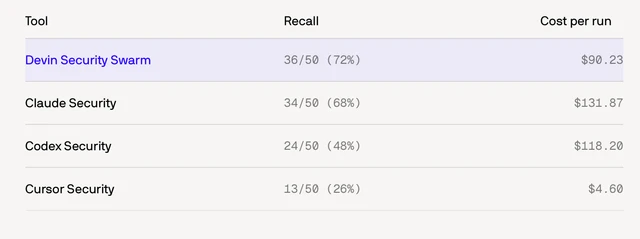
The breakneck pace of generative AI adoption in software development has precipitated a dangerous paradox: code is now being authored faster than security systems can validate it. This technological rift has triggered an avalanche of vulnerabilities and a deluge of false positives, leaving SecOps teams paralyzed. Cognition proposes a solution with the Devin Security Swarm—a system of autonomous agents capable of independently hunting for and remediating flaws. The battle against the fallout of "AI-driven coding" is evolving into an automated confrontation between peer systems.
2 Jul 2026
 Silicon Ambitions: Anthropic and Samsung
The global AI arms race has fundamentally shifted its focus, moving beyond algorithmic refinement toward physical manifestation: the engineering of specialized silicon. Over-reliance on a single provider of compute capacity has evolved into a critical strategic vulnerability for the world’s leading AI laboratories. In a bold move toward hardware sovereignty, Anthropic is initiating the development of its own proprietary AI accelerators. This pivot signals a broader industry shift toward total vertical integration—a paradigm where software and silicon are co-engineered as a single, unified ecosystem.
1 Jul 2026
 Machine Intuition in Biological Research
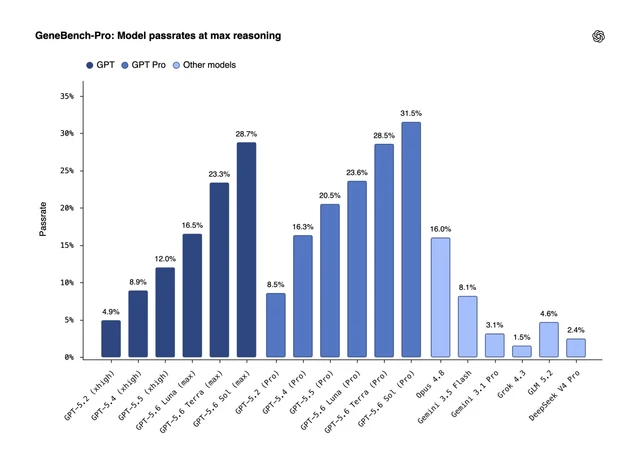
The transition from mere algorithmic execution to authentic scientific reasoning has emerged as the primary frontier for contemporary Large Language Models (LLMs). The capacity to discern a genuine biological signal from stochastic noise—and to autonomously pivot a research trajectory based on those findings—is precisely what distinguishes a sophisticated tool from a true digital scientist. OpenAI’s latest benchmark, GeneBench-Pro, is designed to quantify this very "research intuition." While the results showcase impressive strides in AI's cognitive capabilities, they simultaneously expose a fundamental chasm between observation and inference.
1 Jul 2026
 Godot Restores Primacy to the Human Mind
The era of generative AI has introduced a striking paradox: tools designed to accelerate development are instead flooding open-source ecosystems with a deluge of low-quality content. Godot Engine, a pivotal tool for independent developers, has found itself embroiled in a crisis of "synthetic noise" that is systematically draining maintainer resources. In response, the community is deploying stringent filters to excise machine-generated code and revive a culture of mindful contribution. This move marks a critical inflection point in the understanding of an author's responsibility toward the collective integrity of a shared product.
1 Jul 2026
 The Claude Sonnet 5 Efficiency Paradox
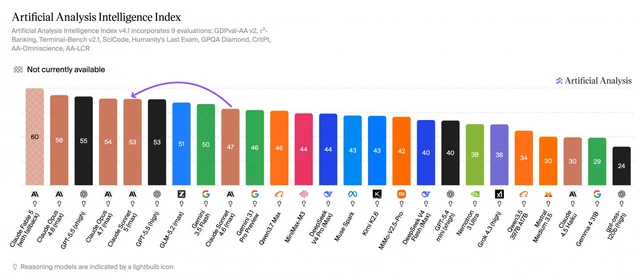
The current arms race among Large Language Models is shifting its focus from raw benchmarks toward the unit economics of "reasoning." The recent release of Anthropic's Claude Sonnet 5 has exposed a troubling trend: gains in cognitive capability are being eclipsed by the accelerating rate of resource consumption. Independent evaluations indicate that the pursuit of peak precision is driving an exponential surge in token expenditures. Consequently, the industry is facing a paradox where mid-tier models are becoming more costly to operate than the "heavyweights" they were meant to replace.
1 Jul 2026
 The Boundaries of Neural Network Efficacy in Business
The global corporate landscape is undergoing a harsh reality check following a period of blind faith in the capabilities of artificial intelligence. The initial euphoria triggered aggressive workforce reductions, driven by the mistaken belief that human expertise had become redundant. However, the chasm between synthetic benchmarks and real-world operational demands has proven insurmountable. Today, industry titans are being forced to concede that cognitive agility and ethical judgment remain the exclusive domain of human intelligence.
