The global AI race is evolving, pivoting from the era of monolithic model training toward the critical phase of mass deployment and inference. In this new landscape, real-time execution efficiency has emerged as the paramount priority for the industry's titans. Nvidia, the long-standing hegemon of the GPU market, is now extending its reach into the CPU domain with the unveiling of the Vera family. This strategic gambit is designed to forge a closed ecosystem, providing a robust bulwark against the rising tide of custom silicon development among cloud service providers.
For a long time, Nvidia's footprint in the central processing unit (CPU) segment remained largely peripheral. The company's offerings were confined to the niches of gaming systems and specialized onboard computers for the automotive industry, while the primary technological breakthroughs were occurring on the GPU side. However, the modern AI infrastructure landscape is rewriting the rules: the focus is shifting toward inference—the process of deploying trained models to generate real-time responses. It is here that the role of the CPU becomes critical, as these processors provide the essential orchestration of computations and the management of data streams.
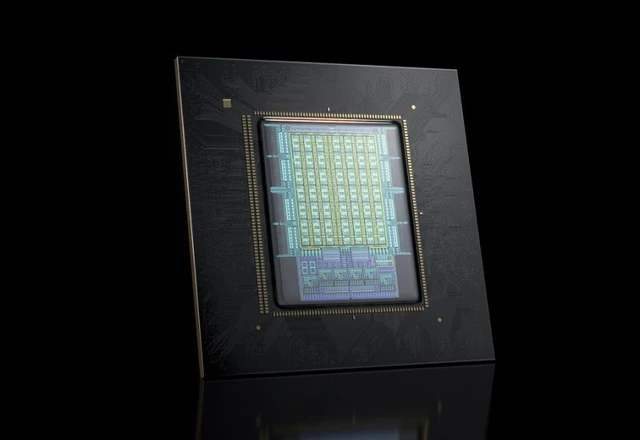
With the launch of the Vera family, Nvidia is making a decisive push into the server market. This is more than a mere expansion of their product portfolio; it is a strategic attempt to seize the initiative from traditional industry leaders. At a time when the largest cloud providers and AI developers are designing their own proprietary chips to reduce vendor dependency, Nvidia is offering the market a comprehensive, turnkey solution. The strategy is to provide clients with a highly integrated ecosystem where the CPU and GPU operate in total synergy, minimizing data transfer latency.
What gives this transition particular significance is that the Vera processors were conceived during the ascent of generative AI. Unlike legacy server solutions, which evolved over decades to handle general-purpose tasks, Vera was engineered from the ground up to accommodate the specific workloads of modern neural networks. This allows for optimized memory management and accelerates operations that were previously considered "bottlenecks" in the interaction between the central processor and the graphics accelerator.
The efficacy of this approach is exemplified by the experience of the startup Perplexity. According to available data, when deploying AI agents specialized in software engineering, Nvidia's chips demonstrated a 1.5x performance increase compared to solutions from other vendors. For complex tasks such as coding—which require a fusion of rigorous logic and the probabilistic inference of a neural network—hardware-level optimization provides a tangible advantage in response latency and overall system throughput.
Nvidia's financial ambitions in this sector are formidable: the company aims to scale its CPU revenue to $20 billion by the end of the current fiscal year. Such an aggressive forecast is underpinned by the support of the industry's heaviest hitters. Beyond Perplexity, the list of potential Vera adopters already includes giants such as OpenAI, Anthropic, and Oracle.
Ultimately, Nvidia is seeking to transform its role from a component supplier into the architect of comprehensive computing platforms. If this strategy succeeds, the server computing market may face a fundamental paradigm shift, where the primary criterion for choosing a processor is no longer general-purpose versatility, but the degree of its integration into the artificial intelligence ecosystem.
 iPhone 17: Dominating the Global Market