The global AI surge has ignited an unprecedented demand for high-performance memory. Against this backdrop, China is aggressively pursuing technological sovereignty, seeking to minimize its reliance on Western supply chains amidst mounting sanctions pressure. Despite its relative youth, CXMT is emerging as a pivotal player in the execution of this strategic mandate. A synergy of state funding and favorable market dynamics is now paving the way for the manufacturer to establish its own HBM production capabilities.
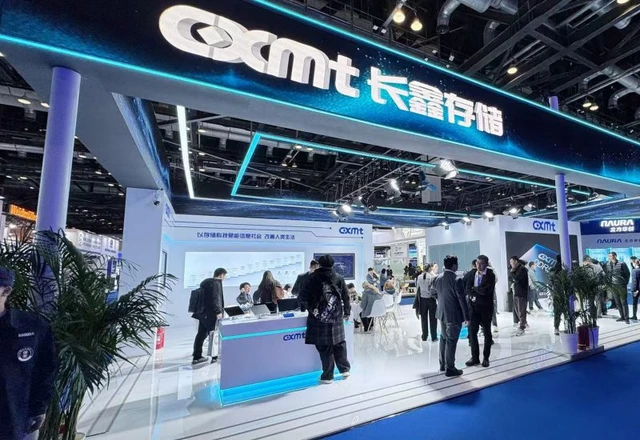
The story of CXMT is one of meteoric ascent—from an ambitious 2016 startup to a strategic pillar upon which China’s aspirations for high-performance computing now rest. For years, the company operated beneath the radar outside its home region, but the global semiconductor crunch forced even titans like Apple to take notice of its output. Today, CXMT is viewed as the primary candidate to lead the development of a national infrastructure for High Bandwidth Memory (HBM), a component critical to the operation of modern neural networks.
CXMT’s technological bedrock was built less on homegrown innovation than on the strategic absorption of foreign expertise. In 2019, the company acquired the patents of the bankrupt German firm Qimonda, securing a vital foundation of intellectual property. This acquisition was augmented by the aggressive recruitment of high-tier engineers from South Korea and Taiwan, allowing the company to rapidly close the competency gap.
Central to this ecosystem is the company's relationship with the Dutch lithography giant ASML. While export restrictions have made acquiring the cutting-edge EUV scanners necessary for the most advanced process nodes nearly impossible, CXMT has managed to maintain a stable supply of DUV systems. Symbolically, the proximity of the company's headquarters to a theme park featuring a monument to its cooperation with ASML underscores the gravity of this partnership for the Chinese manufacturer.
Behind CXMT’s success lies the formidable machinery of the Chinese state. Entities linked to the PRC government control more than a third of the company's shares, providing colossal financial backing; in the last two years alone, $880 million has been injected into the firm. This scaling is further evidenced by its workforce, which has already grown to 20,000 employees. To accelerate capacity upgrades and bolster its R&D engine, CXMT is preparing for an IPO, eyeing a capital raise of over $4.3 billion.
The economic tipping point arrived with the dawn of the generative AI era. In the first quarter of this year, the company recorded a net profit of $4.8 billion, nearly offsetting the $5.4 billion in cumulative losses accrued since its inception. Currently, CXMT commands an 11% share of the global DRAM market; with the launch of new production lines across three Chinese cities, this share could climb to 15% by 2028. Nevertheless, analysts at SemiAnalysis warn that even with maximum capacity expansion, the global memory shortage will persist for at least another two years.
Of particular interest is the company's strategy for mastering HBM. CXMT has deliberately kept its progress in this area under wraps, as import substitution is now a priority of China's national security. Production is expected to be deployed across several sites, including Shanghai.
Admittedly, early iterations of Chinese HBM will likely lag behind Western counterparts in terms of efficiency and yield rates due to the use of less sophisticated equipment. In the current climate, however, economic expediency is secondary to strategic imperative. High market prices for DRAM, the anticipated capital influx from the IPO, and unconditional state support make this risky technological leap entirely feasible.
 iPhone 17: Dominating the Global Market