5 Jul 2026
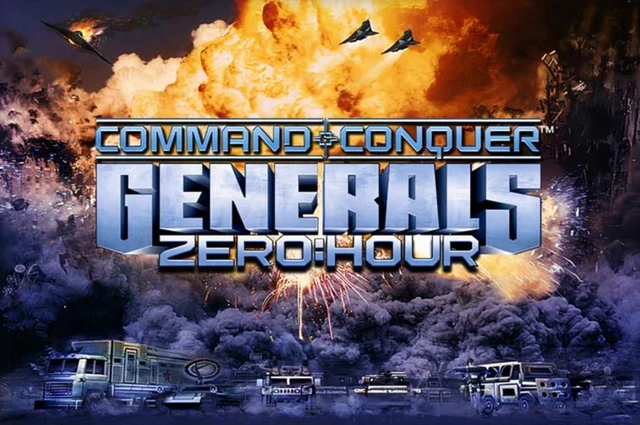 Command & Conquer Generals: A New Lease on Life
The divide between legacy code and modern platforms is rapidly dissolving, driven by the evolution of Large Language Models. A recent experiment—porting an iconic early-2000s strategy title to iOS—highlights AI's transition from a mere assistant to a fully autonomous engineering agent. At the center of this breakthrough was Claude Fable 5, which successfully navigated technical hurdles that had stymied previous iterations of neural networks. This case marks the beginning of a new chapter in digital preservation and the automation of sophisticated systems programming.
4 Jul 2026
 The Environmental Cost of Google’s Neural Networks
The era of Large Language Models has evolved beyond a mere challenge of algorithms and datasets; it has become a crisis of physical resources. Google’s latest environmental report reveals an unprecedented surge in power consumption—a spike that casts serious doubt on the feasibility of the decade's climate targets. The scale of these requirements is now comparable to the total energy budgets of entire nations. Within this tension between rapid technological acceleration and environmental stewardship, the true cost of modern artificial intelligence is becoming starkly apparent.
4 Jul 2026
 The Collapse of Tokenomics and the Battle for Data
The contemporary generative AI market is grappling with a profound crisis of confidence between enterprise clients and the tech giants. While the industry was acclimating to token-based pricing models, a fundamental conflict emerged over data privacy and the ownership of intellectual capital. Palantir CEO Alex Karp has openly accused industry leaders of covertly harvesting unique client business processes to train their proprietary models. This clash signals a pivotal shift: moving away from unbridled enthusiasm for neural networks toward a rigorous struggle for digital sovereignty.
4 Jul 2026
 A Visual Approach to LLM Cost Optimization
The operational overhead of advanced AI agents is increasingly becoming a primary bottleneck for scaling development automation. Traditional token-based pricing creates an inflexible correlation between context volume and financial expenditure, forcing developers to navigate a constant trade-off between analytical depth and budgetary constraints. Yet, the emergence of visual prompt compression tools offers an unexpected workaround. By transforming textual data into images, it is now possible to radically reduce request costs without significantly compromising the quality of the output.
4 Jul 2026
 The Era of Autonomous Agents in Everyday Life
The boundary between professional software engineering and everyday productivity is rapidly dissolving. We are witnessing a fundamental paradigm shift: a transition from interactive chatbots to autonomous agents capable of executing long-running tasks without human intervention. The ability to write code is evolving into an invisible layer of general intelligence, accessible to every user. This evolution is redefining the very nature of corporate labor, transforming employees across all disciplines into orchestrators of complex digital workflows.
4 Jul 2026
 The Realities of Automated Legacy System Migration
The modern software development industry is currently striving to strike a delicate balance between AI autonomy and expert oversight. Migrating massive legacy codebases to contemporary stacks often becomes an arduous undertaking, fraught with the risk of functional regression. The experience of migrating 60,000 lines of PHP to TypeScript demonstrates that the intrinsic value of AI lies not in replacing the developer entirely, but in enabling a hyper-accelerated iteration loop. This case study redefines the paradigm for planning automated refactoring and underscores the indispensable nature of human supervision.
4 Jul 2026
 Digital Pharmacology in Service of Humanity
The convergence of Large Language Models (LLMs) and biotechnology is shifting from the realm of theoretical exploration into the practical synthesis of therapeutics. Anthropic is making a bold strategic move by pledging to tackle "neglected diseases"—conditions that have been sidelined by the traditional pharmaceutical industry for decades due to poor profit margins. This pivot transforms the AI developer from a mere toolkit provider into an active stakeholder in the biomedical sector. However, the trajectory from in silico molecular prediction to regulatory approval remains one of the most formidable hurdles in contemporary science.
4 Jul 2026
 Stealth Tracking in the Battle of the AI Giants
The global AI arms race has evolved beyond a mere competition over parameter counts, shifting instead toward a high-stakes arena of corporate espionage and digital sovereignty. A recent clash between Anthropic and Chinese research labs has uncovered a perilous precedent: the weaponization of development tools to covertly identify users. What originated as a technical safeguard for intellectual property has escalated into a full-blown geopolitical standoff. This case underscores the fragility of trust in an era where source code serves simultaneously as both a shield and a surveillance mechanism.
3 Jul 2026
 Cloudflare’s Ultimatum to the Search Giants
The symbiotic relationship between content creators and search engines, cultivated over decades, is currently facing an existential crisis driven by the rise of generative AI. The traditional "indexing-for-traffic" social contract has effectively dissolved now that neural networks consume data without redirecting users back to the source. Cloudflare—which mediates roughly 20% of global web traffic—has moved to radically shift the rules of engagement, presenting tech giants with a stark ultimatum. This demand to decouple search indexing from AI training crawlers marks the dawn of a new era in the battle over intellectual property across the open web.
3 Jul 2026
 A Strategy for the Deep Integration of Enterprise Intelligence
The global AI arms race is shifting gears, moving beyond the phase of model development into the realm of real-world application. For the enterprise sector, mere API access is no longer sufficient; the market now demands seamless, deeply integrated solutions capable of fundamentally transforming business processes. Microsoft is meeting this challenge by establishing a massive operational arm designed to bridge the gap between raw technology and its actual implementation. This move signals the dawn of a new era in "deployment engineering," where success is measured not by model parameters, but by tangible efficiency in production environments.
3 Jul 2026
 The Illusion of Security in Modern AI Browsers
The integration of Large Language Models (LLMs) directly into web browsers promised to revolutionize our interaction with the digital landscape, transforming traditional browsing into an intuitive, conversational experience. Yet, this convergence has opened a critical security loophole where "contextual trust" has emerged as a primary attack vector. Research into the BioShocking vulnerability reveals that contemporary AI agents can be manipulated and weaponized as conduits for the exfiltration of sensitive data. The core issue is not a flaw within the models themselves, but rather a fundamental failure to isolate external content from the agent's systemic privileges.
3 Jul 2026
 Intelligent Standardization of Toyota's Production Cycles
In an era defined by hyperautomation, the primary bottleneck to operational efficiency is no longer a deficit of technology, but rather data fragmentation and the prevailing semantic gap. For an industrial titan like Toyota, internal linguistic dissonance acts as a "hidden tax" on productivity, creating friction that inevitably slows the pace of vehicle production. The remedy lies in leveraging artificial intelligence to achieve a comprehensive unification of technical terminology across every facet of the organization's business processes. This strategic pivot aims to synchronize the entire product lifecycle—from initial blueprint to final sale—establishing a unified digital governance ecosystem.
