The global AI surge has triggered an unprecedented scramble for semiconductor memory. While the world's gaze remains fixed on the maneuvers of industry titans, smaller players are launching aggressive expansions to seize emerging market opportunities. Taiwan's Nanya Technology is pivoting from a strategy of cautious growth toward a massive scale-up of its production capacity. These multi-billion dollar investments signal a new chapter in the shifting power dynamics of the semiconductor landscape.
The current technological landscape is entering an era where the performance of AI models is inextricably linked to memory bandwidth and capacity. In this computational arms race, massive capital expenditures are typically associated with the industry's titans; however, current market dynamics have opened a window of opportunity for "second-tier" manufacturers. Taiwan's Nanya Technology, long overshadowed by the market leaders, has announced a radical overhaul of its financial roadmap, intending to allocate $6.2 billion in capital expenditures next year.
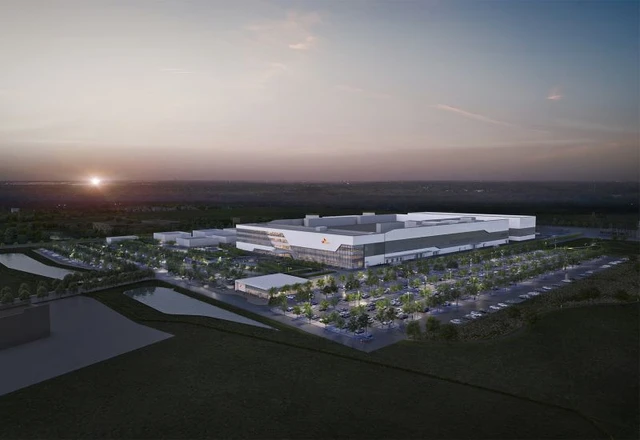
For Nanya, this move represents more than mere growth—it is a tectonic shift in its business model, with investment levels quadrupling compared to the current year. The centerpiece of this strategy is the construction of a new memory chip fabrication plant. With a total project cost estimated at $15 billion, the move signals Nanya's ambition to compete in the semiconductor industry's premier league.
The company's second-quarter financial results exhibit almost surreal momentum, providing the bedrock for such audacious plans. Revenue surged 684% year-over-year, reaching $2.6 billion. Even more striking is the growth in net profit, which skyrocketed by 1,324% to $1.6 billion. The most telling metric, however, is the dramatic reversal in profitability: after recording a negative profit margin of -20.6% a year ago, the figure has soared to 79.5% this quarter.
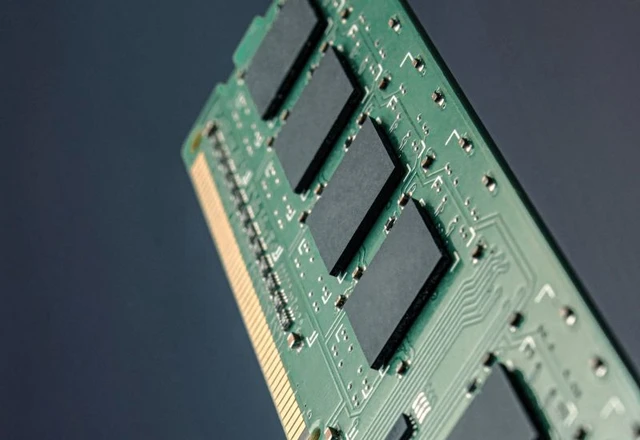
This precipitous climb proves that the AI-driven component shortage is benefiting even the smaller players. While the giants focus on hyper-complex solutions like High Bandwidth Memory (HBM), Nanya is successfully capitalizing on lucrative niches, including DDR4 memory, which remains in high demand across a vast array of server and client systems.
The production rollout will be executed in phases. The first stage of the new facility's commissioning is expected by 2028. Initially, the plant will process 30,000 silicon wafers per month, with a planned ramp-up to 45,000. In the semiconductor world, these volumes translate to the capacity to generate millions of chips, allowing Nanya to significantly expand its market share.
Management's strategic calculus is based on a close analysis of their South Korean rivals. The massive capacity expansions in South Korea serve as confirmation for Nanya that the demand for memory is not a transient spike, but a long-term structural trend. With memory shortages projected to persist for several more quarters, aggressive investment today is the only viable path to securing future dominance.
 Nvidia’s Technological Pragmatism in the Open-Model Race