The automotive industry is undergoing a fundamental paradigm shift, evolving from the mere manufacture of vehicles to the engineering of the intelligent systems that will build them. Humanoid robots are transcending their status as laboratory curiosities, emerging instead as strategic instruments for driving industrial efficiency. Mitsubishi Motors is making a decisive move in this direction, outlining a large-scale integration of humanoid robotics across its production cycles. This initiative marks a new chapter in Japanese robotics, where the synergy between automotive engineering and artificial intelligence is poised to redefine the architecture of the modern factory.
The automotive industry's pursuit of automation has long since evolved beyond the confines of simple assembly lines. Today, the sector is searching for ways to create versatile machines capable of adapting to human environments without requiring a radical overhaul of factory infrastructure. In this context, Mitsubishi Motors' initiative to launch the mass production of humanoid robots appears as a logical progression in the evolution of industrial design.
The epicenter of this technological leap will be a facility in Kyoto. The company's ambitions are significant: starting next year, production rates could scale to a thousand units per month. Such volume indicates that this is not merely a pilot project, but the full-scale deployment of a new technological platform. Initially, these robots will be integrated into the company's internal processes, taking over labor-intensive tasks such as component transport and engine assembly.
The implementation strategy envisions a phased transition from internal trials to commercialization. Once these systems prove their reliability and efficiency on the factory floor, Mitsubishi will explore the possibility of bringing the product to the external market. Notably, potential clients could include direct competitors in the automotive market, effectively transforming the company from a traditional vehicle manufacturer into a provider of high-tech solutions for the entire industry.
Corporate head Takao Kato envisions immense potential for humanoids to optimize logistics and welding operations. Unlike traditional stationary robotic arms, humanoid machines offer greater flexibility and the ability to navigate spaces originally designed for humans. While the question of how these new humanoids will coexist with classic industrial robots remains open, it is clear that the company aims to create a flexible ecosystem into which third-party component suppliers can seamlessly integrate.
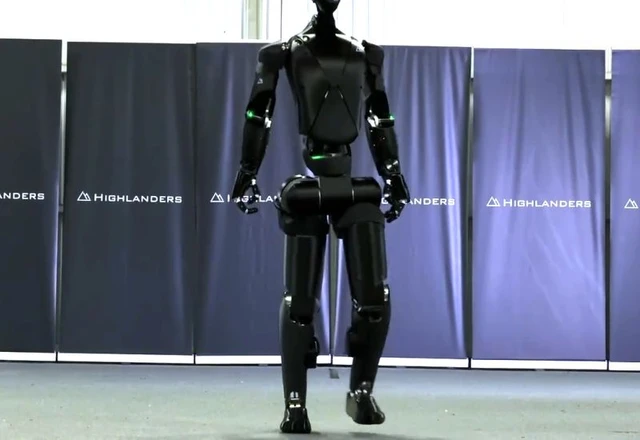
The technological bedrock of this project is a partnership with Highlanders, a Japanese startup founded by alumni of the University of Tokyo. Mitsubishi's investment in this venture, which began in May of this year, underscores a strategic bet on academic foundations and cutting-edge developments in motion control and artificial intelligence.
Japan enters this race amidst fierce global competition. Currently, China holds a dominant position, accounting for approximately 85% of global humanoid robot shipments. Beijing aims to solidify its leadership in this field by 2035, positioning robotics as one of the primary pillars of its national economy.
In response to this challenge, the Japanese government has outlined its own long-term objective: to deploy approximately 10 million AI-powered robots by 2040. State support for research and development, combined with the industrial expertise of giants like Mitsubishi, is intended to allow Japan to offset its temporary lag through uncompromising quality and the deep integration of robotics into the real sector of the economy.
 Nvidia’s Technological Pragmatism in the Open-Model Race