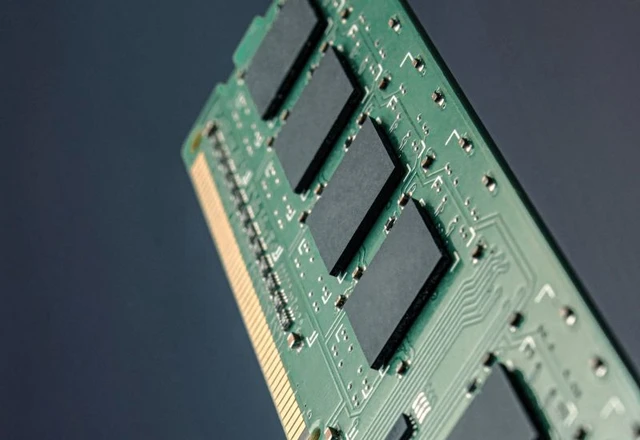
The global AI surge has triggered tectonic shifts across hardware supply chains. Even as the industry races to adopt the latest standards, the market is grappling with an unforeseen shortage of legacy components. The intricate interdependence between storage and memory segments has created a paradox where legacy technologies are becoming more costly than their cutting-edge successors. Current market dynamics signal a sharp spike in DDR4 pricing—a trend that could fundamentally reshape the economics of server infrastructure for years to come.
The contemporary semiconductor landscape is currently defined by a series of peculiar paradoxes. While technological evolution typically drives down the cost of legacy standards, the DDR4 memory segment is exhibiting the opposite trend. According to data from DigiTimes, contract pricing for this memory type could surge by as much as 50% this quarter, completely upending initial forecasts of moderate growth.
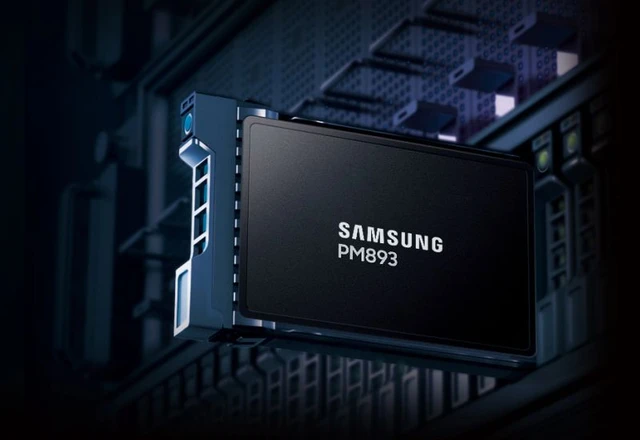
The catalyst for this phenomenon is not a direct spike in demand for consumer PC RAM, but rather an insatiable demand for enterprise-grade infrastructure. The primary driver has been the rise of enterprise Solid State Drives (SSDs). In these devices, DRAM chips serve as high-speed caches used to manage data mapping tables and accelerate access to the most frequently requested blocks of information. This creates a rigid technical correlation: typically, every 1 terabyte of NAND flash capacity in an enterprise SSD requires 1 gigabyte of DRAM.
As the volume of data processed by neural networks grows and drive capacities increase, the requirement for DRAM caching chips has scaled exponentially. This has placed significant strain on DDR4 production, which has been systematically scaled back in recent years.
The situation is further exacerbated by the strategic pivots of the market's dominant players. Samsung, Micron, and SK hynix have methodically shifted their production capacities toward the more advanced DDR5 standard, effectively ceding the DDR4 niche to Taiwanese manufacturers. The result is a precarious imbalance: demand is climbing while supply is restricted to a handful of companies already operating at peak capacity.
This shortage has led to a market anomaly where, on the spot market, 16Gb DDR4 chips are trading at a premium over their more advanced DDR5 counterparts. Experts suggest that this deficit could become structural, potentially persisting for the next two years.
A domino effect has since reached even older memory generations. As DDR4 becomes either unavailable or prohibitively expensive, electronics manufacturers have begun reverting to DDR3, triggering price hikes in that segment as well. In some instances, the unit cost of DDR3 has already surpassed that of DDR5. In desperate scenarios, the market has even seen a resurgence of interest in DDR2, as the industry scrambles for any viable alternative to maintain the production of budget-tier devices.
Parallel to this, volatility is mounting in the NAND segment. Prices for SLC and MLC memory types are expected to continue their ascent in the second half of the year; SLC pricing has already posted double-digit percentage growth in the first half.
The current state of affairs presents the industry with a critical challenge. Taiwanese fabs are running at full utilization and lack the short-term capacity to scale production to meet enterprise demand. The only viable escape route may be a partial return to DDR4 production by giants like Micron, though such targeted interventions are unlikely to fully stabilize the market amidst the global AI boom.
 Nvidia’s Technological Pragmatism in the Open-Model Race